
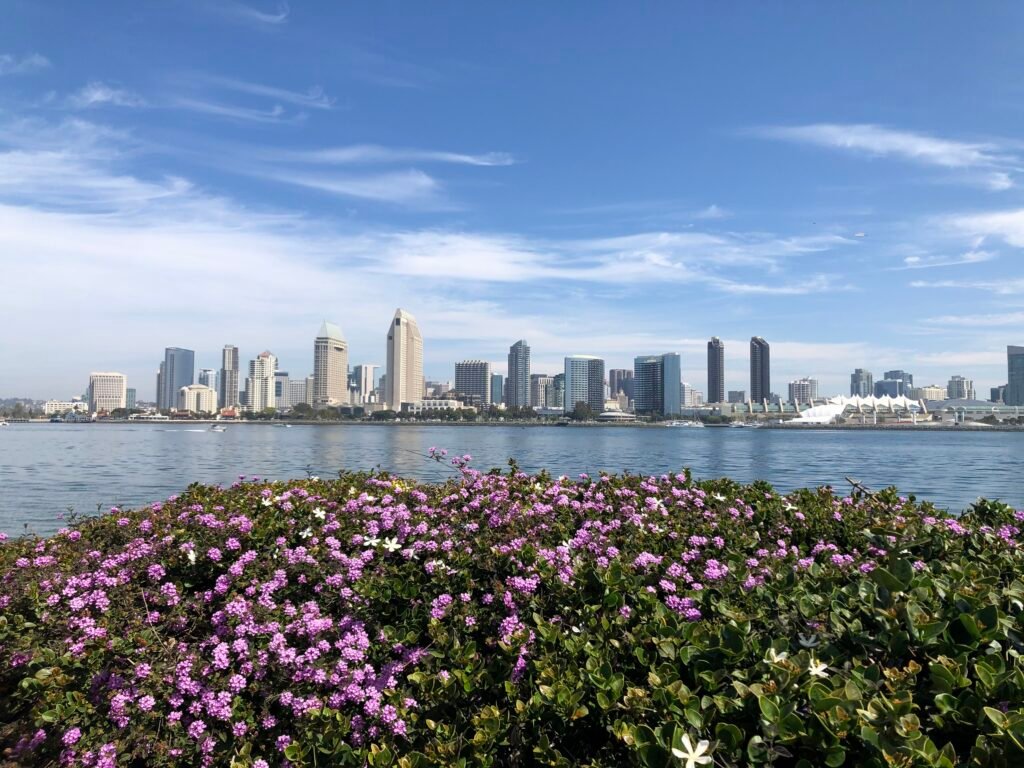
San Diego divides the visitor experience into compact walking pockets rather than one continuous sightseeing core. The strongest pocket sits downtown, where waterfront and central neighborhoods connect naturally during a walking-heavy day. Balboa Park remains a practical extension, but it sits beyond the tightest downtown walking pattern. Farther coastal areas break the pattern because their internal walkability does not erase the distance from downtown. This structure favors one central base and selective transfers, rather than connecting every major attraction on foot.
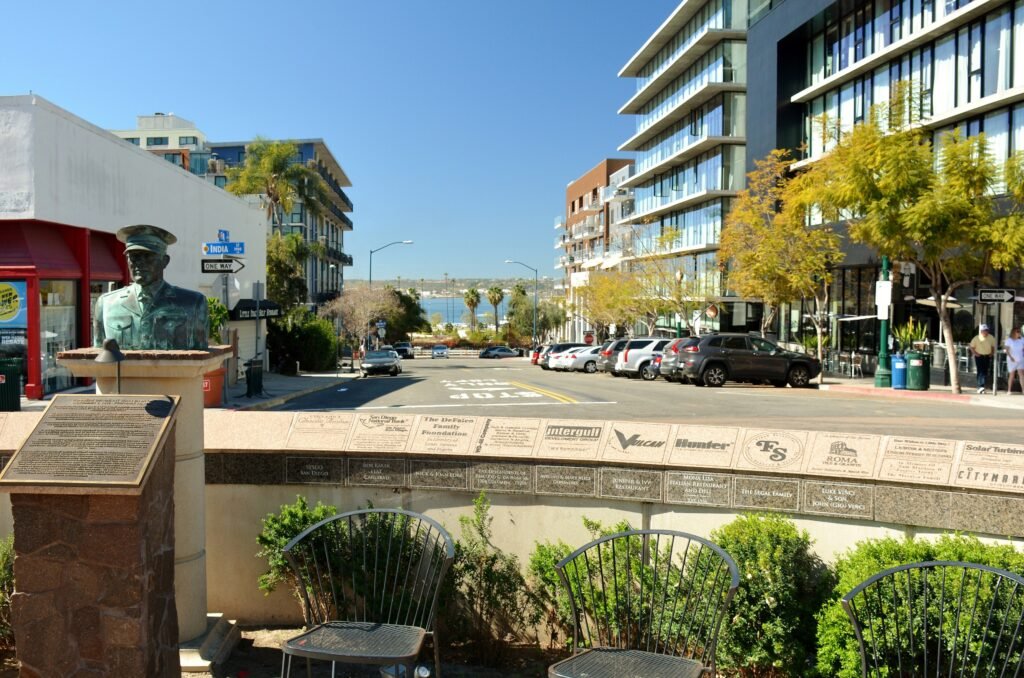
Why San Diego Works in Walkable Clusters
Downtown is the core that makes a car-free weekend realistic. Little Italy, the Embarcadero, the Marina, Gaslamp Quarter and East Village sit close enough together to build a full sightseeing day around walking. The waterfront is especially useful because major attractions such as the Maritime Museum and USS Midway line up naturally with Seaport Village before the route turns inland toward the Gaslamp and Petco Park.
Balboa Park is a second strong walking cluster rather than an extension of downtown. Once you arrive, the Museum of Us, gardens, Plaza de Panama, Timken Museum, Botanical Building, Spanish Village and zoo entrance fit into a compact cultural circuit. The smarter move is to use a local bus from downtown, then spend your walking time inside Balboa Park rather than on the connector. Check current MTS information for the most convenient service.
The coast is where San Diego becomes more fragmented. La Jolla Village is a good example: the tourism authority describes a concentration of shops, restaurants and galleries, with La Jolla Cove only steps away. That makes La Jolla very walkable once you are there, but it does not make La Jolla walkable from downtown. Coronado works similarly: the ferry creates a simple car-free transfer, but the island is a separate walking zone.
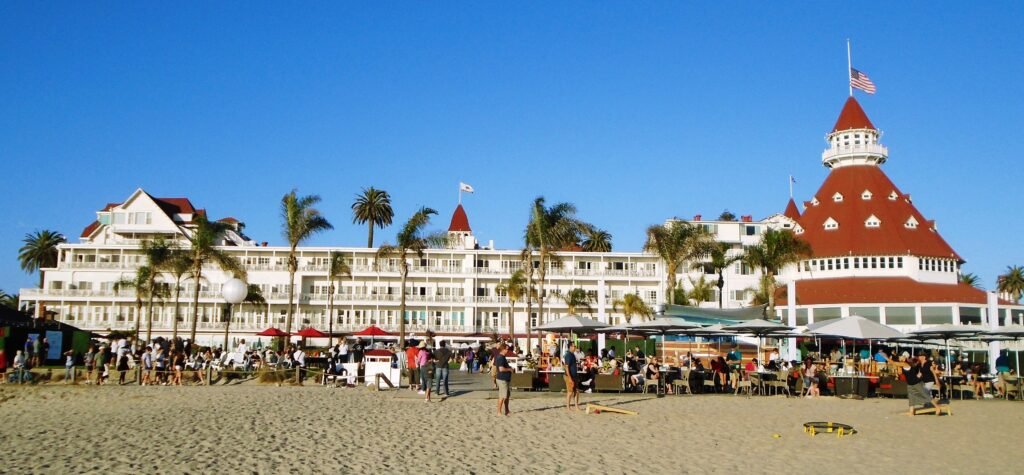
Best Neighborhoods to Stay In
Little Italy is our strongest first-time base for a walking-heavy weekend. It has its own active street life, sits close to the Embarcadero, and keeps Santa Fe Depot and Trolley service within easy reach. It also balances northern and southern downtown sights better than a hotel at either extreme of the core.
Marina / Gaslamp Quarter is excellent if your priorities are the convention-center waterfront, Seaport Village, nightlife and Petco Park. You will give up some convenience for Little Italy and the northern Embarcadero, but Day 1 becomes exceptionally easy to organize.
East Village works especially well for Petco Park, events and Trolley access. The Gaslamp is next door, while the trade-off is a longer walk to the northern waterfront and Little Italy.
Bankers Hill / the west side of Balboa Park can be a smart choice when the park and museums matter more than the waterfront. Expect more grade and less direct Trolley access than downtown, but a shorter approach to Balboa Park.
La Jolla Village is best treated as a coast-first alternative rather than the default first-time base. The Cove, shoreline, shops and restaurants cluster well on foot, but downtown, Balboa Park and Petco Park become cross-city trips.
Useful Walking Times
These are practical planning estimates rather than guaranteed walking times. Signals, crowds, exact entrances and individual pace can change the actual time.
- Piazza della Famiglia → Maritime Museum: about 10–15 minutes.
- Maritime Museum → USS Midway: about 12–15 minutes.
- USS Midway → Seaport Village: about 10–12 minutes.
- Seaport Village → Gaslamp Quarter Archway: about 15–20 minutes.
- Gaslamp Quarter Archway → Petco Park: about 5–10 minutes.
- Santa Fe Depot → USS Midway: about 8–10 minutes.
- Museum of Us → Timken Museum: about 5–8 minutes.
- Botanical Building → Spanish Village Art Center: about 5–8 minutes.
- Spanish Village → San Diego Zoo entrance: about 5–8 minutes.
A 2-Day Walking Route
The two routes are deliberately organized as separate walking clusters. Day 1 stays in the downtown-and-waterfront core. Day 2 uses transit to reach Balboa Park, then keeps the rest of the day on foot. That is a better representation of how San Diego actually works than forcing both days into one continuous walking line.
Day 1: Little Italy, Embarcadero, Gaslamp & East Village
Walking route
Little Italy, Embarcadero, Gaslamp & East Village
- Piazza della Famiglia
- Maritime Museum of San Diego
- USS Midway Museum
- Seaport Village
- Gaslamp Quarter Archway
- Petco Park
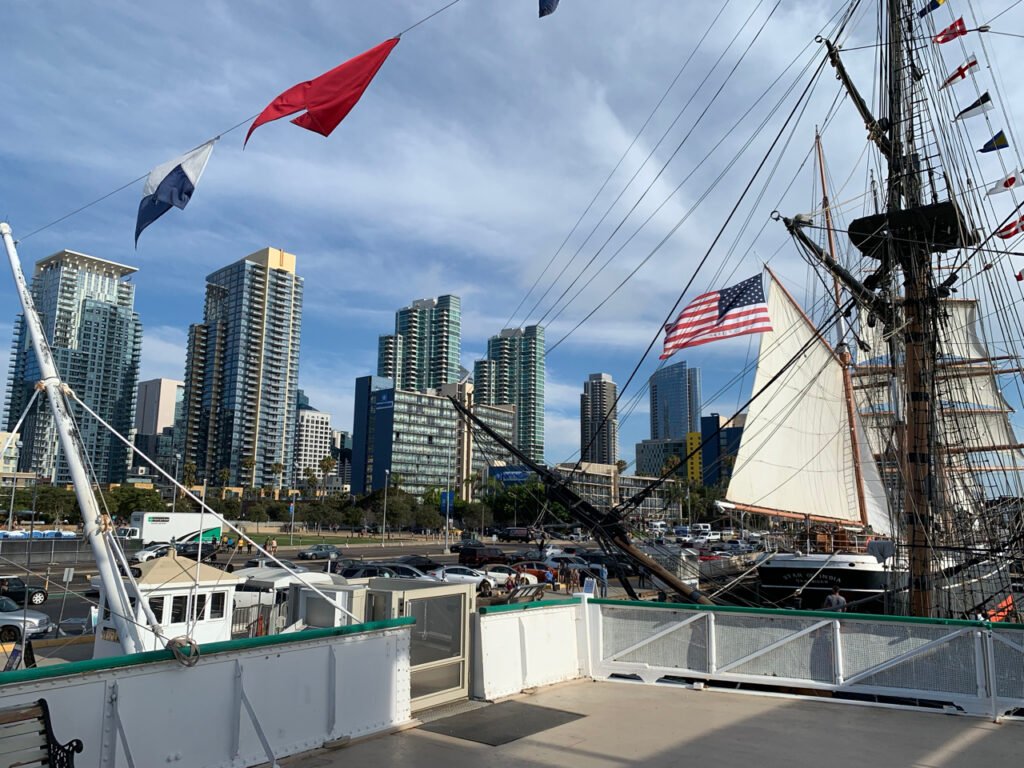
Start at Piazza della Famiglia in Little Italy, then walk to the bay and turn south for the Maritime Museum of San Diego. Continue along the Embarcadero to the USS Midway Museum, then follow the waterfront to Seaport Village. From there, turn inland to the Gaslamp Quarter Archway and finish at Petco Park in East Village. The route itself is compact enough for a relaxed sightseeing day; museum entry, meals and waterfront stops are what determine the final duration.
You do not need to enter every paid attraction for the route to work. If the Midway or Maritime Museum is a priority, give it a real time block rather than treating it as a quick photo stop. If you prefer a mostly outdoor day, the Embarcadero, Seaport Village, Gaslamp streets and Petco Park exterior still create a coherent route.
Day 2: Balboa Park Cultural Core & Zoo Edge
Walking route
Balboa Park Cultural Core & Zoo Edge
- Museum of Us
- Alcazar Garden
- Plaza de Panama
- Timken Museum of Art
- Botanical Building and Lily Pond
- Spanish Village Art Center
- San Diego Zoo
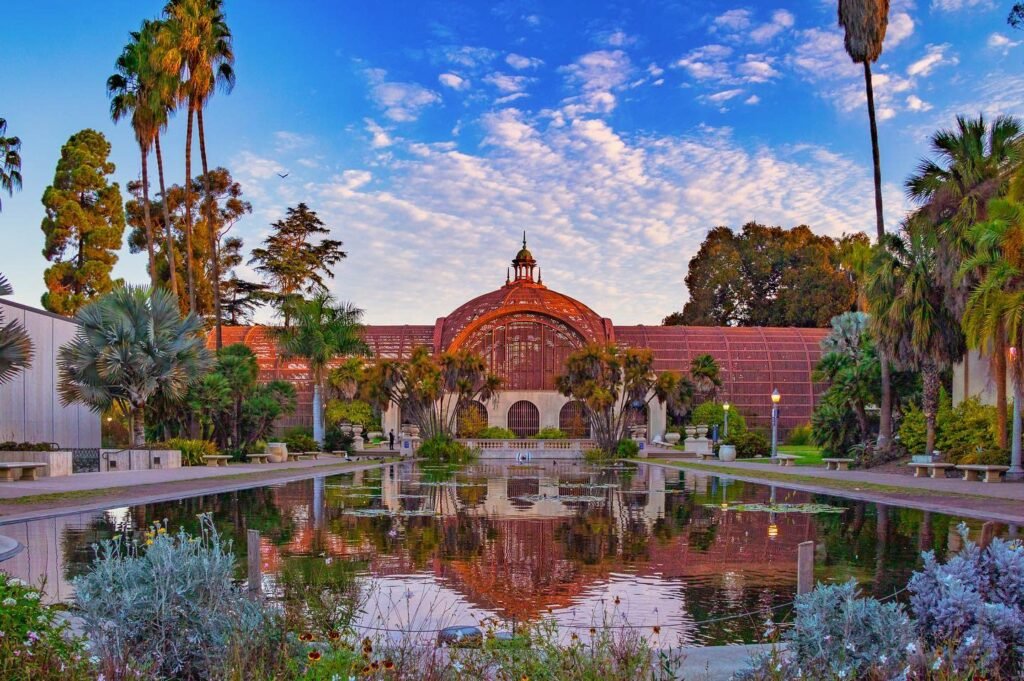
From downtown, use a local bus toward Balboa Park rather than spending the first part of the day on a low-value connector walk. Begin around the Museum of Us, then continue through Alcazar Garden and Plaza de Panama to the Timken Museum of Art. Walk past the Botanical Building and Lily Pond, continue to the Spanish Village Art Center, and finish at the San Diego Zoo entrance.
Entering the zoo changes the scale of the day. The park-to-zoo route is compact, but the zoo itself is a large attraction with substantial internal walking and some steep grades. If you want a museum-heavy Balboa Park day instead, treat the zoo entrance as the end point and spend the saved time inside the cultural institutions along El Prado.
Getting Around San Diego Without a Car
The Trolley is the main regional transit spine, connecting downtown with Old Town, UC San Diego/UTC, South Bay, East County and the border. Buses fill important gaps, especially for destinations such as Balboa Park that are not directly on the Trolley.
For Balboa Park and the zoo, local buses can remove an inefficient downtown-to-park walk and leave more time for exploring the park itself. Check current MTS routes and schedules before travel.
MTS offers integrated bus and Trolley ticketing through PRONTO, along with contactless payment options. Fares, transfer windows and daily caps can change, so check current MTS fare information before travel.
Coronado is a ferry trip rather than a walking extension of downtown. Regular passenger ferries connect central San Diego with Coronado, but schedules and fares vary, so check the current operator timetable before travel. Once across the bay, treat Coronado as its own walking outing.
For La Jolla and the beach neighborhoods, check the current MTS trip planner for the most useful combination on your date. The mistake to avoid is assuming that a Trolley map alone tells you how easy every coastal outing will be; some trips still need a bus connection or take enough time that a rideshare becomes a reasonable convenience choice.
Arrival Without a Car
San Diego International Airport sits unusually close to the central visitor area and has direct public-bus connections with downtown. Those services connect with the Trolley, COASTER, Amtrak and other local transport, although the Trolley itself does not stop directly at the airport terminals. Check current airport and MTS information before travel.
That still makes arriving without a car straightforward for a downtown stay. Tap a contactless card or use PRONTO, ride into the central grid, and continue on foot or transfer as needed. Travelers arriving by Amtrak have an even simpler start: Santa Fe Depot places you directly in the downtown walking core near the Embarcadero, Little Italy and multiple transit connections.
Where Walking Stops Making Sense
The main limitation is geographic, not a lack of good walking districts. Downtown, Balboa Park, Coronado and La Jolla are separate experiences. You can connect them without a private car, but you should not judge San Diego by whether a single pedestrian route can link them all. The same applies to the beach neighborhoods: Pacific Beach, Mission Beach and Ocean Beach may each reward walking once you arrive, yet combining several of them in one day can turn the trip into a sequence of long transfers.
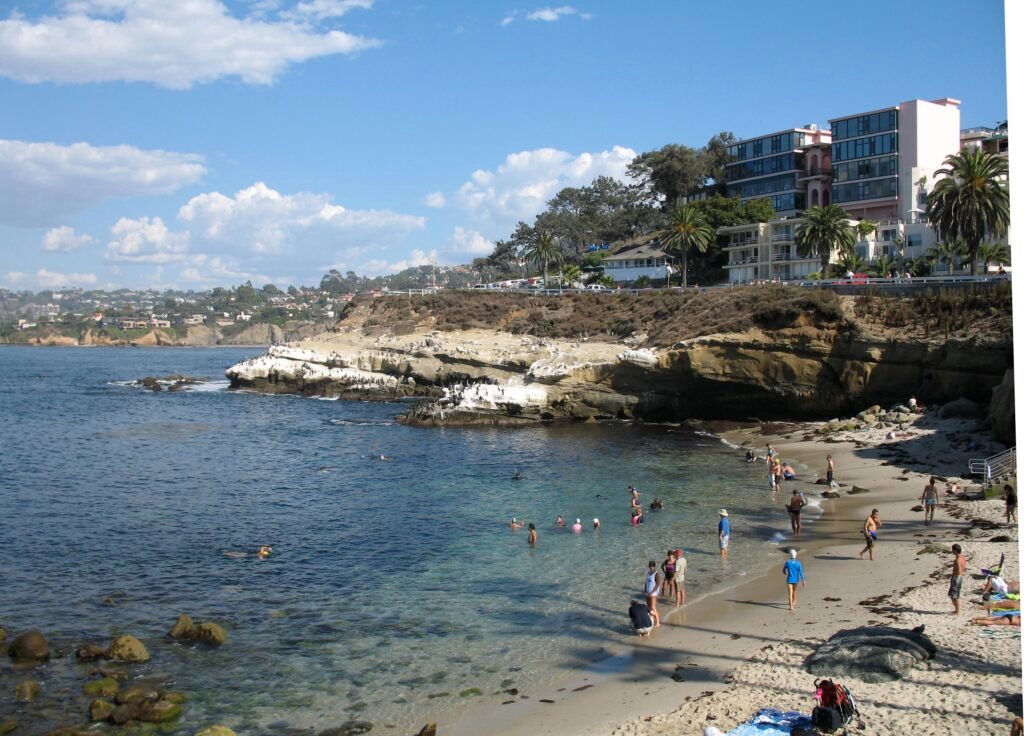
A car becomes more useful when the itinerary is built around Torrey Pines, Point Loma/Cabrillo, North County, or a multi-beach day. It can also save time for travelers who want to jump between several far-apart coastal areas in a short window. For the classic first-time combination of downtown, Balboa Park and Coronado, however, parking and driving are optional rather than fundamental.
Practical Walking Tips
- Base yourself downtown if your goal is to maximize walking and minimize transfers.
- Use Route 7 or Rapid 215 for Balboa Park instead of treating the downtown-to-park connector as mandatory walking.
- Use the current MTS payment option that best fits your number of rides, and check fare rules before travel.
- Plan coastal areas as separate outings. La Jolla, Coronado and the beach neighborhoods are not one continuous waterfront walk from downtown.
- Check live MTS and ferry service before setting out because events, construction and temporary detours can affect otherwise good routes.
- Wear shoes that handle both pavement and grades. Downtown is relatively easy, but Balboa Park and especially the zoo can add more climbing and steps than the map suggests.
Seasonal Walking Note
San Diego’s coastal climate makes long walking days realistic in much of the year, but comfort still changes by season. Winter carries most of the region’s rain, while late spring and early summer can begin with low coastal cloud before brighter conditions develop. On clear days, sun exposure is usually a bigger planning issue than temperature: carry water, use sun protection and build shade or indoor stops into long waterfront and Balboa Park days. Seasonal conditions mainly affect comfort and walking pace, so adjust longer outdoor routes to the weather.
Bottom Line
San Diego is a good city to visit without a car when you stop asking it to be one giant walking district. Stay in a sensible downtown base, walk Little Italy, the Embarcadero, Gaslamp and East Village, take frequent transit to Balboa Park, and choose one separate coastal outing such as Coronado or La Jolla. That approach plays to San Diego’s strengths. A rental car becomes useful only when your weekend expands into several widely separated beaches, Point Loma, Torrey Pines or North County.