
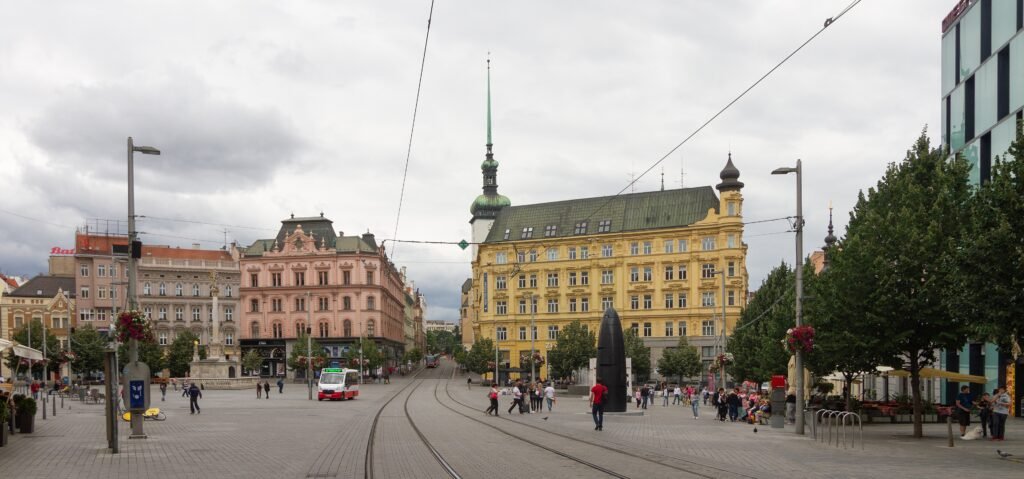
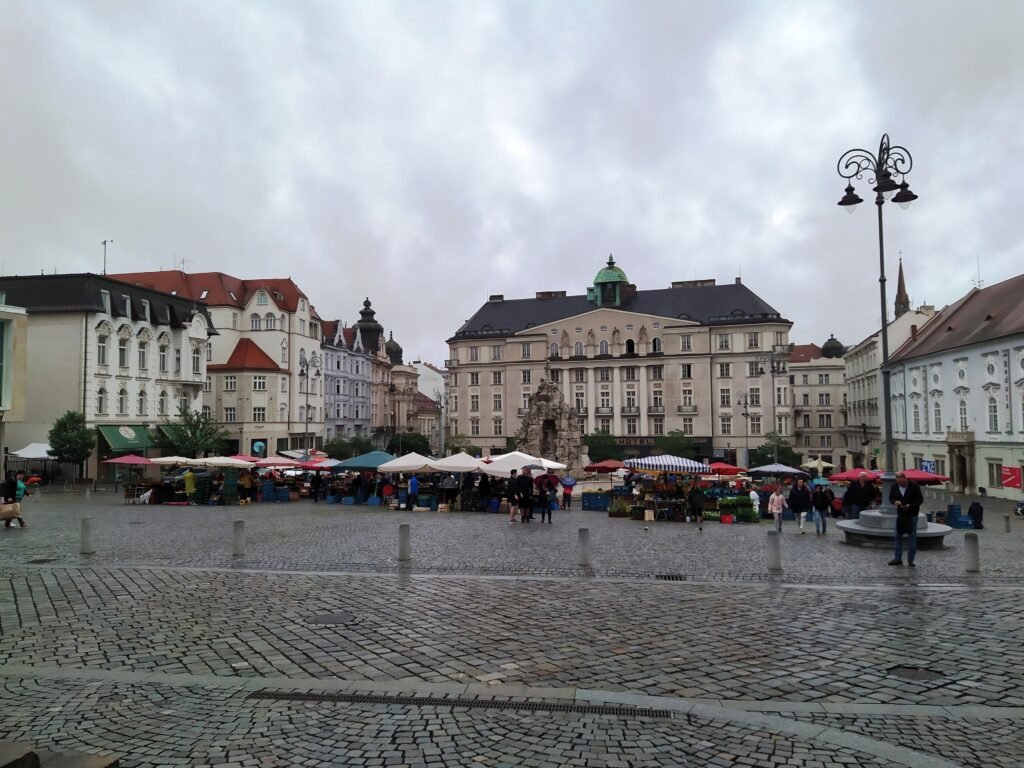
Brno compresses its strongest first-time sights into a short corridor beginning almost at the main railway station. Masarykova leads directly toward Zelný trh and Náměstí Svobody through a pedestrian-priority center where trams still run. Old Town Hall, central galleries, Petrov, and the Špilberk approaches then branch from that compact spine. The map looks flatter than the experience, because Petrov and Špilberk introduce concentrated climbs rather than citywide hills. Villa Tugendhat sits beyond this tight core, making a short tram ride more efficient for many visitors. That pattern makes Brno ideal for walking by cluster, with transit reserved for the outer extensions.
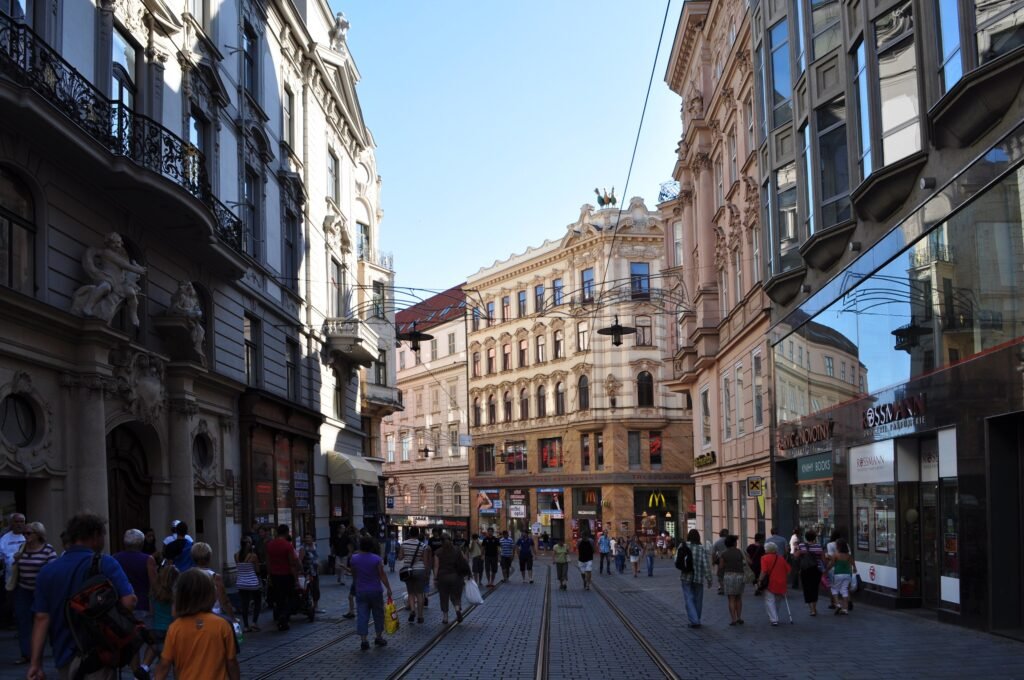
Why Brno Works Well on Foot
The strongest walking chain starts almost outside Brno hlavní nádraží. Masarykova leads straight into Zelný trh, then the Old Town opens around Náměstí Svobody, Radnická and Jakubské náměstí. General vehicle access to the historic centre requires permits, while trams continue through key pedestrian-priority streets. That combination creates unusually continuous central walking without making the centre completely traffic-free. Embedded rails, delivery access and historic paving still require attention.
Petrov and Špilberk should be read as nearby hills, not distant attractions. The cathedral remains roughly ten minutes from the main station and only minutes above Zelný trh. Špilberk rises just west of Husova and the Old Town. Their elevation makes walking harder, but it does not break the central geography. Villa Tugendhat is different: it sits far enough north to work better as a separate extension.
Best Areas to Stay for a Walking Weekend
The historic centre around Náměstí Svobody and Zelný trh gives the easiest all-day walking base. A station-facing stay on Benešova or Masarykova sharply reduces luggage friction without sacrificing Old Town access. Husova and the Šilingrovo edge balance Petrov, Špilberk and central museums particularly well. The Veveří and Moravské náměstí edges suit travelers prioritizing Lužánky or northern districts, though the market sits farther away.
Useful Walking Times
Brno hlavní nádraží to Zelný trh takes roughly 6–8 minutes. Zelný trh to Old Town Hall takes about 2–3 minutes. Old Town Hall to Náměstí Svobody takes around 4–5 minutes. Allow roughly 10–12 minutes from Náměstí Svobody to Petrov, including the final climb. Náměstí Svobody to Špilberk Castle is closer to 20–25 minutes because of the hill. From Dětská nemocnice, Villa Tugendhat is about a ten-minute walk.
These are practical planning estimates rather than guaranteed walking times.
A 2-Day Walking Route
The first route demonstrates how little repositioning the historic core needs. On the second day, one tram ride saves low-value mileage before a long southbound walk through Brno’s northern and western extensions.
Day 1: Main Station, Old Town and Petrov
Walking route
Day 1: Main Station, Old Town and Petrov
- Brno hlavní nádraží
- Zelný trh (Vegetable Market)
- Old Town Hall
- Náměstí Svobody (Freedom Square)
- St. James Church
- Moravian Gallery – Pražák Palace
- Cathedral of St. Peter and Paul (Petrov)
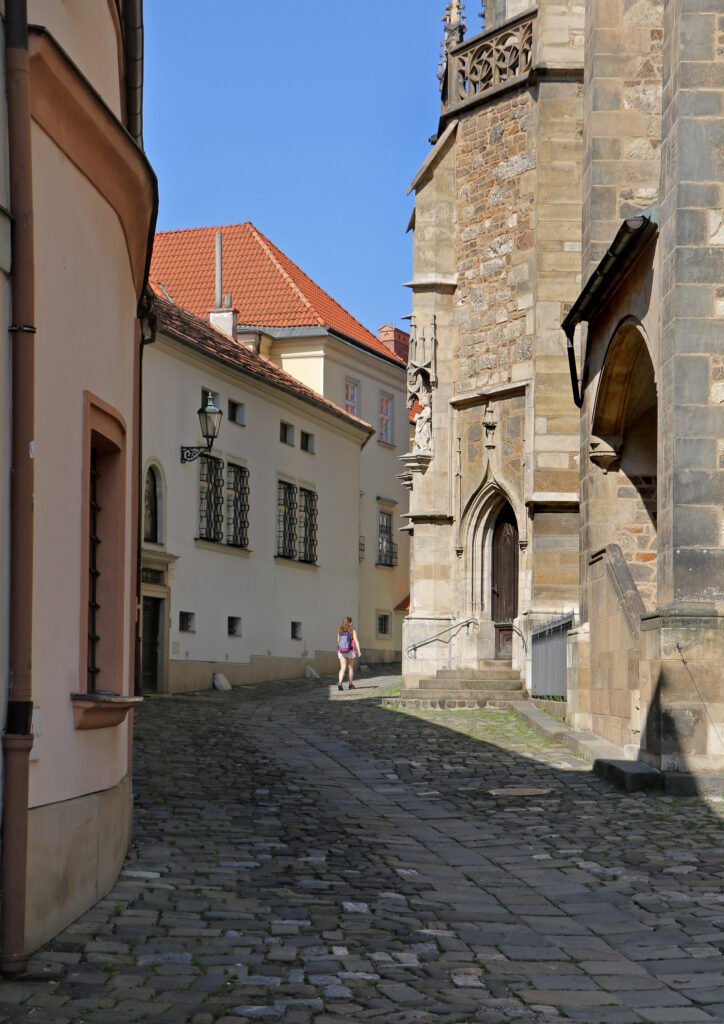
Start at Brno hlavní nádraží and follow Masarykova toward Zelný trh. Old Town Hall sits just beyond the market, followed naturally by Náměstí Svobody and St. James Church. Continue west to Pražák Palace, then finish at Petrov rather than climbing early and descending twice. This sequence keeps the short central legs together and saves the day’s main uphill effort for the end.
Day 2: Villa Tugendhat, Lužánky, Špilberk and Mendel
Walking route
Day 2: Villa Tugendhat, Lužánky, Špilberk and Mendel
- Dětská nemocnice tram stop
- Villa Tugendhat
- Lužánky Park
- Moravské náměstí
- Špilberk Castle
- Mendel Museum
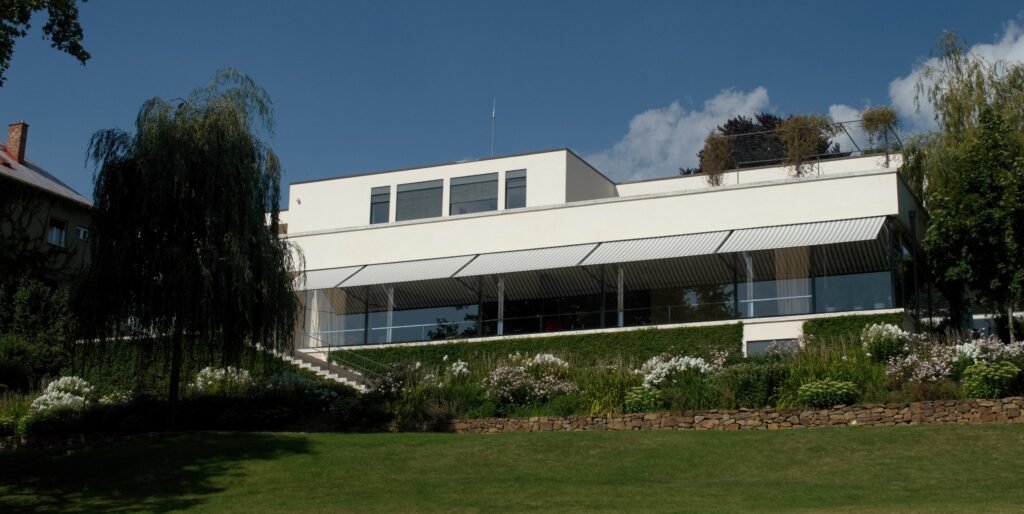
Take a short tram from Hlavní nádraží to Dětská nemocnice, then walk about ten minutes to Villa Tugendhat. Continue through Lužánky toward Moravské náměstí instead of returning north. From there, cross the central-western edge and climb through Špilberk Park to the castle. Descend toward Mendlovo náměstí and finish at the Mendel Museum, where transit makes the return easy.
When Transit Is Better Than Walking
Transit is most valuable when a walk adds distance without adding much sightseeing. Villa Tugendhat is the clearest example, especially before a longer second-day route. Mendlovo náměstí and the exhibition grounds also have strong tram access. Brno Reservoir belongs in a separate leisure outing, not an extension of the Old Town walk. Service changes can affect outer routes, so check current DPMB information when planning the reservoir or other western extensions.
Contactless validators and Brno’s integrated ticketing system make occasional tram and bus use straightforward. Night services also provide useful coverage after normal daytime routes thin out. Check current DPMB fares, validation rules and operating times before travel.
Arriving in Brno Without a Car
Rail is one of Brno’s strongest arrival advantages. Hlavní nádraží sits immediately beside the visitor core, so many central hotels and first sights need no onward transit. Direct rail links connect Brno with Prague, Vienna, Bratislava and other major Central European cities. Check current railway timetables for your travel date.
Brno–Tuřany Airport also has public transport into the city, while travelers using larger regional airports can continue to Brno by rail or coach. Check current airport routes and schedules rather than relying on seasonal destination lists.
When a Car Helps
A private car adds little to the standard Brno weekend. Moravian Karst and Macocha, Lednice–Valtice, and Slavkov/Austerlitz are separate regional excursions with different transport calculations. Brno Reservoir remains reachable by public transport and does not require a car. A vehicle becomes more useful when combining several rural or regional destinations on one day, rather than for central Brno itself.
Walking Limitations and Practical Tips
Watch tram tracks on Masarykova, Zelný trh and Náměstí Svobody, where pedestrian activity shares space with operating trams. Cobbles and stone paving can slow rolling luggage or mobility aids. Petrov is a short climb, while Špilberk demands a longer uphill section through park approaches. Villa Tugendhat interiors require advance planning, so reserve before building the second day around a timed visit.
Temporary traffic changes and construction can occasionally affect central streets or outer tram routes. Check current DPMB notices if your plans depend on the reservoir, western districts or a particular connection.
Seasonal Walking Note
Summer heat can make Petrov and Špilberk climbs feel harder, while winter ice can make historic paving more demanding. Rain also changes grip on stone surfaces. These conditions change walking comfort rather than the distances between Brno’s main sights. In any season, a short tram hop can preserve energy without changing the logic of the walking itinerary.
Bottom Line
Brno packs an unusually useful first-time walking network between its main station, market squares, central museums, Petrov and Špilberk. The important exceptions are easy to understand: hills add effort, while Villa Tugendhat and the reservoir sit outside the tightest core. With trams handling those extensions and rail arrivals landing beside the Old Town, a two-day visit works naturally without a private car.