
A map can make Portugal’s city breaks look deceptively similar. In practice, Braga feels easy until Bom Jesus changes the scale. Guimarães compresses medieval sights into a few streets, while Porto stacks equally close attractions above the Douro. Lisbon asks for deliberate transit between central walks and outer districts. Évora keeps most headline sights inside its walls. Coimbra packs Baixa and Alta close together, then turns that short distance into a serious climb. Walking time, elevation, station location and transit therefore matter more than simple map distance.
Portugal’s Six-City Ranking
| Rank | City | Walkable Weekend score | Strongest advantage | Main limitation |
|---|---|---|---|---|
| 1 | Braga | 86/100 | Balanced central walking, useful transit and convenient car-free arrival | Bom Jesus sits outside the core and adds a distinct climb |
| 2 | Guimarães | 85/100 | Tiny medieval core with very short sightseeing walks | Less transit depth beyond the center; Penha remains an outer elevation |
| 2 | Porto | 85/100 | Dense central sights plus strong major-city transit | Severe vertical effort between the upper city and the Douro |
| 4 | Lisbon | 84/100 | Strong transit supports several rewarding walking districts | Repeated hills and separated outer clusters such as Belém |
| 5 | Évora | 82/100 | Exceptionally compact walled-center sightseeing | Shallower transit depth and a railway station outside the walls |
| 6 | Coimbra | 81/100 | Tight historic footprint between Baixa and Alta | The Baixa–Alta climb and a final connection from Coimbra-B |
Guimarães and Porto are tied at 85/100, so the next position shown is fourth. The ranking focuses specifically on a short first-time visit built around walking and useful public transport; it is not a ranking of food, nightlife, architecture, affordability or everyday residential life.
Why Braga Narrowly Leads
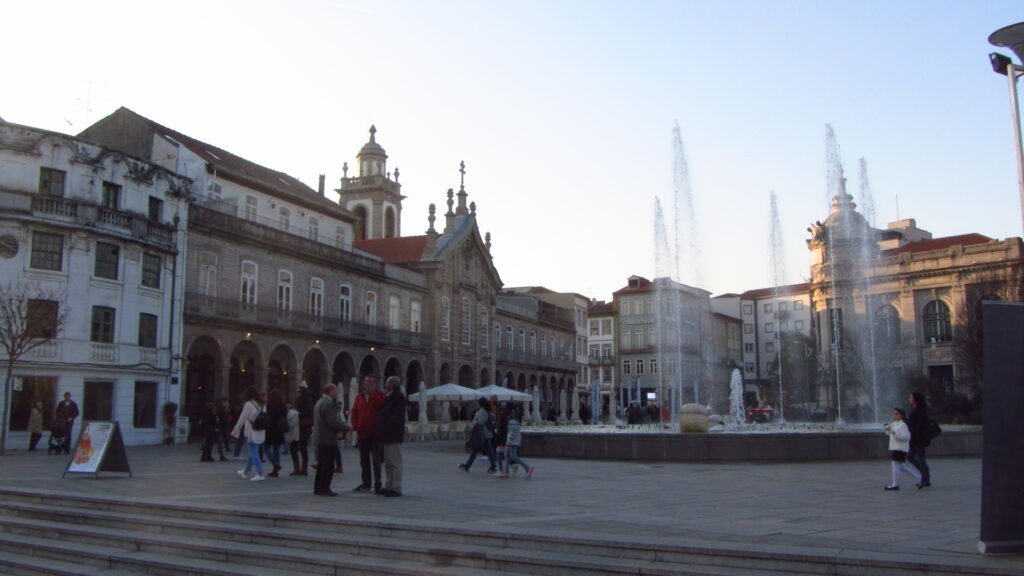
Braga’s advantage is balance rather than the smallest sightseeing footprint. Praça da República, Avenida Central, Rua do Souto and the cathedral area form an easy central chain. The railway station also feeds that core conveniently, so arrival does not create a difficult opening transfer. Central walking rarely requires a strategic transit ride just to keep the day moving.
Bom Jesus prevents Braga from becoming a simple “everything is walkable” story. The sanctuary sits outside the historic core, and the climb changes the physical character of the visit. TUB buses and the funicular can make the extension practical without making it geographically central or flattening the hill. Sameiro pushes the outer geography farther again.
That combination makes Braga unusually balanced for a two- or three-day car-free stay. Its center is manageable on foot, arrival is straightforward, and public transport covers the main outer extension without dominating the weekend.
Guimarães and Porto: Same Score, Opposite Walking Days
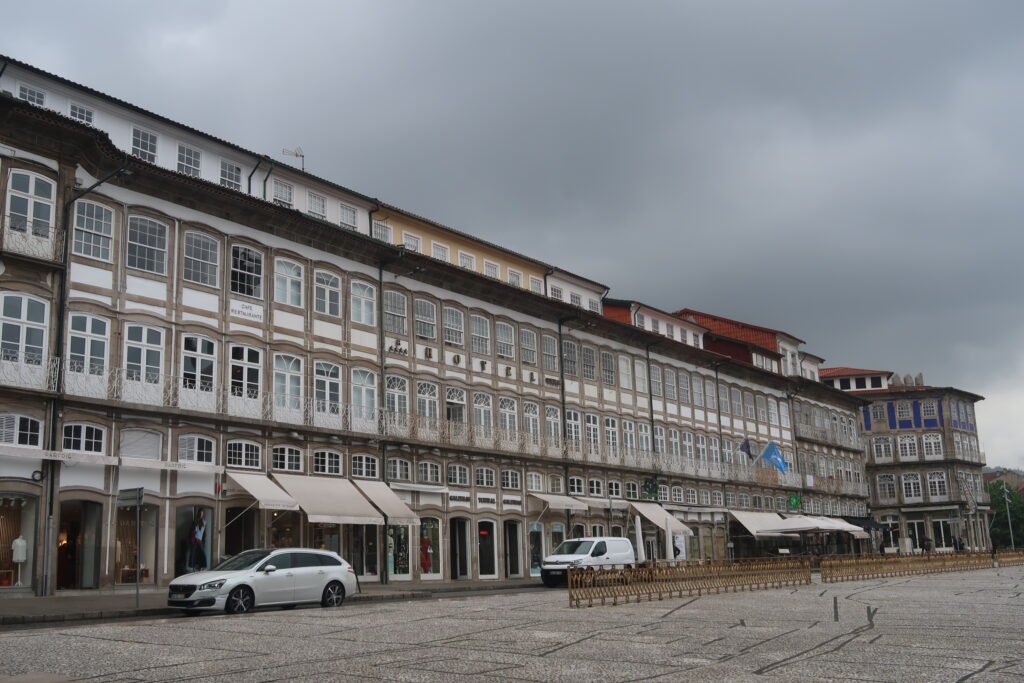
Guimarães earns its side of the tie by shrinking the medieval visitor day into a remarkably small area. Largo da Oliveira, Praça de Santiago, Rua de Santa Maria and the castle-palace zone sit close enough for sightseeing to flow naturally. Granite paving and modest elevation add some friction, but the central walk is far less vertically punishing than Porto’s.
Once that medieval core ends, Guimarães has fewer high-capacity transit options to lean on. Penha is a genuine outer attraction, and the cable car reduces effort without moving the hill into the center. Travelers who want to minimize urban transit can still cover most headline sights before needing a vehicle connection.
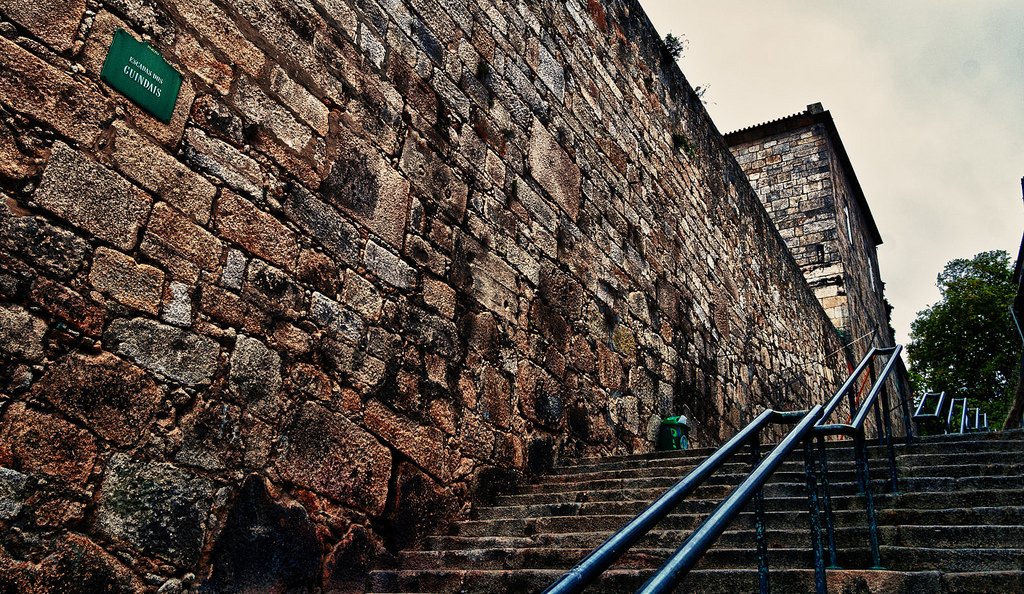
Porto reaches the same total from the other direction. Ribeira, São Bento, Clérigos, Aliados and the Dom Luís I crossing create extraordinary central concentration. Yet the city repeatedly stacks those places above or below one another, so stairs, cobbles and steep grades turn short map distances into harder walking. The Douro is not an automatic barrier because the bridge gives pedestrians a strong connection to visitor-relevant Gaia.
Transit is where Porto compensates. Metro and STCP become genuinely useful for Campanhã, the airport, Boavista, Serralves, Foz and other extensions beyond the dense historic core. Guimarães needs less transit during central sightseeing but offers less depth once you leave it. Porto asks more from your legs and gives more transport back. Neither profile breaks the tie.
Compare Guimarães in detail with Porto’s hill-aware walking and transit plan to see why the identical score feels so different on the ground.
Lisbon: A Bigger Walking Day Built Around Transit
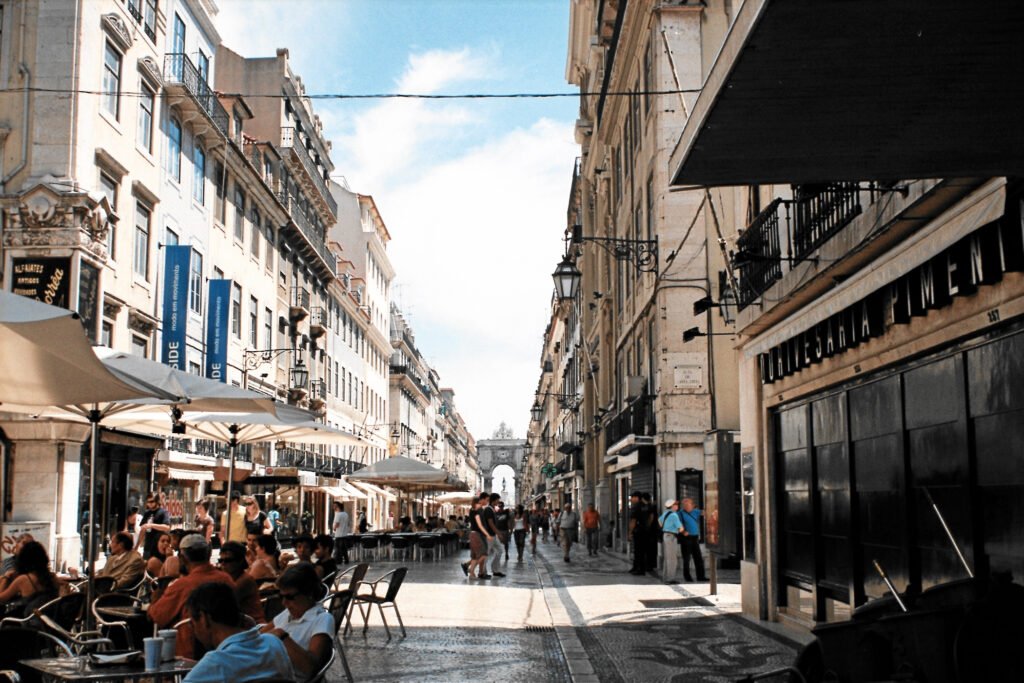
Lisbon works because its central districts connect into several strong walking sequences rather than one tiny pedestrian core. Baixa, Chiado, Carmo, Alfama and lower Bairro Alto approaches can be combined efficiently, especially when the route avoids unnecessary repeated climbing. The river-level parts of Baixa and Cais do Sodré also provide useful flatter stretches between hillier sections.
The limitation is cumulative effort. Calçada, stairs, tram interfaces and repeated elevation changes make a day feel harder than the map suggests. Castelo de São Jorge is still geographically central despite its climb. Belém, by contrast, is a real outer cluster and should stay separate from central compactness even when tram or rail makes the transfer easy.
Strong transit is why Lisbon remains so practical despite its size and terrain. Metro, trams, buses and rail let visitors walk the best connected districts, then skip low-value mileage between clusters. Airport Metro access is a major car-free advantage, although many central stays still involve a transfer. Read the Lisbon walkability guide for route ordering and the Belém extension.
Évora and Coimbra: Compact Does Not Mean the Same Thing
Évora is compact in the most literal way. Praça do Giraldo, Rua 5 de Outubro, the cathedral, Roman Temple and surrounding historic streets sit inside one coherent walled center. The gates and continuous streets keep the walls from functioning as a meaningful pedestrian barrier. Central gradients and historic surfaces add some effort, but nothing like Porto’s or Coimbra’s repeated climbing.
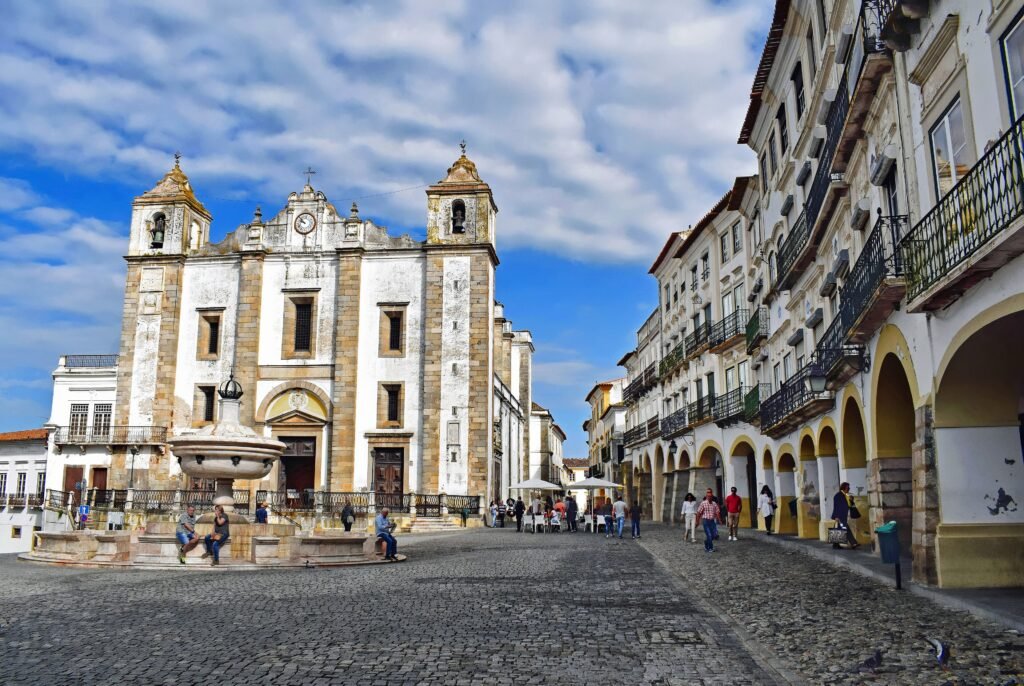
Its fifth-place position therefore does not come from a spread-out center. The difference appears when visitors need transit beyond the walls or arrive by rail. Local coverage is useful but thinner than in the larger cities, and Évora railway station sits outside the walled core. Regional sites such as Cromeleque dos Almendres also remain separate from the city’s compact pedestrian geography.
Coimbra flips the problem. Praça 8 de Maio, Rua Ferreira Borges, Almedina, Sé Velha and the University occupy a very small horizontal footprint. The climb from Baixa toward Alta changes that footprint into a serious physical test through steep streets and stairs. A staircase can be direct and geographically efficient while still demanding much more effort.
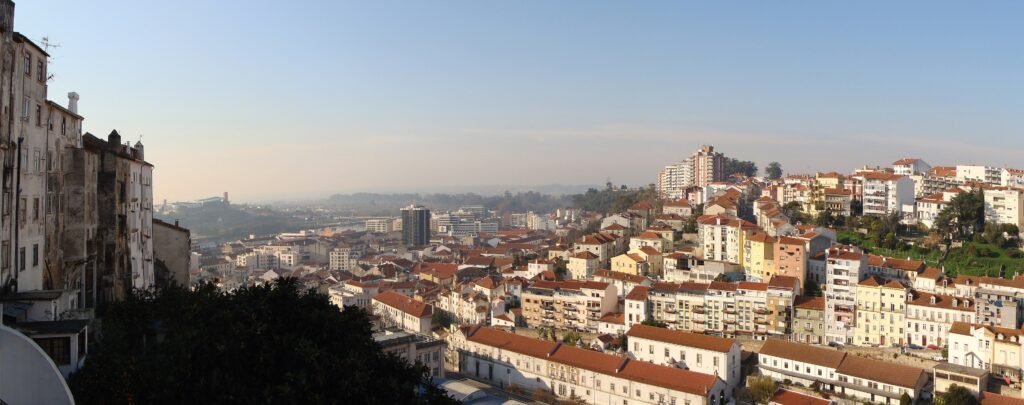
Arrival adds another layer. Long-distance rail uses Coimbra-B, not a station opening directly into the historic center. Local transport around Coimbra has been changing as Metro Mondego develops, so visitors should check the current network before travel rather than relying on older route assumptions. For the complete ascent and arrival strategy, see the Coimbra walking guide. The Évora guide covers the contrasting walled-center pattern.
Where the Hills Actually Change the Weekend
Porto, Lisbon and Coimbra make the clearest case that compactness and effort are different questions. Porto’s attractions are densely packed around the river and upper city, but elevation repeatedly interrupts an otherwise short route. Lisbon spreads the climbing across several central districts. Coimbra concentrates much of its difficulty into the decisive Baixa-to-Alta ascent.
Braga, Guimarães and Évora are generally kinder inside their central visitor zones. Braga’s hardest climb is geographically concentrated at Bom Jesus. Guimarães keeps most medieval sightseeing on modest grades before Penha. Évora’s main historic loop stays comparatively manageable inside the walls. Vertical transport can save energy in several cities, but it never makes the underlying terrain flat.
Rivers, Walls and the Shape of the Walk
Physical features only matter when they actually disrupt pedestrian movement. Porto’s Douro looks like a dividing line, yet Dom Luís I Bridge keeps the visitor riverfront connected on foot. Évora’s walls look restrictive on a map, but gates and continuous streets preserve a coherent center. Coimbra’s Mondego sits beside a relatively manageable lower-city walk, while the decisive challenge rises inland toward Alta. Lisbon likewise offers useful flatter movement along the river before streets climb toward older hillside districts.
When Transit Is Worth Using
Braga mainly needs transit when the weekend leaves the center for Bom Jesus or Sameiro. Guimarães can keep central sightseeing almost entirely on foot, then use transport for Penha or outer areas. Porto and Lisbon benefit most from a deliberate walk-within-clusters strategy, using transit for airports, stations and separated districts. Évora rarely needs transit for the central sights, but its local network matters more for arrival and outer movements.
Coimbra is the most transitional case. The city is compact enough to reward walking, yet arrival and elevation make selective transport useful. Because local services and infrastructure are still evolving, check current Metro Mondego and SMTUC information before travel. Temporary closures of lifts or other vertical connections can also change the easiest route on a particular day.
Arriving Without a Car: The Station Can Matter as Much as the Train
Braga benefits from a railway station that relates practically to the historic center. Guimarães also offers a manageable rail-to-core arrival. Porto is more complicated because Campanhã handles important long-distance services while São Bento sits dramatically inside the visitor core. Lisbon combines strong airport Metro access with transfers that vary by hotel location.
Évora’s station is outside the walls, so the final approach matters even though intercity rail works well. Coimbra requires the clearest last-mile planning because long-distance trains use Coimbra-B. A frequent train can therefore produce a less convenient walking arrival than a slightly weaker service ending closer to the sights.
Which Portuguese City Fits Your Walking Style?
| Traveler priority | Best match | Why it fits |
|---|---|---|
| Best overall balance for a walking-first weekend | Braga | A manageable center, useful outer-area transit and convenient arrival create few weak points. |
| Ultra-compact medieval-center walking | Guimarães | Most headline sights sit within a very tight central chain that needs little transit. |
| Compact sightseeing with major-city transit | Porto | Dense historic sights combine with strong transit once steep central walking or outer districts become inefficient. |
| Central walking plus transit-supported outer districts | Lisbon | Strong connected central walks pair naturally with Metro, tram and rail to separated clusters. |
| Compact walled-city walking | Évora | Most central sightseeing stays inside one coherent historic zone with little need for local transit. |
| Steep university-city walking | Coimbra | Short horizontal distances reward walkers who accept the sustained Baixa-to-Alta climb. |
| Lower-effort central terrain | Braga, Guimarães and Évora | Their main central visitor zones are generally less punishing than Porto, Lisbon or Coimbra. |
| Minimize transit during sightseeing | Guimarães or Évora | Both concentrate headline attractions tightly enough that central sightseeing rarely depends on transit. |
These categories describe different travel styles rather than changing the overall ranking. Guimarães and Porto remain tied at 85/100, despite offering very different experiences on foot.
Bottom Line
Braga combines compact central walking, manageable terrain and useful transport with relatively few compromises. Guimarães and Porto reach the same score through very different experiences: one concentrates medieval sightseeing into a tiny core, while the other pairs dense attractions with much steeper terrain and stronger transit. Lisbon works best with selective transport between walking districts, Évora keeps sightseeing unusually concentrated inside its walls, and Coimbra rewards careful route planning around the Baixa–Alta climb. The practical difference between these cities is less about raw distance than how much elevation, transit and arrival planning each weekend requires.