
By Marc Jerrard | Walking in Circles UK
I’ve walked hundreds of miles around London over the years, exploring its streets, parks, bridges and hidden corners. I’ve also led groups on some fairly ambitious walking challenges, including the London Monopoly Challenge and the Thames Bridges Challenge.
Yet one of the things I love most about London is that, however many times I walk through it, I still discover something new.
Of course, London’s famous landmarks are worth visiting. But some of my favourite discoveries have happened completely by accident, somewhere between one attraction and the next.
And that’s what makes exploring London on foot so special.
Every bridge tells a different story
Take the River Thames. I’ve walked routes crossing many of its bridges, and what always strikes me is how each one has its own personality.
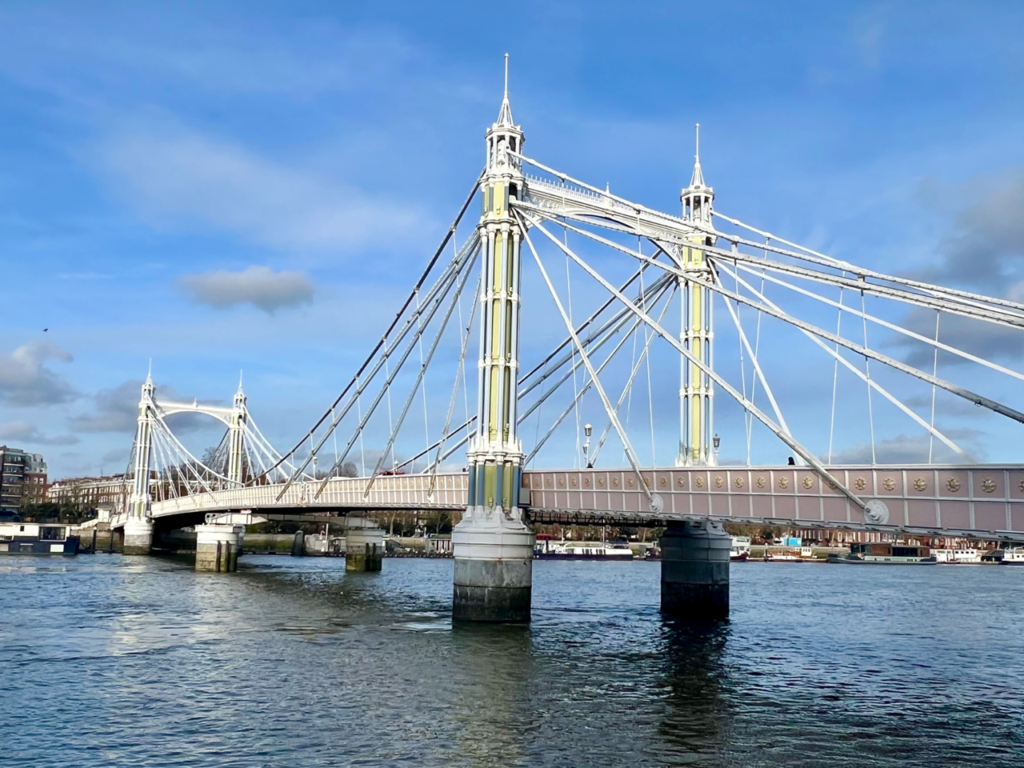
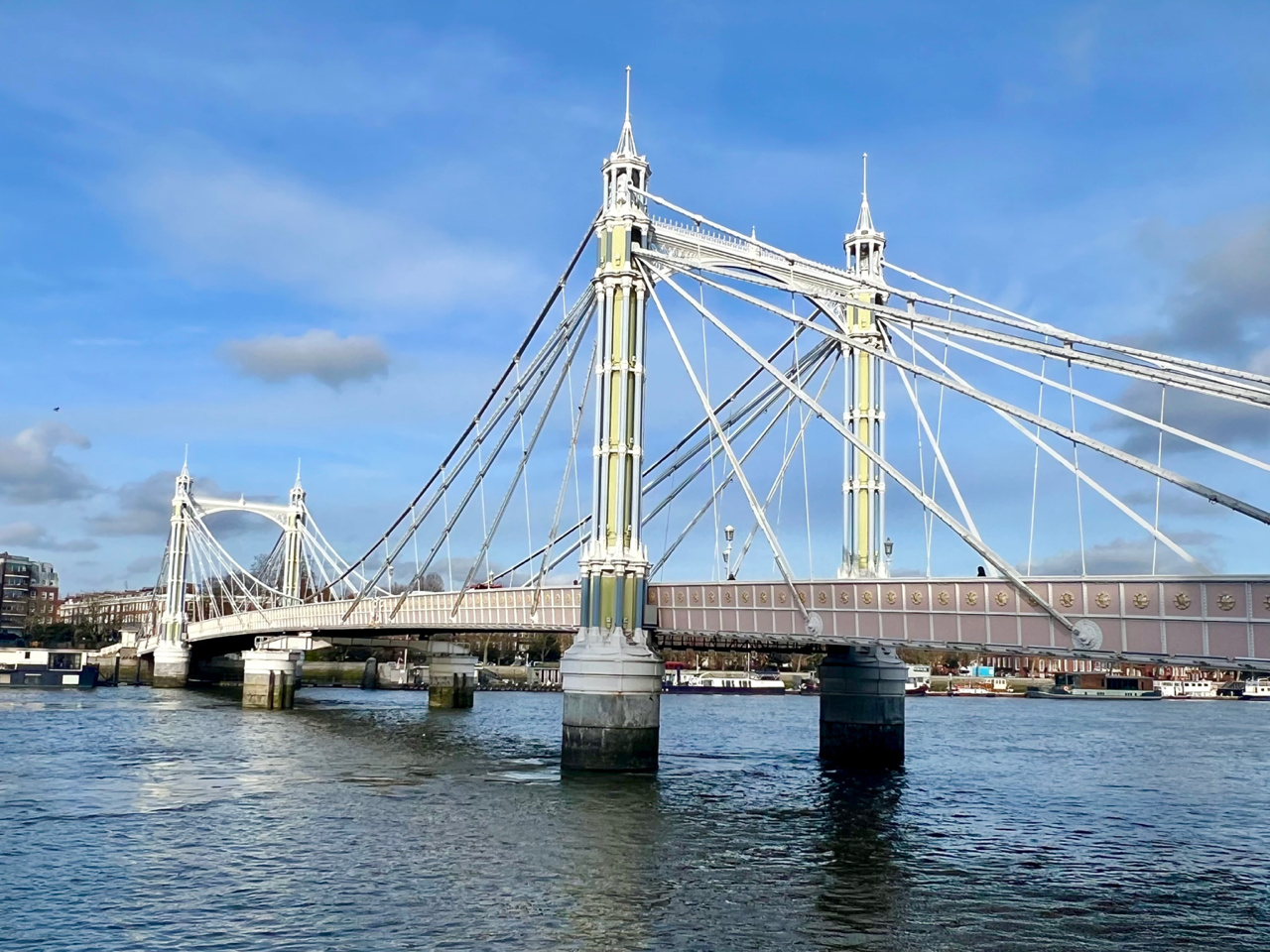
Albert Bridge, with its elegant design and decorative lights, is one of my favourites. Cross it into Battersea Park and you’ll discover the London Peace Pagoda, a beautiful and rather unexpected sight beside the river.
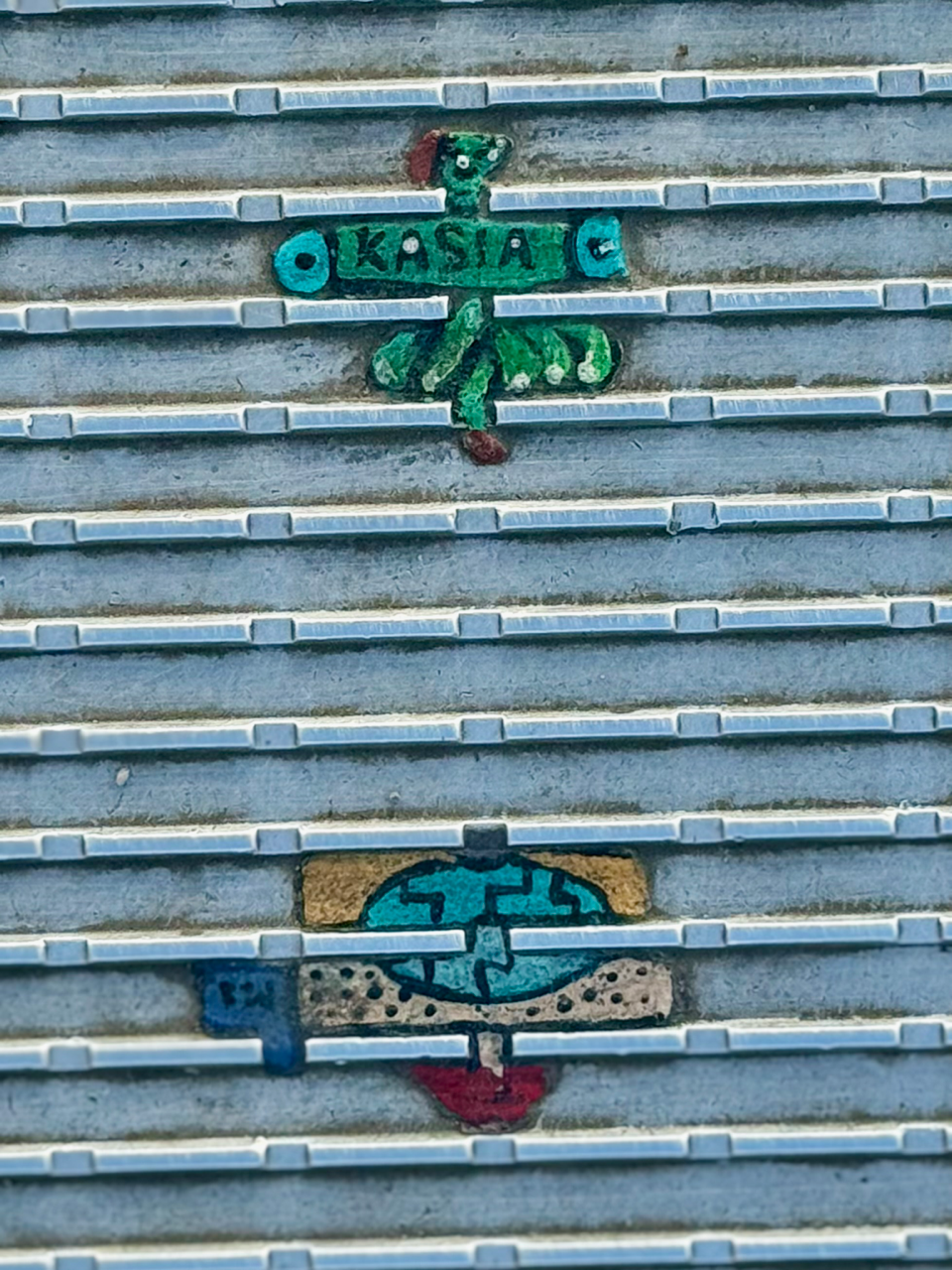
Then there’s the Millennium Bridge. Most people are looking towards St Paul’s Cathedral or back towards Tate Modern. But look down and you might spot something extraordinary: tiny works of art created from discarded chewing gum on the bridge’s surface. These miniature paintings, associated with artist Ben Wilson, can change or disappear over time as the bridge is maintained.
Cross Lambeth Bridge towards Westminster and another little gem awaits in Victoria Tower Gardens, where you’ll find the Emmeline Pankhurst memorial, a reminder of the fight for women’s suffrage.
What I love about these walks is that every crossing reveals something different. Sometimes it’s a spectacular view. Other times, it’s something you’d never have thought to look for.
London’s wonderfully strange street names
Another thing I’ve noticed, particularly when walking through the older parts of the City, is just how unusual some of London’s street names are.
Bleeding Heart Yard, Crutched Friars, Knightrider Street, Mincing Lane, Hanging Sword Alley, Pudding Lane and Turnagain Lane. You couldn’t invent some of them!
Many reflect London’s medieval history, from ancient trades and religious communities to forgotten landmarks and local legends.
I’ve seen people on walks stop simply to photograph a street sign. Quite often, it sparks a conversation about what the name might mean or what happened there centuries ago.
It’s a small thing, but that’s exactly my point. You don’t always need a famous attraction to find something interesting.
The surprises you almost walk past
One of my favourite examples is the Wonderpass near Baker Street.
From the outside, it’s simply a pedestrian underpass beneath the busy Marylebone Road. But step inside and you’re greeted by bold red-and-white spirals, curious little display cabinets and fascinating snippets of local history. It’s almost like stumbling across a miniature museum underground.
I love the idea that something as ordinary as crossing a road can become an experience in itself.
And then there’s London’s canals.
Walk along Regent’s Canal and suddenly the atmosphere changes. The traffic and crowds give way to narrowboats, waterside cafés, old industrial buildings and quieter stretches of the city.
It’s a completely different perspective of London, yet you’re often only a short distance from some of its busiest streets.
It’s not just about getting from A to B
When I’m planning a walking route, I naturally think about the places I want people to see. But I’ve learned that the stretches between those places can be just as memorable.
On my Monopoly walks, for example, we’re following a route connecting familiar names from the board game. But the real experience is everything we encounter along the way.
Sometimes it’s an unusual building, a hidden garden or a quirky street name. Sometimes it’s simply stopping to appreciate a view that everyone else seems to be rushing past.
And even when I’ve walked a route several times before, someone in the group will occasionally spot something I’ve missed.
That’s one of the pleasures of walking with other people. Everyone notices something different.
So if you’re visiting London for a weekend, by all means see Buckingham Palace, Big Ben, Tower Bridge and the other famous sights.
But don’t be afraid to wander a little.
Cross a different bridge. Follow a canal. Look up at the buildings, down at the pavement, and occasionally behind you.
Because some of London’s best discoveries aren’t the places you set out to visit.
They’re the ones you find along the way.
A note for weekend visitors
Walkable Weekend editor’s note. Marc’s discoveries are spread across different parts of London, rather than forming one short continuous route. For a weekend visit, choose a manageable area—such as Albert Bridge and Battersea Park, the Millennium Bridge and nearby riverside streets, or Baker Street and a section of Regent’s Canal. Check access and current towpath notices before setting out. For practical routes, transport and car-free arrival advice, see our London walking guide.
About the author
Marc Jerrard is the founder of Walking in Circles UK, where he shares walking routes, hiking challenges and adventures across the UK and beyond. He regularly leads group walks around London, including the London Monopoly Challenge and Thames Bridges Challenge, encouraging others to discover the unexpected pleasures of exploring on foot.