
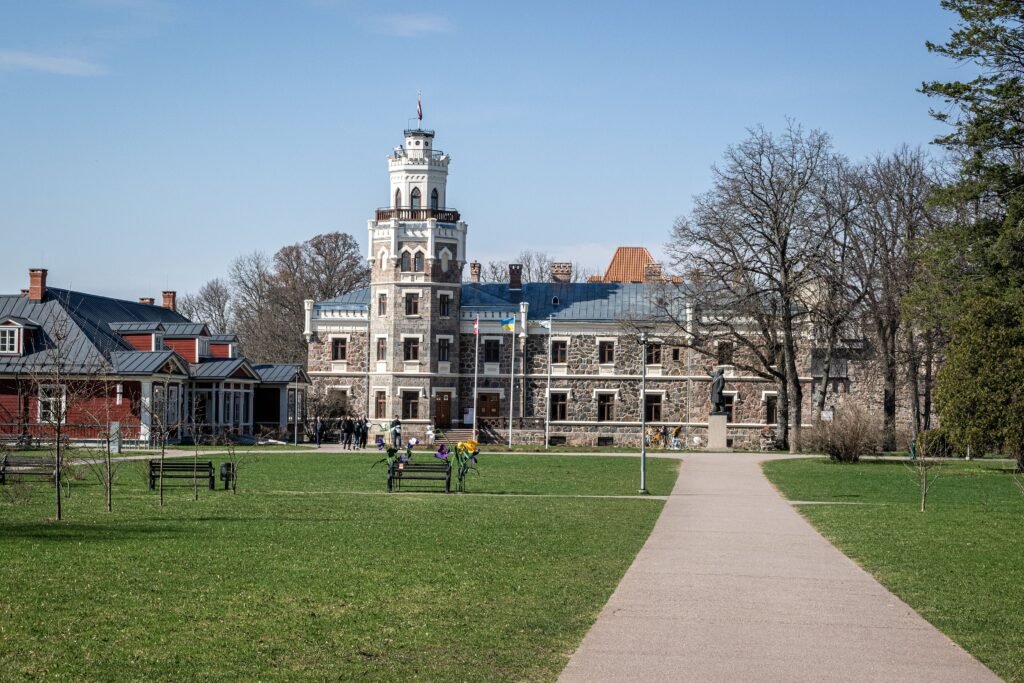

The Gauja River has carved an unusually deep division through Sigulda’s visitor map. The railway station sits on the gentler town side, where Pils iela leads toward the two Sigulda castles. The cable-car station also occupies this upper plateau, but its crossing reaches Krimulda on the opposite ridge. From there, paths drop toward the cave and rise again toward Turaida. Distances viewed across the valley conceal descents, detours and substantial climbs. A weekend itinerary should therefore distinguish the straightforward castle-quarter walk from a separate hill-and-forest excursion. This distinction matters most when daylight is short or mobility is limited.
The Town Center Is Walkable; the Valley Is a Different Journey
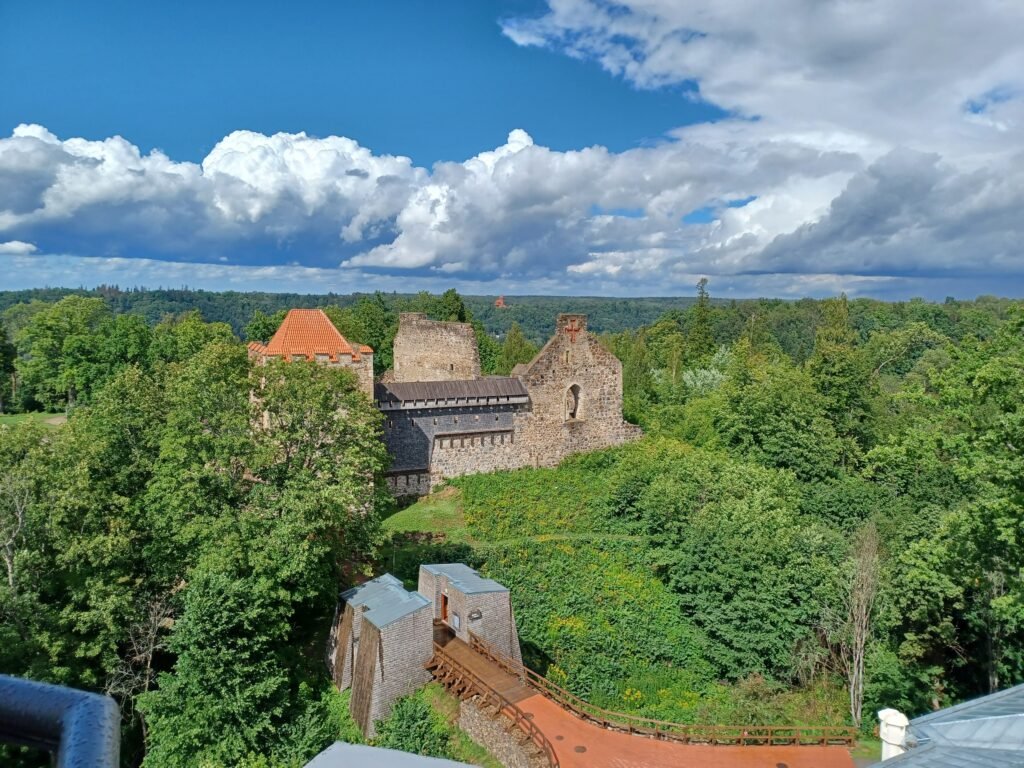
Sigulda’s practical town route begins at Station Square. Raiņa iela and Pils iela lead toward parks, the castle quarter and nearby cafés. The New Castle and Livonian Order castle ruins are neighbors, so visiting both does not require a separate trip. The cable-car terminal is another upper-town stop within this general area. These paths are much more manageable than the forest descents below the ridge.
Do not use the castles’ visibility from one another as proof of easy pedestrian access. Krimulda sits beyond the Gauja crossing. Gutman’s Cave is lower in the valley, while Turaida Castle stands farther uphill. The Turaida Museum Reserve says it is about 5 km from central Sigulda. The actual route may involve forest paths, marked road crossings and slopes rather than five flat city-center kilometers. Check the museum’s transport guidance before setting out.
The Three Separate Valley Clusters
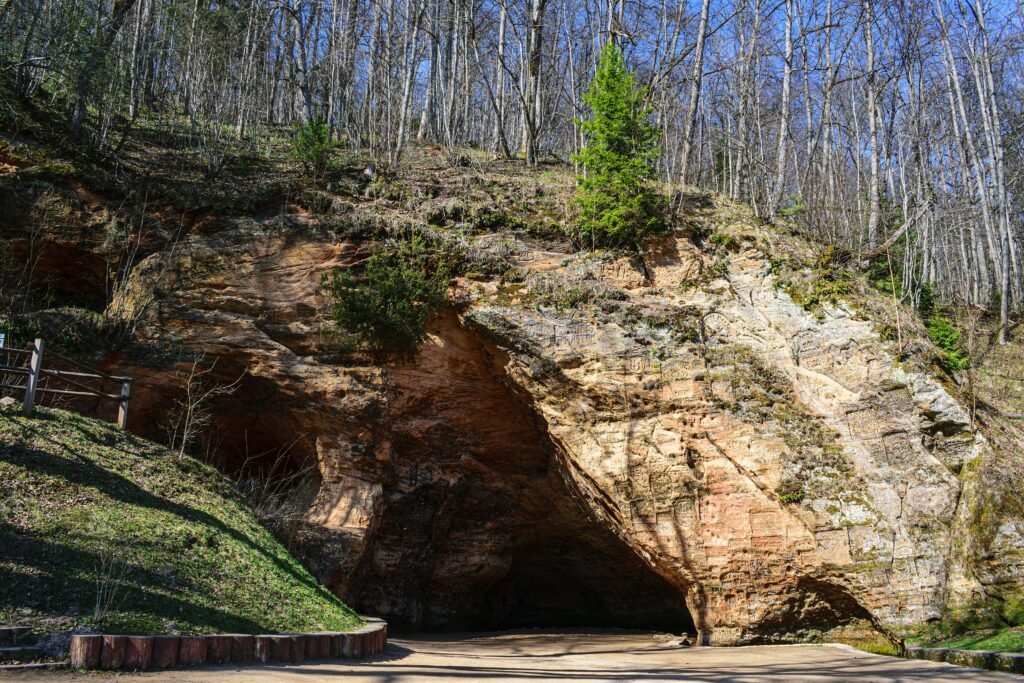
Gutman’s Cave is a sandstone grotto near Turaidas iela, at the valley floor. It can be visited independently, but walking there from the town requires a descent or a suitable roadside approach. Krimulda Manor and its castle ruins occupy the opposite upper ridge. The cable car gets you across the river; it does not transport you to the cave entrance or onward to Turaida.
Turaida Museum Reserve is a larger destination with a hilltop medieval castle, museum exhibits and Dainu Hill. The cave-to-Turaida circuit published by Sigulda tourism is about 6 km as a full loop. Its steep ravines, natural surfaces and wooden stairs make it a hike. This is fundamentally different from walking between shops and sights on Pils iela. See the official Turaida trail map.
How Long Do Walks Between Sigulda Sights Take?
The estimates below are for route planning, not live navigation. They assume ordinary walking where practical; steep sections may take much longer. The river and valley topography make straight-line measurements misleading.
Railway station → Walking-Stick Park: 12–18 min / about 1 km; Mostly town sidewalks and paths. Railway station → Sigulda Castle Quarter: 20–25 min / about 1.6–1.9 km; Paved town route; allow extra time with luggage. Station → Sigulda cable-car terminal: 15–22 min / about 1.3–1.6 km; Upper-town streets; does not enter the valley. Sigulda cable-car crossing → Krimulda: 20–30 min departure intervals; 1,020 m crossing; Timetable and ticket required, separate from walking.
Castle quarter → Gutman’s Cave: 35–55+ min / roughly 2.5–3.5 km by walking route; Valley descent and crossing choice; stairs or grades. Station → Gutman’s Cave: 40–60+ min / roughly 3–4 km; Not an ordinary flat town stroll. Gutman’s Cave → Turaida Museum Reserve: 40–70+ min / roughly 2.5–3.5 km, path-dependent; Uphill sections; the official 6 km circular hike is longer. Town center → Turaida Museum Reserve: About 5 km; 65–100+ min walking; Museum-published distance; climbs and exact path affect time. Krimulda Manor → Gutman’s Cave: 25–45+ min, trail-dependent; Steep descent on a serpentine/stair route.
These time bands are conservative editorial estimates informed by official visitor geography. They are not measured turn-by-turn routes. The best path can change with closures, weather and trail conditions. If walking effort is important, use a route map and confirm access before committing to a valley crossing.
Where to Stay in Sigulda Without a Car
Near Sigulda railway station and Station Square: the best base for train arrivals, everyday services and scheduled regional buses. It also avoids starting every day with a long luggage carry. Along Pils iela or around the castle quarter: useful for sightseeing and upper-valley views, with a longer walk to the rail and bus platforms. Near Raiņa iela and the central parks: a sensible compromise between transport and the castles.
Krimulda and rural valley-side stays: better for travelers prioritizing quiet or hiking, but much less forgiving after the cable car closes. A lodging address that appears close to Sigulda on a map may sit across a steep valley. Check road access, check-in times and the actual last transport option before booking.
A Realistic Two-Day Sigulda Weekend
Day 1: Station, Central Parks and the Two Sigulda Castles
Start at the railway station and follow the town streets toward Walking-Stick Park. Walk to the Sigulda cable-car terminal for views over the Gauja valley without committing to a crossing. Continue to Sigulda New Castle, where the restored rooms and castle-quarter workshops add a compact cultural stop. Finish at the neighboring medieval castle ruins and their viewpoints. Return to the center for dinner using the town streets, not a valley trail.
Walking route
Railway Station, Walking-Stick Park and Sigulda Castle Quarter
- Sigulda railway station and bus station
- Raiņa iela, central Sigulda
- Walking-Stick Park
- Sigulda cable car upper station
- Sigulda New Castle
- Sigulda Medieval Castle
Allow about 2.5–3.5 km for the mapped town-side route, excluding time inside attractions. The sites are close enough for an unhurried day. Both Sigulda castles currently advertise shorter November–April hours, generally closing at 17:00. Confirm special-day arrangements on the official castle page.
Day 2: Krimulda, Gutman’s Cave and Turaida — With Real Climbing
For a physically demanding day, take the cable car from Sigulda to Krimulda first. Walk to Krimulda Manor and its nearby medieval ruins. Descend by the serpentine route toward Gutman’s Cave, watching for wet steps and uneven ground. Continue toward Turaida Castle only if you are prepared for the climb and have checked a proper walking route. The official cave-to-Turaida circuit includes ravines, stairs and unmarked sections.
Walking route
Krimulda ridge, Gutman’s Cave and Turaida castle — strenuous option
- Krimulda cable car station
- Krimulda Manor
- Krimulda Castle ruins
- Krimulda serpentine path
- Gutman’s Cave
- Vikmeste Valley trail approach
- Turaida Museum Reserve
- Turaida Castle tower
- Dainu Hill (Hill of Folksongs)
- Turaida bus stop
The mapped route begins after the cable crossing and ends at the Turaida bus stop. Neither transport leg is a walking shortcut. Budget about 6–9 km of walking after the crossing, depending on your trail choices. This is a strenuous outing, not a casual urban afternoon. Allow two to three or more hours moving, plus substantial museum time. Check daylight and reserve energy for the last climb.
Lower-effort Day 2 alternative: use bus 3112 from Sigulda bus station to Turaida. Explore the museum, then take a correctly timed bus toward GNP for access toward Gutman’s Cave. Return to town by bus if the departures work. This skips the Krimulda ridge and long forest climbs. Do not assume that every stop operates every weekend or that a bus runs after the museum closes.
Cable Car: Useful Connection, Not a Full Sightseeing Network
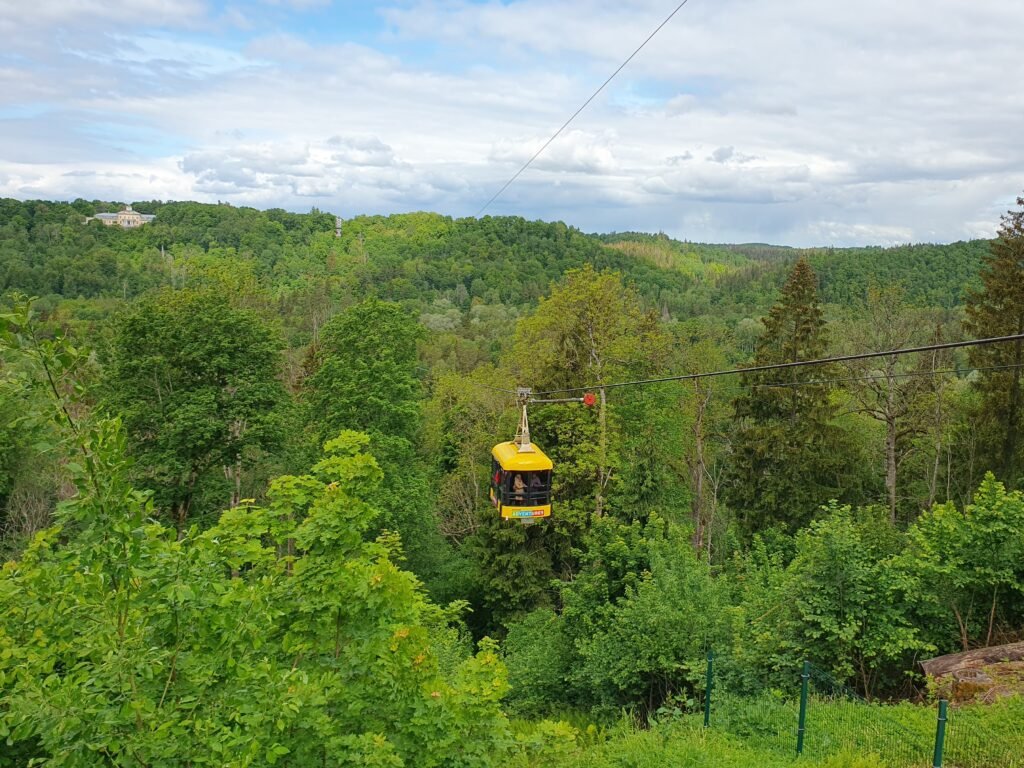
The Sigulda–Krimulda cable car crosses 1,020 meters of the Gauja valley. The operator advertises departures about every 20–30 minutes, with a paid one-way option. Its published regular hours are approximately 10:00–17:00 from November through April and later during warmer months. Special dates and peak-autumn ticket rules may differ. The cable car saves a difficult river-valley transfer, but its Krimulda end remains far from Turaida Castle. Check the operator’s latest schedule and fares.
A one-way crossing makes sense if you are walking onward through Krimulda. A return ticket is more suitable for a viewpoint outing, but it still involves queuing and disembarking at the far station. The car does not run late into the evening. Treat it as an optional paid transport link rather than proof that the separate sights are close on foot.
Buses and Arriving From Riga Without a Car
Vivi trains connect Riga with Sigulda and arrive directly in the town center. The railway station and bus station sit close together, which makes a car unnecessary for arrival. Several services operate daily, but departure times vary. Vivi states that an updated Sigulda-line timetable took effect October 5, 2026. Check the current Vivi timetable rather than relying on a fixed departure printed in a travel blog.
Regional bus 3112 serves the Sigulda–Turaida–Krimulda corridor, including the GNP stop used for valley access. It can remove the least rewarding road miles, but the departures are too sparse for casual hop-on, hop-off travel. Weekend and Sunday patterns differ. The municipality’s public transport page names the route and links travelers to current timetable providers. Check the return trip before boarding outward.
From Riga Airport, you must first reach the Riga rail or intercity-bus network. This adds a connection and luggage handling to the journey. From central Riga, direct train arrival at Sigulda is much easier. The main station makes the town a credible car-free weekend base, even though getting between its outer sights still requires planning.
Sidewalks, Stairs and Mobility Limitations
Sigulda’s central paths are easier to follow than its forest trails. Paved approaches, park paths and town crossings support the station-to-castle visit. Beyond the ridge, official routes mix gravel, dirt, forest roads and wooden staircases. The primeval valley reaches roughly 85 meters deep. Footing can be uneven, and a route that looks short may demand a long descent followed by another steep ascent.
Travelers using wheelchairs, walkers or strollers should not assume the cave-to-Krimulda or cave-to-Turaida trails are step-free. Turaida Museum Reserve reports partial accessibility, particularly at the manor complex and visitor center. This does not establish accessible access to every tower, hill path or viewpoint. Confirm individual facilities directly and consider bus or taxi transfers between separated sites.
Autumn Colors, Winter Ice and Trail Conditions
Autumn foliage is a major reason to visit Sigulda, especially along the Gauja viewpoints. It also concentrates visitors around castle viewpoints and cable-car queues. Wet leaves, mud and rain can make natural trails and wooden steps slippery. Plan longer moving times rather than assuming that a postcard view means a simple walk.
In winter, ice, snow, short daylight and closed or hazardous steps can change what is sensible. A castle-quarter visit may remain easy while a valley hike becomes unsafe for ordinary sightseeing shoes. Official hiking guidance favors April–October for the longer routes and warns about slippery stairs. Check park alerts, museum hours and transport on the specific travel date. The seasonal risk is a planning constraint, not a reason to treat the permanent hills as flat.
When Would a Car Help?
A private car is unnecessary for Sigulda’s rail arrival and central castle district. Local bus 3112 and the cable car can also support a well-planned trip to selected outer sights. A car becomes more convenient for remote countryside accommodation, multiple time-sensitive Gauja-area stops or limited-mobility trips that cannot use steep trails. It does not solve access restrictions inside historic grounds and forest reserves.
The Bottom Line
Choose Sigulda for a car-free town-and-castles day plus a separate valley day matched to your fitness. Stay near the station or Pils iela. Use the cable car and regional buses deliberately, and keep a flexible alternative for rain or ice. The dramatic Gauja terrain makes this an excellent walking and hiking destination, but not a uniformly easy pedestrian city.