
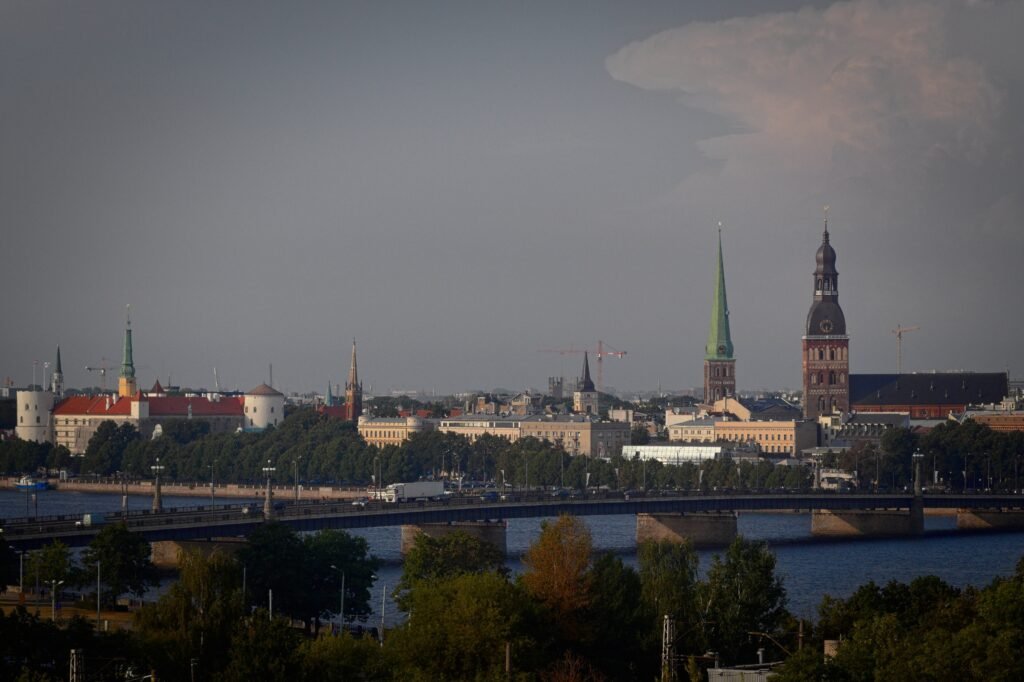

Riga’s medieval lanes meet canal parks and Art Nouveau avenues within a relatively connected central sightseeing area. Jūrmala’s coastline extends well beyond its walkable Majori–Dzintari core. Cēsis and Kuldīga gather heritage sights closely, although their historic surfaces add effort. Liepāja links central culture with a beach, while Karosta stands apart. Sigulda’s castle quarter is easy to approach, but the wider Gauja Valley demands real climbs and trail walking. These six destinations show why pleasant paths, compact attractions and useful public transport are not interchangeable. The choice depends on whether visitors want urban variety, a quiet historic core, coastal walks or a deliberate hiking weekend.
This comparison covers six independently assessed Latvian destinations: Riga, Jūrmala, Cēsis, Liepāja, Kuldīga and Sigulda. It does not claim to rank every destination in Latvia. Each destination has a separate Walkable Weekend city guide for more detailed routes, transport information and walking limitations.
Six Latvian Destinations Ranked for a Walking Weekend
Riga leads these six independent destination assessments. Jūrmala and Liepāja are tied for second place, followed by Cēsis, Kuldīga and Sigulda. A higher total does not always mean a smaller historic center or fewer steps. These rankings cover the six assessed destinations, not every place in Latvia.
| Rank | Destination | Walkable Weekend score | Strongest walking advantage | Main walking limitation |
|---|---|---|---|---|
| 1 | Riga | 89/100 | Old Town, canal parks, Central Market and nearby Art Nouveau streets connect into a varied central walk. | Cobblestones, crowded crossings and more distant neighborhoods mean not every sight belongs to one continuous route. |
| 2 (tie) | Jūrmala | 77/100 | The Majori–Dzintari resort core puts pedestrian Jomas Street, beaches and park paths close together. | The 25-kilometer shoreline extends far beyond a compact walking center; resorts and excursions span multiple rail stops. |
| 2 (tie) | Liepāja | 77/100 | Rose Square, Great Amber, the Trade Canal Promenade, Seaside Park and the beach offer a workable central-to-coast walking sequence. | Karosta Prison, its military district and Northern Forts form a separate northern visitor cluster. |
| 4 | Cēsis | 74/100 | Castle Square, Cēsis Medieval Castle, St. John’s Church and the old town cluster closely. | Castle slopes, old paving and Gauja National Park trails make a broader weekend more demanding. |
| 5 | Kuldīga | 69/100 | Alekšupīte, old town streets, the brick bridge and Venta Rapid fit into a concentrated heritage walk. | Historic paving, small slopes and limited transport constrain some visitors and longer regional outings. |
| 6 | Sigulda | 56/100 | The station-to-castle-quarter town walk is manageable and offers immediate access to scenic viewpoints. | Gauja Valley slopes, stairs and trails separate Gutmanis Cave, Krimulda and Turaida from an effortless urban circuit. |
The two second-place destinations offer different weekends. Jūrmala is flat and resort-oriented but elongated; Liepāja connects an urban center to the beach, with Karosta requiring a separate trip. Kuldīga has one of the tightest heritage cores, yet limited transit and indirect arrival reduce its overall car-free practicality.
How the Six Latvian Destinations Feel on Foot
The central question is not simply whether walking is enjoyable. It is whether a first-time visitor can move between the principal sights without repeated transfers or exhausting detours. A connected sightseeing district differs from a scenic coastal walk or a network of hiking trails.
Riga
Walking advantage: Old Town, canal parks, Central Market and nearby Art Nouveau streets connect into a varied central walk. Main limitation: Cobblestones, crowded crossings and more distant neighborhoods mean not every sight belongs to one continuous route. Central Old Town to Alberta iela takes roughly 10–15 minutes; allow extra time for wandering and crossings.
Jūrmala
Walking advantage: The Majori–Dzintari resort core puts pedestrian Jomas Street, beaches and park paths close together. Main limitation: The 25-kilometer shoreline extends far beyond a compact walking center; resorts and excursions span multiple rail stops. Jomas pedestrian street is about 1.1 kilometers; use coastal trains rather than treating the whole shore as a single route.
Cēsis
Walking advantage: Castle Square, Cēsis Medieval Castle, St. John’s Church and the old town cluster closely. Main limitation: Castle slopes, old paving and Gauja National Park trails make a broader weekend more demanding. The main castle and church sights cluster in short historic-center walks; forest outings are separate.
Liepāja
Walking advantage: Rose Square, Great Amber, the Trade Canal Promenade, Seaside Park and the beach offer a workable central-to-coast walking sequence. Main limitation: Karosta Prison, its military district and Northern Forts form a separate northern visitor cluster. Central sights and beach fit into a leisurely walking day; Karosta is better approached by bus.
Kuldīga
Walking advantage: Alekšupīte, old town streets, the brick bridge and Venta Rapid fit into a concentrated heritage walk. Main limitation: Historic paving, small slopes and limited transport constrain some visitors and longer regional outings. Old town sights and the Venta riverfront are close enough to combine in one unhurried outing.
Sigulda
Walking advantage: The station-to-castle-quarter town walk is manageable and offers immediate access to scenic viewpoints. Main limitation: Gauja Valley slopes, stairs and trails separate Gutmanis Cave, Krimulda and Turaida from an effortless urban circuit. The Visit Sigulda 15-kilometer valley hike is medium to difficult; it must not be equated with town-center sightseeing.
Compact Old Towns, Long Coasts and Separate Visitor Clusters
Cēsis and Kuldīga make historic sightseeing relatively concentrated. Their medieval lanes, stone surfaces and castle or riverbank paths still introduce friction. Riga offers a much broader central itinerary, where Old Town, canal parks and Art Nouveau streets join naturally. Its larger metropolitan attractions cannot all fit inside that same walk.
Jūrmala follows an elongated coast. Jomas Street anchors a practical resort stroll, but a beach extending across many neighborhoods should not be confused with a single pedestrian sightseeing district. Liepāja’s central waterfront and beach connect more tightly. Karosta, its prison and the Northern Forts require separate planning rather than an inflated downtown walking circuit.
Sigulda poses the sharpest distinction between town walking and an outdoor excursion. A straightforward castle-quarter stroll can turn into steep ravine descents and climbs. Official hiking itineraries include gravel, wooded paths and wooden stairs; those are not equivalent to flat urban sidewalks.
Which Destination Fits a Two-Day Walking Weekend?
Riga: Day 1: medieval Old Town, canal-edge parks and Central Market. Day 2: Esplanade, Alberta iela and the Quiet Centre; use transit for farther districts. Best for: First-time visitors seeking architectural variety and a full two-day urban itinerary.
Jūrmala: Day 1: Majori station, Jomas Street, Dzintari and beach accesses. Day 2: Dubulti and its beach, reached on foot as a longer walk or by local train. Best for: Travelers who prefer easy resort promenades and want railway-supported beach exploration.
Cēsis: Day 1: old town, church, medieval castle and Castle Park. Day 2: a selected natural trail as a distinct outing with appropriate footwear and return transport. Best for: Heritage-focused travelers seeking a compact town base with optional nature.
Liepāja: Day 1: Rose Square, Great Amber and the canal Promenade. Day 2: Seaside Park and beach; bus to Karosta if prioritizing the military heritage cluster. Best for: Visitors wanting a mix of urban culture, waterfront and beach, with one optional bus excursion.
Kuldīga: Day 1: historic center, squares, Alekšupīte and Venta Rapid. Day 2: slower riverside paths or a nearby excursion planned separately. Best for: Travelers who want minimal transport after arrival and concentrate on a small heritage center.
Sigulda: Day 1: station square, town center and Sigulda castle quarter. Day 2: choose a valley hike or bus-assisted Turaida and Gutmanis Cave excursion. Best for: Active walkers who deliberately want castles plus hiking, not a level city break.
Where Public Transport Helps Most
Riga has the broadest city network, with trams, trolleybuses and buses extending beyond the central walking areas. The airport’s route 22 gives visitors a public-transport arrival option. Jūrmala’s trains serve different resort districts; the rail line is especially useful when a planned coast walk would otherwise become too long.
Liepāja’s buses and tram support local movement, but the bus is particularly valuable for reaching Karosta. Sigulda’s rail and regional buses solve arrival, while local buses can reduce the return climb from Turaida. Cēsis and Kuldīga reward visitors who choose accommodation near the historic core. Their surrounding countryside should not be assumed to have frequent urban-style transit.
Reaching These Destinations Without a Rental Car
Riga is the main international entry point, with airport buses and central train and bus stations. From Riga, Vivi trains provide useful access to Jūrmala, Sigulda and Cēsis. Liepāja has bus connections and a less frequent rail option; check the exact travel date. Kuldīga is primarily reached by intercity bus. Route schedules and transfers can change, so confirm the return trip before committing to a short weekend.
Walking Conditions and Accessibility
Riga’s Old Town and the historic cores of Cēsis and Kuldīga contain cobbles, steps or uneven surfaces. Jūrmala’s gentler resort streets do not remove the difficulty of soft sand and dune approaches. Some beaches offer improved ramp access, but conditions vary by entrance. Liepāja adds exposed coast and rougher military-district surfaces. Sigulda requires particular caution around wooded slopes, wet stairs and natural paths.
Coastal wind can make exposed routes tiring outside warm months. Autumn is attractive for Gauja scenery, but fallen leaves may hide slippery steps. Winter light and ice affect the comfort of all six destinations. Check local accessibility details and trail conditions rather than treating every scenic walking route as step-free.
Where to Stay if You Want Less Transit
Stay near Riga Old Town or the central boulevard edge for a walk-first urban visit. In Jūrmala, Majori or Dzintari keeps Jomas Street and beach routes convenient. Cēsis Old Town and central Kuldīga make short heritage visits simpler. Liepāja’s center is the best compromise between cultural streets and the seafront. In Sigulda, town-center lodging reduces ordinary transfers but not the climbing involved in valley excursions.
Bottom Line
Riga delivers the most varied urban walking itinerary. Cēsis and Kuldīga emphasize compact heritage centers, while Jūrmala specializes in resort promenades. Liepāja combines city streets with the coast, though Karosta needs a separate outing. Choose Sigulda for active valley walking rather than effortless urban sightseeing. Across these six destinations, the most useful choice depends on how much transit and physical effort you want in your two-day visit.