


Between Cēsis railway station and the medieval castle, a short walk reveals a remarkably concentrated historic town. The straight station approach gives way to irregular lanes, small squares, and centuries-old building plots around St. John’s Church. The New Castle museum and medieval ruins share a single complex, making visit time more important than distance. Yet Castle Park drops sharply below the castle plateau, adding substantial stairs to an otherwise short connection. Maija Park remains close by, while the wooded Gauja valley belongs to a different walking scale. Cīrulīši’s trailhead needs a separate approach before any forest hiking begins.

How the Historic Center Works on Foot
Cēsis Old Town preserves a medieval street layout clustered around St. John’s Church and the castle complex. Start on Rīgas iela for narrow historic streets and the Old Town Hall, then reach Rose Square without a long detour. Pils laukums contains the New Castle, home to the Cēsis History and Art Museum, and the entrance to the medieval ruins. The castle’s Western Tower and historic rooms reward a proper visit, not just an exterior photograph. The nearby visitor information center also makes orientation straightforward.
These central landmarks belong to one connected pedestrian area. They do not require a bus, and their separation is usually measured in minutes. The surface is another matter: stone paving, narrow edges and occasional vehicle access make the town less uniformly accessible than its compact map suggests. Around the castle, the slope matters more than the map distance. Official tourism information describes Castle Park as roughly 22 meters below New Castle Square, with grand dolomite steps on the main approach.
Castle Park, Maija Park and the Edge of Town
Castle Park offers a pond and garden paths below the fortifications. It is close to the museum but a distinct walking effort for anyone avoiding steps. Maija Park sits near the castle and central streets, with another pond, sculptures and family facilities. Both parks work naturally alongside a historic-center day. They should not be mistaken for the much larger forest-and-river landscape around Cēsis.
Cīrulīši Nature Trails begin at the Žagarkalns campsite, roughly four to five kilometers of street walking from the Old Town by practical access routes. Allow approximately 50–70 minutes on foot before starting a marked trail. These are estimates, not a mapped universal route or a claim that the approach has continuous park-style paths. The official marked loops measure 2.7, 3.5 and 6.2 kilometers, excluding your journey from the center. A bus or taxi is sensible when saving your energy for the forest.
Where to Stay Without a Car
Choose the Old Town or Pils laukums vicinity if your priority is the castle, museum, church and restaurants. Staying near Unity Square or along the short station-to-center corridor also works well, particularly when arriving with luggage. Cīrulīši accommodation suits travelers prioritizing woodland time, but it creates a separate daily journey to the town center. Confirm the actual street location rather than relying on a property’s broad Cēsis address.
Realistic Walking Times in Cēsis
Railway and bus stations to Rose Square: about 10–15 minutes. Reaching the castle complex from the station generally takes 12–18 minutes. Rose Square to the New Castle: roughly 4–7 minutes; the medieval castle is immediately adjoining. St. John’s Church to Castle Park’s upper access: around 5–8 minutes, before allowing time for the descent. Castle Square to Maija Park: typically 4–8 minutes on a direct street approach. These are ordinary walking estimates; cobbles, luggage, stairs and weather can increase them.
A Two-Day Walking Weekend
Day 1: Station, Old Town, Castle and Parks
Begin at Cēsis railway station, beside the main bus station, and walk toward Unity Square. Continue through Rīgas iela and its historical buildings, then reach Rose Square and St. John’s Church. From there, move directly to the New Castle’s History and Art Museum and the medieval castle entrance. Save time for the ruins and tower if their stairs fit your mobility needs. Descend into Castle Park afterward and finish at Maija Park. This order keeps the cultural sights together while leaving the final park visit flexible.
Walking route
Day 1 — rail station to the castle quarter and parks
- Cēsis railway station
- Unity Square (Vienības laukums)
- Old Town Hall (Rīgas iela 7)
- Rose Square (Rožu laukums)
- St. John's Church
- Cēsis History and Art Museum (New Castle)
- Cēsis Medieval Castle
- Cēsis Castle Park
- Maija Park
The mapped Day 1 route is a short urban chain rather than an endurance walk. If steps are difficult, skip the Castle Park descent and reach Maija Park by its upper street approaches instead. Castle and museum opening hours change by season; verify them before committing to the day’s sequence.
Day 2: Cīrulīši and the Gauja Valley
Treat the second day as a separate nature outing, not an extension of the Old Town walking loop. Check CATA routes 3005 and 3010 toward Cīrulīši, or arrange a local taxi to the Žagarkalns campsite trailhead. Bus routes serve the wider Cīrulīši district; confirm the walk from your specific stop. Choose the official 3.5-kilometer marked forest loop if conditions permit, passing views near Mirror Cliffs and Zvanu Cliffs before returning to the trail area. Follow trail signs rather than treating the map pins as a replacement for the official trail map.
Walking route
Day 2 — separate Cīrulīši forest-trail outing
- Žagarkalns campsite / Cīrulīši trail start
- Spoguļklintis (Mirror Cliffs)
- Zvanu Cliffs (Zvanu klintis)
- Žagarkalns campsite / trail finish
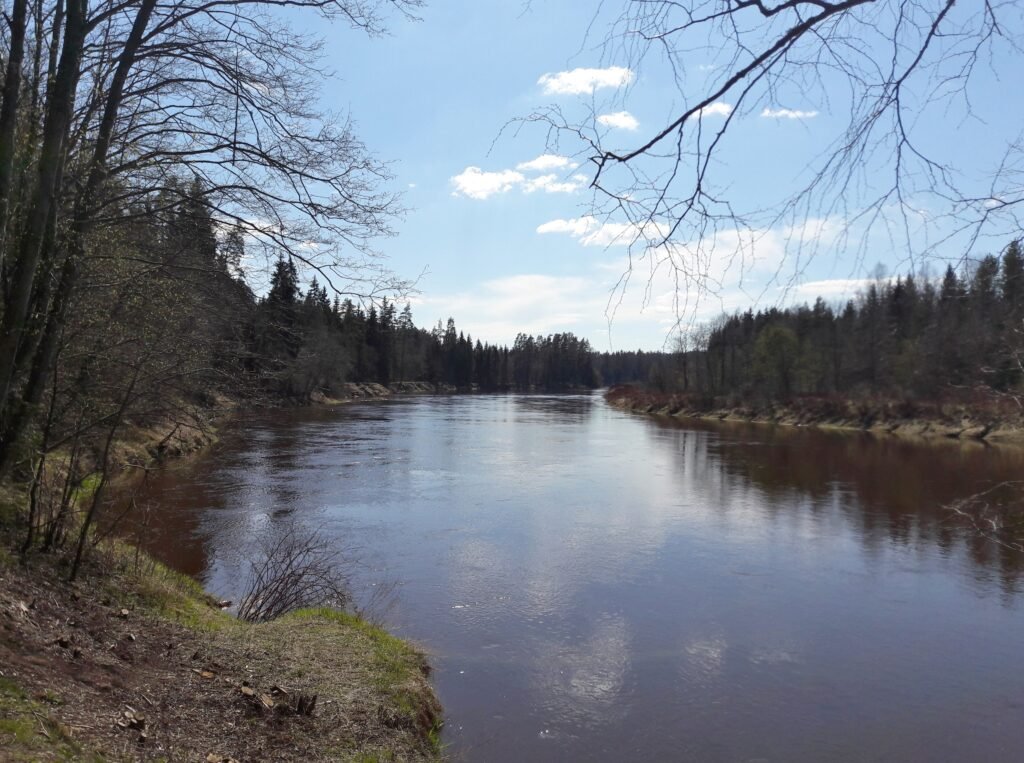
The shorter 2.7-kilometer Venden route can suit travelers wanting less time in the woods. The 6.2-kilometer option demands more time and energy. All three routes are separate from the roughly four-to-five-kilometer town-to-trailhead approach. Rooted ground, gravel, forest boards and wet slopes require proper shoes; the tourism office explicitly says the trails are unsuitable for strollers. In ice or poor light, stay in the center rather than forcing a forest hike.
Where Gauja National Park Stops Being a City Walk
The Cīrulīši trails are close enough to Cēsis for an independent half-day adventure, but they are not part of the Old Town’s walkable core. Ērgļu Cliffs lie farther outside the center and have their own viewpoints and stairways. Āraiši, the Amata valley, Līgatne and other Gauja National Park attractions also require separate journey planning. Do not combine their names on a map and assume there is a comfortable sidewalk between them.
A dedicated long-distance hiker can reach additional landscape sites on foot, but that is a different activity from a first-time two-day city break. For most visitors, choose one forest destination, then plan its access transport and return before leaving town.
Local Buses: Useful but Not a Substitute for Walking
Cēsis has local and regional buses, including routes 3005 and 3010 toward Cīrulīši. Route 5615 also appears in current local listings for the Ērgļu cliffs direction, but departure frequency requires checking. These services expand where you can visit without a car, not how close those places are to the historic center. Changes to specific 2026 weekend and evening departures make spontaneous late returns unwise. The tourism office recommends carrying cash when buying bus tickets from drivers.
Arriving from Riga and Other Latvian Cities
Direct Riga–Cēsis trains generally take around 80–110 minutes, depending on the service. The town is also served by trains on the Riga–Valmiera–Valga corridor. Direct Riga coaches usually take roughly 1 hour 45 minutes to 2 hours, with more departure choices on many days. The rail and bus terminals sit next to each other, and the castle quarter is a manageable walk away. Confirm times for your actual travel date because rail services and coach patterns vary.
International air travelers commonly arrive through Riga Airport. From the airport, reach Riga’s central transport area first, then continue on a Cēsis train or coach. There is no need to rent a car for central Cēsis, but luggage and connections make the full arrival less effortless than the short station-to-castle walk.
Accessibility, Winter and When a Car Helps
The museum lists disability access, but that designation does not make medieval tower stairs or ruined surfaces step-free. Ask the museum about specific exhibition routes if access is essential. Castle Park’s steep stair approach may also require a different street-level plan. Even outside the castle, uneven stones and narrow historical passages can slow wheelchair users, stroller users and travelers with limited balance.
Winter adds ice risk on cobbles, park stairs, woodland roots and boardwalks. Forest paths may be muddy in shoulder seasons, and daylight is short. Check the official castle opening timetable and trail conditions rather than relying on summer photographs. A car becomes useful mainly for combining scattered Gauja-region attractions or reaching rural trailheads on days with thin bus service. It offers little advantage for the compact historic center itself.
Bottom Line
Cēsis offers a genuinely compact medieval sightseeing weekend, with its principal cultural landmarks close to both arrival stations. Its impressive nature trips are a different proposition: Cīrulīši is a planned forest outing, and the wider Gauja region requires even more travel. Walk the Old Town, judge castle steps separately, and use transport deliberately for the landscapes beyond it.