
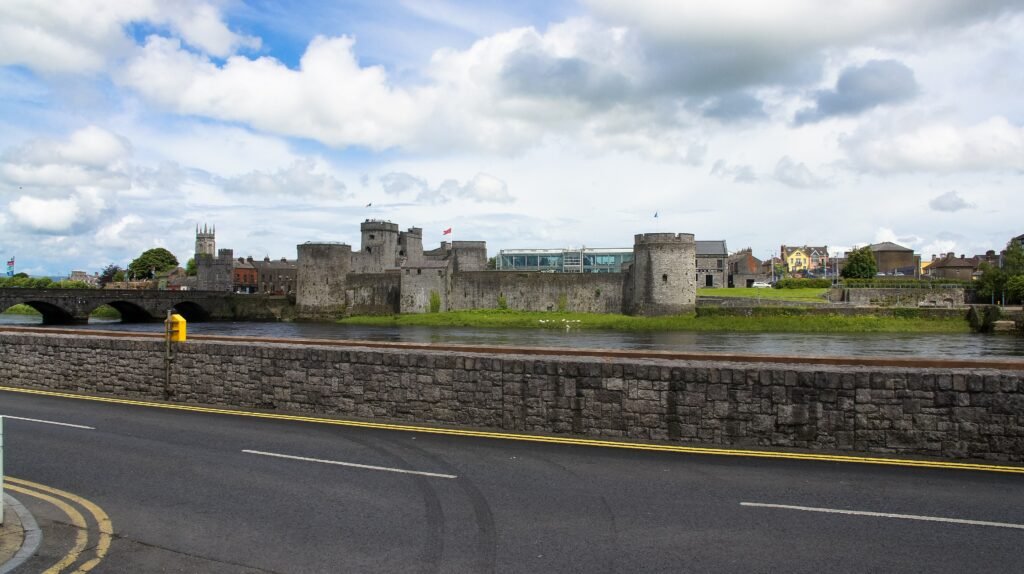
Two rivers shape the center without splitting it into isolated sightseeing districts. Mathew Bridge links the Medieval Quarter directly with the Hunt Museum and commercial streets. Southward, O’Connell Street leads naturally toward the Georgian Quarter, People’s Park, and Colbert Station. Arthur’s Quay and Bedford Row provide short cross-links between the riverfront and central shopping streets. Most headline sights therefore sit within a roughly 20-minute walking span from Colbert to King John’s Castle. The weak points are specific rather than citywide. Busy bridge approaches and some awkward crossings reduce comfort, but they rarely create serious detours.
How Limerick Fits Together on Foot
The city’s visitor geography works as one elongated central network rather than several isolated pockets. King John’s Castle and St Mary’s Cathedral sit together on King’s Island. Mathew Bridge carries you across the Abbey River toward the Hunt Museum and Arthur’s Quay. O’Connell Street then continues the walking spine south toward Pery Square, People’s Park, the City Gallery, and Colbert Station. Current visitor guidance puts Arthur’s Quay about 11 minutes from King John’s Castle and Colbert about 20 minutes from the castle.
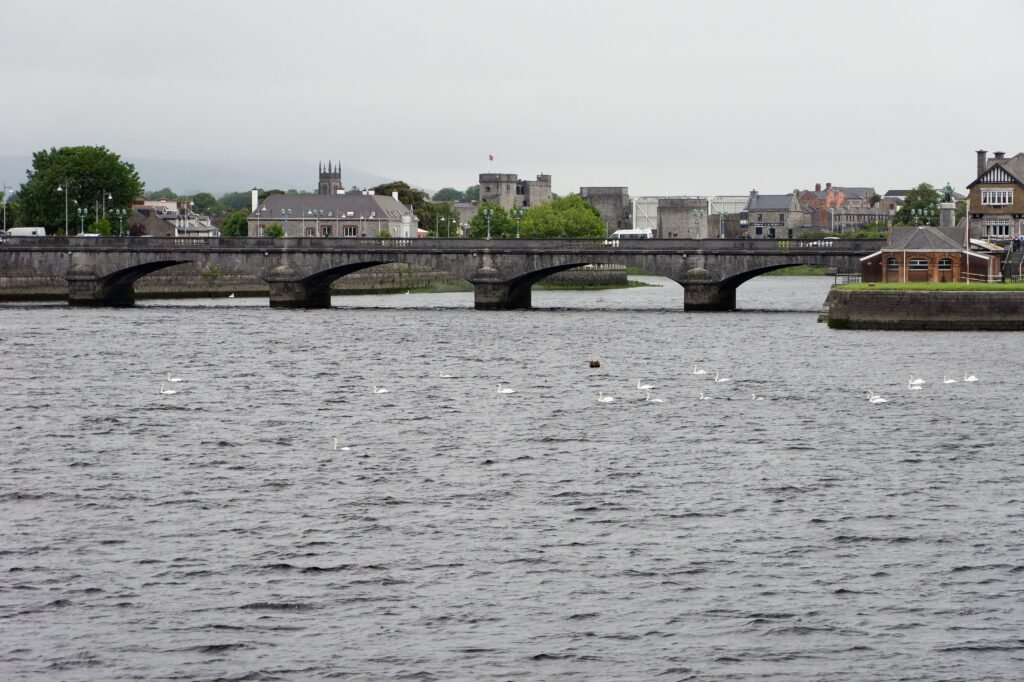
The Shannon and Abbey River shape routes, but they do not split the center. Sarsfield, Thomond, and Mathew bridges support useful loops, including the official Three Bridges Walk. The trade-off is comfort at some approaches, where traffic and crossing geometry feel less relaxed than Bedford Row or rebuilt O’Connell Street. King’s Island also has traffic-free riverside walking, so the medieval cluster remains easy to connect with the rest of a central day.
Best Areas to Stay for Walking
O’Connell Street and the commercial center: the strongest all-purpose base for short walks toward Arthur’s Quay, the Milk Market, and both historic quarters.
Pery Square and the Georgian Quarter: quieter and especially convenient for People’s Park, the City Gallery, and Colbert Station.
Medieval Quarter and the riverfront: best for King John’s Castle, St Mary’s Cathedral, and early riverside walks. Several central hotels also sit across the Shannon, with bridge access keeping the commercial core close.
Useful Walking Times
Allow about 10 minutes from Colbert Station to the city center, 12 minutes to Arthur’s Quay, and 20 minutes to King John’s Castle. Arthur’s Quay to the castle is about 11 minutes. The Hunt Museum gives roughly 15 minutes from Colbert. Thomond Park is a longer walk, around 27 minutes from the central O’Connell–Sarsfield area. The University of Limerick is about 70 minutes on foot from the center, so it works better as an optional bus trip.
These are practical planning estimates rather than guaranteed walking times. Crowds, crossings, luggage and individual pace can change the actual time.
A 2-Day Walking Route
Day 1: Medieval Quarter and Three Bridges
Walking route
Day 1: Medieval Quarter and Three Bridges loop
- King John's Castle, Nicholas Street, Limerick, Ireland
- Nicholas Street, Limerick, Ireland
- Saint Mary's Cathedral, Bridge Street, Limerick, Ireland
- Mathew Bridge, Limerick, Ireland
- The Hunt Museum, The Custom House, Rutland Street, Limerick, Ireland
- Arthur's Quay Park, Limerick, Ireland
- Sarsfield Bridge, Limerick, Ireland
- Clancy's Strand, Limerick, Ireland
- Treaty Stone, Thomondgate, Limerick, Ireland
- Thomond Bridge, Limerick, Ireland
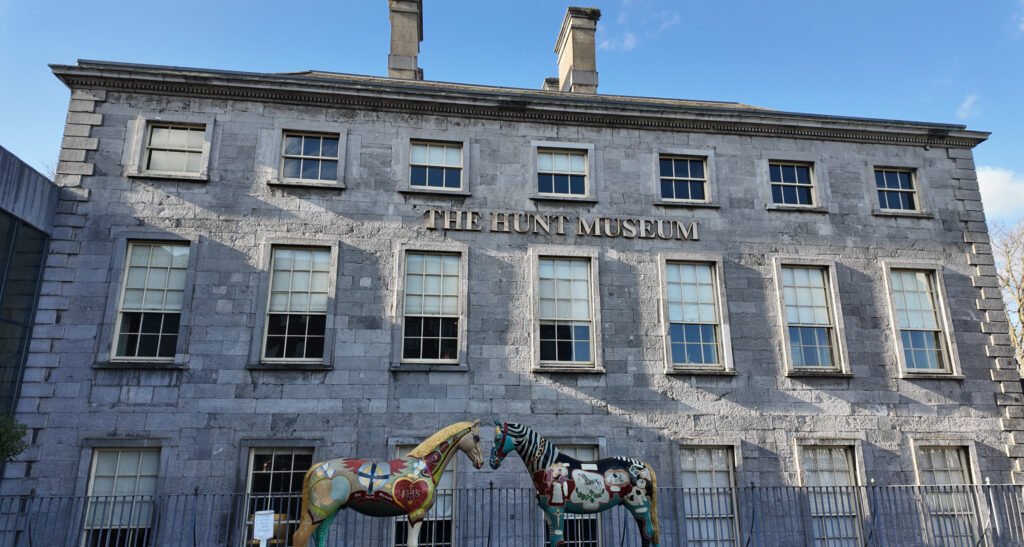
Start at King John’s Castle, then use Nicholas Street to reach St Mary’s Cathedral before crossing Mathew Bridge. Continue to the Hunt Museum and Arthur’s Quay, then cross the Shannon on Sarsfield Bridge. Follow Clancy’s Strand east to the Treaty Stone and return across Thomond Bridge. The final crossing leaves you beside the castle, turning the medieval district and waterfront into one efficient loop.
Day 2: Georgian Quarter, Market Streets and Riverfront
Walking route
Day 2: Georgian Quarter, market streets and riverfront
- Limerick Colbert Station, Parnell Street, Limerick, Ireland
- People's Park, Pery Square, Limerick, Ireland
- Limerick City Gallery of Art, Carnegie Building, Pery Square, Limerick, Ireland
- Pery Square, Limerick, Ireland
- O'Connell Street, Limerick, Ireland
- Thomas Street, Limerick, Ireland
- The Milk Market, Market House, Mungret Street, Limerick, Ireland
- Cruises Street, Limerick, Ireland
- Bedford Row, Limerick, Ireland
- Arthur's Quay Park, Limerick, Ireland
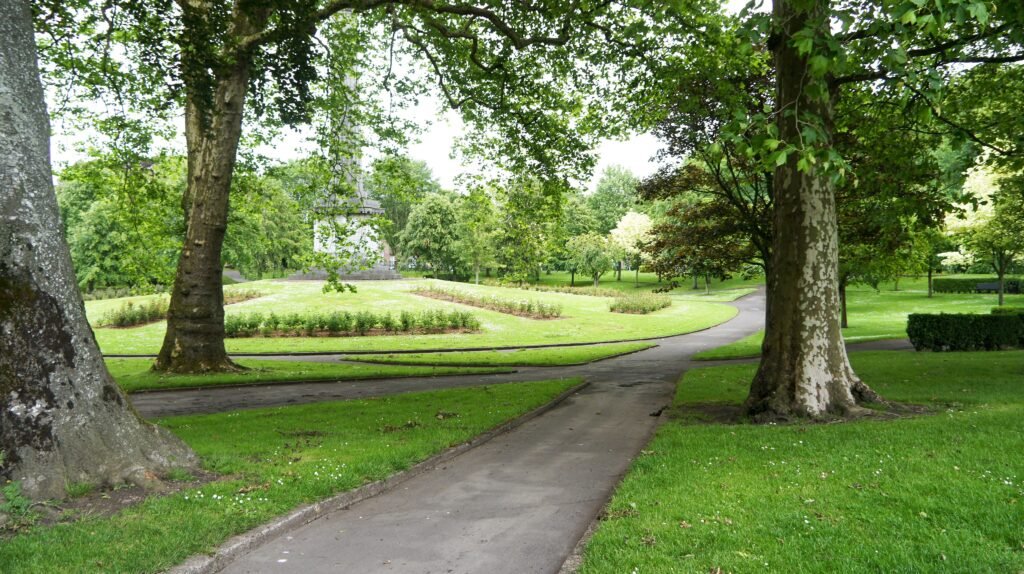
Begin at Colbert Station, with People’s Park and the City Gallery immediately anchoring the southern center. Walk through Pery Square and the Georgian streets to O’Connell Street, then turn toward Thomas Street and the Milk Market. Finish through Cruises Street and Bedford Row at Arthur’s Quay. Temporary street works can occasionally change pedestrian routing around the center, so follow local signs where necessary.
When Transit Helps
Most central sightseeing is faster on foot than by bus. Local services are more useful for longer trips toward Thomond-side destinations, Raheen and the University of Limerick. Payment options and frequencies vary by route, so check current TFI information before travel, especially for evening or weekend journeys.
Arriving Without a Car
Colbert Station is unusually well placed for a city break. The city center is about a 10-minute walk, Arthur’s Quay about 12 minutes, and King John’s Castle about 20. Rail services link Limerick with Dublin and Galway; Dublin journeys include through services and itineraries changing at Limerick Junction. With light luggage, walking from the station is usually simpler than waiting for a local bus.
Shannon Airport has direct public-bus connections with Limerick, including central stops and Colbert Station. Journey times and service frequency vary through the day, so check current Bus Éireann and TFI information before travel.
When a Car Helps
A car adds little to a weekend centered on King’s Island, the commercial core, and Pery Square. It becomes more useful when the trip expands beyond the city into County Limerick or County Clare. Bunratty, Adare, the Cliffs of Moher and other regional destinations are better treated as separate excursions.
Walking Limitations and Practical Tips
The main walking drawback is not distance but uneven comfort between the best streets. Bedford Row, Cruises Street, and rebuilt O’Connell Street are easy walking territory. Bridge approaches and some traffic-heavy corridors can feel more constrained, even when the route stays short. Wayfinding is a recent strength: the council completed a program installing 70 pedestrian signs, including map totems and finger posts, across the center.
Temporary construction can occasionally alter footpaths or crossings around central streets. Check current local notices when major works affect your planned route.
Seasonal Walking Note
Riverfront sections are exposed to wind and rain, especially on the Three Bridges loop. The center’s short distances make it easy to shorten a walk between museums, cafés and market streets when conditions worsen. Seasonal weather changes comfort rather than the distances between Limerick’s main sights.
Bottom Line
Limerick works best as a compact river city with one connected visitor spine. Walk the Medieval Quarter, commercial streets, and Georgian Quarter as linked sections rather than separate trips. Use local buses only for longer outer journeys, and arrive via Colbert or the direct Shannon Airport bus. Bridge approaches provide the main moments of friction, but a private car is unnecessary for the standard central weekend.