
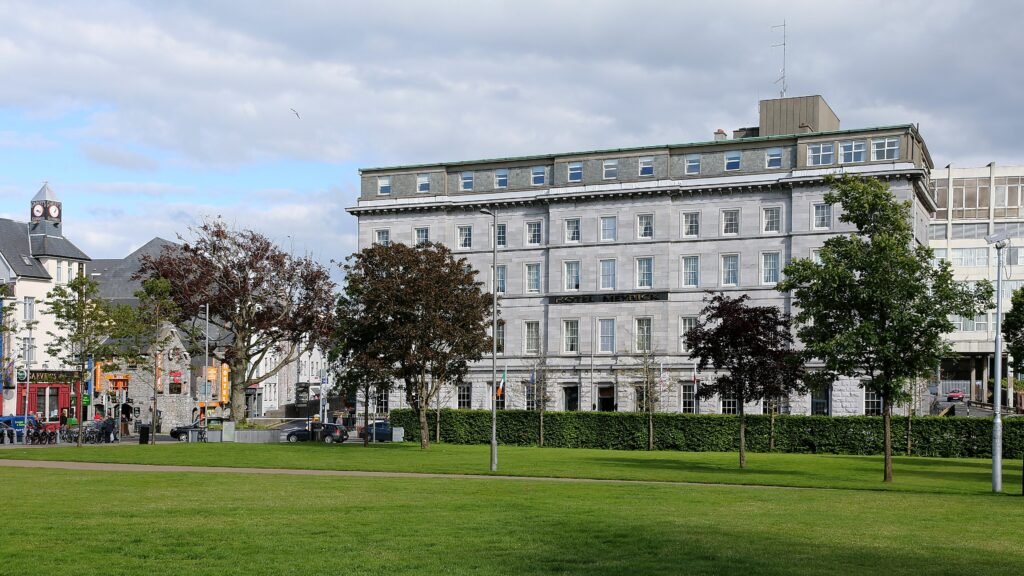
From Eyre Square, the pedestrian logic becomes clear almost immediately. William Street flows into Shop Street, High Street, and Quay Street before reaching the Corrib and Spanish Arch. Most headline central sights sit within roughly ten minutes of this spine, and Ceannt Station lies beside its eastern end. The river complicates movement only locally. Wolfe Tone Bridge and newer pedestrian crossings provide useful links toward the Claddagh and cathedral. The pattern loosens westward rather than failing. University of Galway remains an easy extension. Salthill sits roughly half an hour from Eyre Square and belongs to a separate walking segment.
How Galway Fits Together on Foot
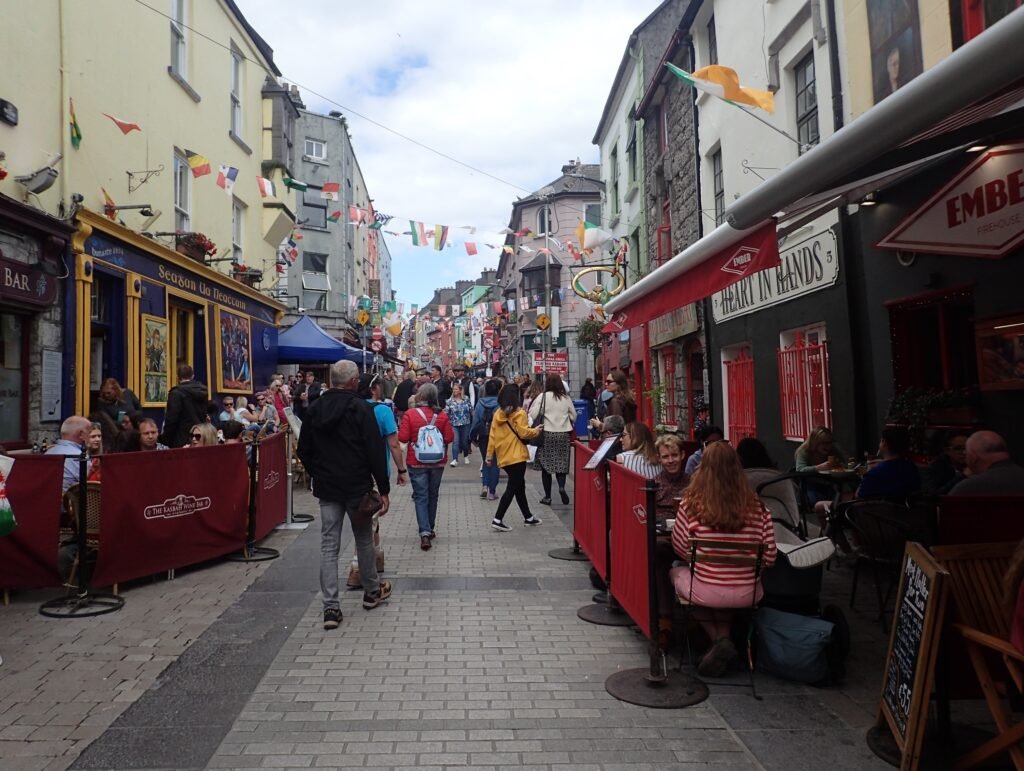
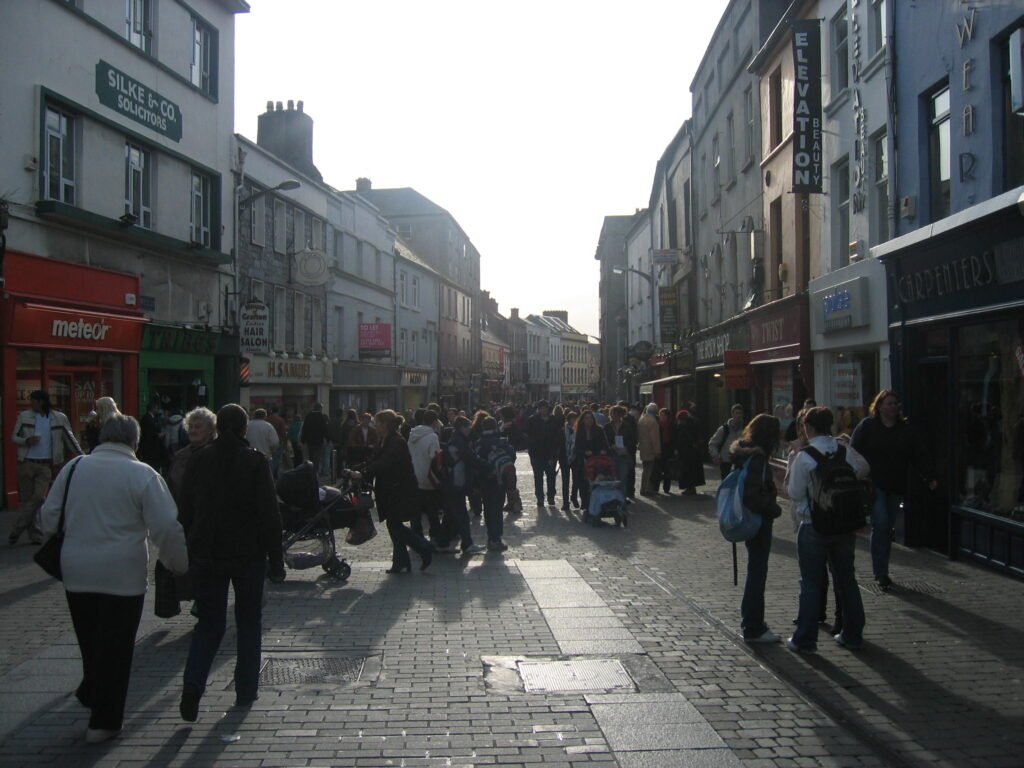
The strongest walking zone runs from Eyre Square through William Street, Shop Street, High Street and Quay Street. Spanish Arch and Galway City Museum sit at the river end of that sequence, so a first sightseeing day rarely needs transit. Ceannt Station is immediately beside the eastern end, making the city unusually easy to enter on foot. The docks and harbor edge are also close, but wider roads and working-waterfront spaces make them less seamless than the pedestrian core.
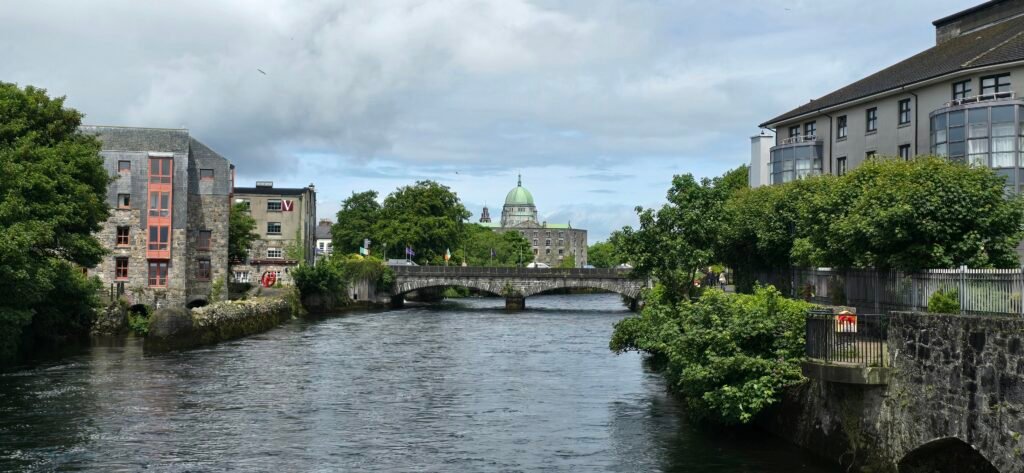
The Corrib creates route choices rather than a serious divide. Wolfe Tone Bridge now has segregated pedestrian walkways on both sides, linking Spanish Arch with the Claddagh and West End. Farther north, Droichead an Dóchais gives walkers a dedicated crossing between the cathedral and university side. The upgraded Eglinton Canal path then adds an 880-meter connection between University Road and Father Griffin Road. Those crossings keep local detours modest without turning Salthill into part of the historic core.
Best Areas to Stay for Walking
Eyre Square is the easiest all-round base for rail, coaches, city buses and short walks into the center. The Latin Quarter and Quay Street put the historic core outside your door, although evening crowds can slow the narrow streets. The West End suits travelers who want easy access to the canal, Claddagh and Salthill direction while staying near the center. Salthill is best when the seafront matters more than immediate access to Shop Street; repeated trips to the historic core make route 401 more useful.
Useful Galway Walking Times
Allow about 3–4 minutes from Ceannt Station to Eyre Square. Eyre Square to Spanish Arch takes roughly 8–9 minutes, and the cathedral is around 10–11 minutes away. University of Galway describes its riverside campus as about a 15-minute walk from the city center. Salthill is the meaningful change of scale: the main promenade area is roughly a 30–35 minute walk from Eyre Square, with Blackrock farther west.
These are practical planning estimates rather than guaranteed walking times. Crowds, weather and individual pace can change the actual time.
A 2-Day Walking Route
Day 1: Ceannt Station to the West End
Walking route
Day 1: Ceannt Station, the pedestrian core and West End
- Galway Ceannt Station, Station Road, Galway, H91 T9CE, Ireland
- Eyre Square, Galway, Ireland
- William Street, Galway, Ireland
- Lynch's Castle, Shop Street, Galway, Ireland
- High Street, Galway, Ireland
- Quay Street, Galway, Ireland
- Galway City Museum, Spanish Parade, Galway, H91 CX5P, Ireland
- Spanish Arch, Galway, Ireland
- Wolfe Tone Bridge, Galway, Ireland
- Dominick Street Lower, Galway, Ireland
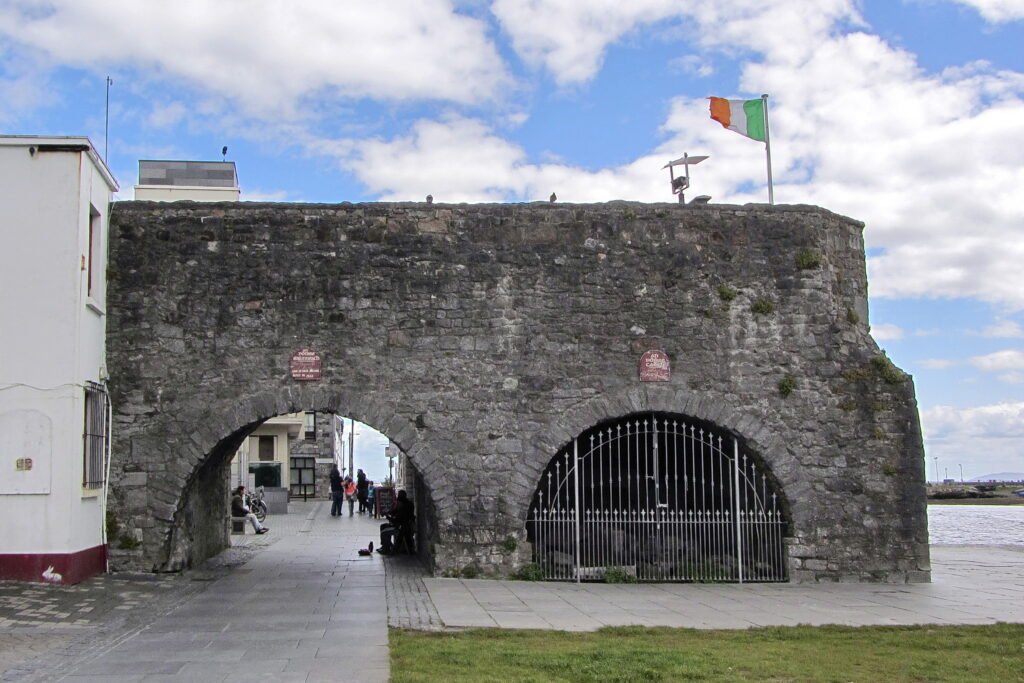
Start at Ceannt Station and Eyre Square, then follow the natural pedestrian chain along William Street and Shop Street. Continue through High Street and Quay Street before visiting Galway City Museum and Spanish Arch. Cross Wolfe Tone Bridge once and finish around Dominick Street in the West End. This route keeps the day’s sightseeing concentrated and avoids returning to Eyre Square. If you want the docks, add them as a short separate detour near the start rather than breaking the core sequence.
Day 2: University, Cathedral, Claddagh and Salthill
Walking route
Day 2: University, cathedral, Claddagh and Salthill
- University of Galway Quadrangle, University Road, Galway, Ireland
- Droichead an Dóchais, Galway, Ireland
- Galway Cathedral, Gaol Road, Galway, H91 A780, Ireland
- Eglinton Canal, Galway, Ireland
- Father Griffin Road, Galway, Ireland
- Claddagh Basin, Galway, Ireland
- Grattan Beach, Galway, Ireland
- Salthill Promenade, Galway, Ireland
- Blackrock Diving Tower, Salthill, Galway, Ireland
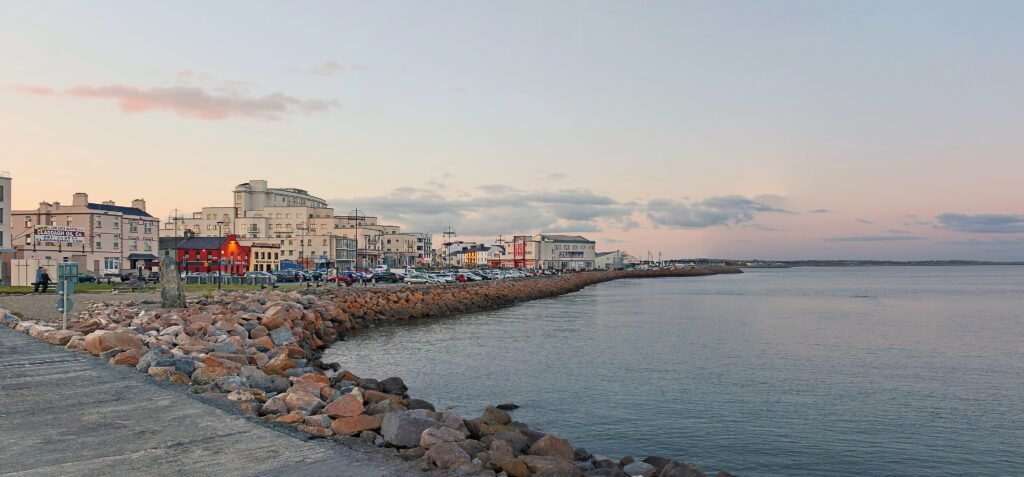
Begin at University of Galway, then cross Droichead an Dóchais to Galway Cathedral. Pick up the Eglinton Canal route south toward Father Griffin Road, then continue through the Claddagh to the waterfront. From Grattan Beach, the promenade becomes the day’s main walking attraction rather than dead mileage. Continue through Salthill toward Blackrock Diving Tower if energy and conditions suit. For the return, route 401 is more efficient than retracing the entire promenade to Eyre Square.
When Galway Buses Improve the Weekend
Most central sightseeing is faster on foot than by bus. Public transport becomes more useful for Salthill, tired returns and less central destinations. Route patterns, frequencies and payment options can change, so check current TFI information before travel rather than relying on fixed service intervals in the guide.
Arriving in Galway Without a Car
Galway Ceannt Station sits only a few minutes from Eyre Square, making rail arrival especially convenient. Direct rail services connect Galway with Dublin and other Irish destinations. For international arrivals, Shannon Airport, Dublin Airport and Ireland West Airport Knock can all work depending on your itinerary, with public transport available from each. Check current rail, coach and airport timetables before travel.
Where Walking Gets Less Seamless
Central pedestrianization does not make every street equally comfortable. Shop Street, High Street and Quay Street can become crowded, while historic paving and narrow lanes can slow anyone with luggage or mobility concerns. The river requires choosing the right bridge, although recent crossings have reduced the penalty. Salthill’s promenade is excellent for continuous walking, but its commercial street has weaker pedestrian permeability and more traffic interaction. Wind and rain can also make exposed river and seafront sections feel substantially harder.
When a Car Helps
A car adds little to the standard Galway city weekend. It becomes useful mainly for regional itineraries where schedules, rural stops or multiple destinations make public transport cumbersome. Connemara, the Burren, Kylemore Abbey, the Cliffs of Moher and other regional destinations are better treated as separate excursions from the Galway city weekend.
Seasonal Walking Conditions
Atlantic weather can change comfort quickly. The Salthill waterfront and Corrib crossings are especially exposed during wind and rain, while the compact central core remains easier to shorten or shelter within. On poor-weather days, public transport can make the Salthill return more comfortable.
Bottom Line
A short Galway visit works best as a compact center plus deliberate western extensions. Walk the Eyre Square-Latin Quarter-Spanish Arch spine without overthinking transport, then add the university, Claddagh and Salthill as separate legs. The Corrib’s crossings are good enough to support this pattern, and the flat terrain keeps effort low. Buses matter most for Salthill returns and other longer extensions rather than everyday sightseeing in the historic center. Choose a central base and a private car becomes unnecessary for the city itself.