
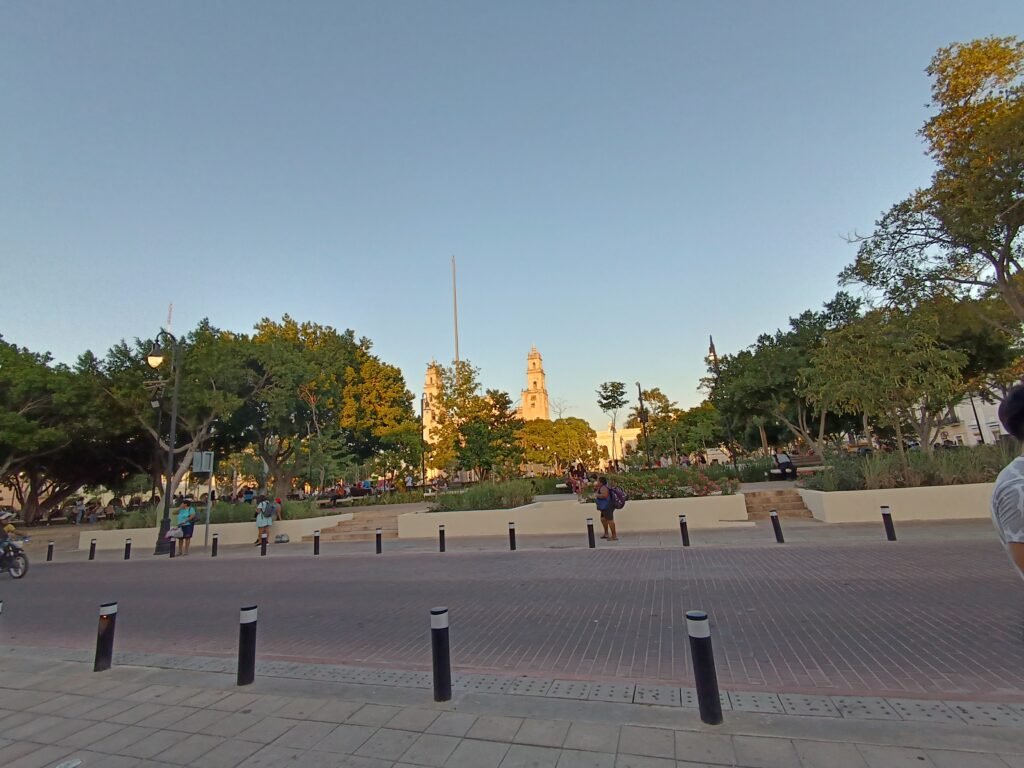
Around Plaza Grande, Mérida concentrates much of its easiest sightseeing before the visitor map stretches north toward Paseo de Montejo. Cathedral, Casa de Montejo, Santa Lucía, markets, and several museums sit within a compact central grid. Santa Ana feels like the hinge between that dense colonial fabric and the broader boulevard beyond. Walking remains practical along Paseo de Montejo, but the corridor adds mileage before Monumento a la Patria. Recent central upgrades have widened selected pedestrian areas without fixing every narrow historic sidewalk. That contrast defines a weekend here: short central walks first, then longer boulevard segments or selective transit.
How Mérida’s Walkable Core Fits Together
Plaza Grande is the strongest pedestrian anchor because several headline sights share the same few blocks. The cathedral, Casa de Montejo and Palacio de Gobierno can be combined without meaningful repositioning. Calle 60 then leads naturally toward Santa Lucía and Santa Ana. Santiago and Mejorada extend the core west and east without breaking its basic coherence. The pattern changes north of Santa Ana. Paseo de Montejo remains straightforward, but it works as a sightseeing corridor rather than another tiny cluster.
Best Areas to Stay for Walking
Centro Histórico is the easiest base for a first visit, especially near Plaza Grande, Santa Lucía or the central Calle 60 corridor. Santa Ana is the best compromise for travelers who want equal access to Centro and Paseo de Montejo. Hotels farther north on the boulevard suit Paseo-focused stays, but they add walking time to Plaza Grande. Santiago is still central enough for a walking weekend and places the western historic quarter close at hand.
Useful Walking Times
- Plaza Grande to Santa Lucía: about 7–10 minutes.
- Santa Lucía to Santa Ana: about 8–10 minutes.
- Plaza Grande to Santa Ana: about 15–18 minutes.
- Santa Ana to the Remate de Paseo de Montejo: about 5–7 minutes.
- Remate de Paseo de Montejo to Palacio Cantón: about 6–8 minutes.
- Palacio Cantón to Monumento a la Patria: about 12–15 minutes.
- Plaza Grande to Monumento a la Patria: roughly 40–45 minutes.
- Plaza Grande to Gran Parque La Plancha: roughly 20–25 minutes.
These are practical planning estimates rather than guaranteed walking times. Traffic signals, crowds, construction and heat can change the time needed on any particular day.
A 2-Day Walking Route
Day 1: Centro Histórico
Walking route
Day 1 — Centro Histórico on foot
- Parque de Santiago, Mérida, Yucatán, Mexico
- Plaza Grande, Mérida, Yucatán, Mexico
- Casa de Montejo, Mérida, Yucatán, Mexico
- Catedral de San Ildefonso, Mérida, Yucatán, Mexico
- Mercado Lucas de Gálvez, Mérida, Yucatán, Mexico
- Parque de la Mejorada, Mérida, Yucatán, Mexico
- Palacio de la Música, Mérida, Yucatán, Mexico
- Parque de Santa Lucía, Mérida, Yucatán, Mexico
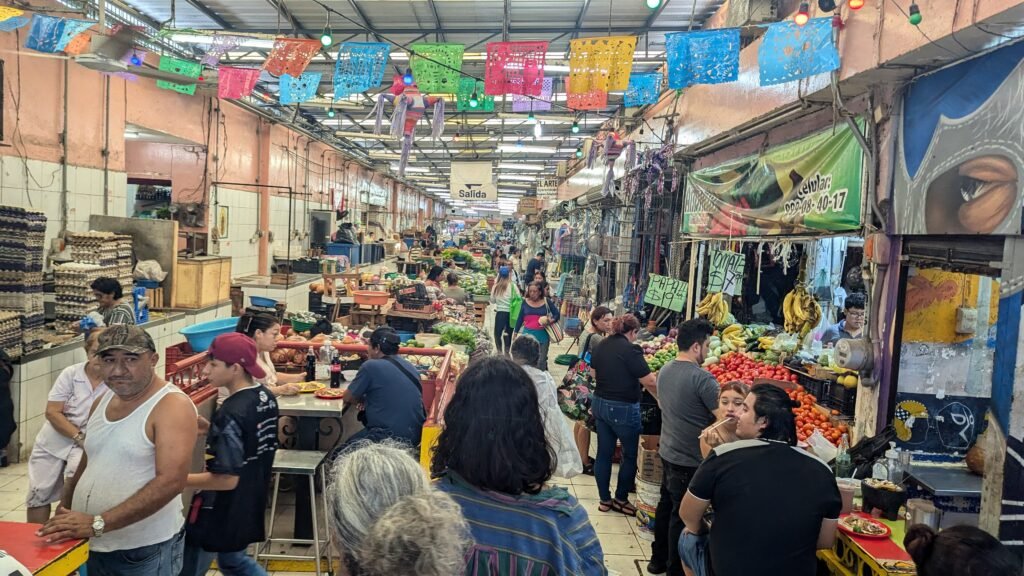
Start in Santiago, then walk east to Plaza Grande before visiting Casa de Montejo and the cathedral. Continue toward Mercado Lucas de Gálvez, where recent improvements have expanded pedestrian space around the market. From there, angle north through Mejorada and the Palacio de la Música. Finish at Santa Lucía, keeping the day inside Mérida’s tightest sightseeing geography. The route avoids repeatedly returning to Plaza Grande while still covering the main historic anchors.
Day 2: La Plancha and Paseo de Montejo
Walking route
Day 2 — La Plancha, Santa Ana and Paseo de Montejo
- Gran Parque La Plancha, Mérida, Yucatán, Mexico
- Parque de Santa Ana, Mérida, Yucatán, Mexico
- Remate de Paseo de Montejo, Mérida, Yucatán, Mexico
- Museo Regional de Antropología Palacio Cantón, Mérida, Yucatán, Mexico
- Monumento a la Patria, Mérida, Yucatán, Mexico
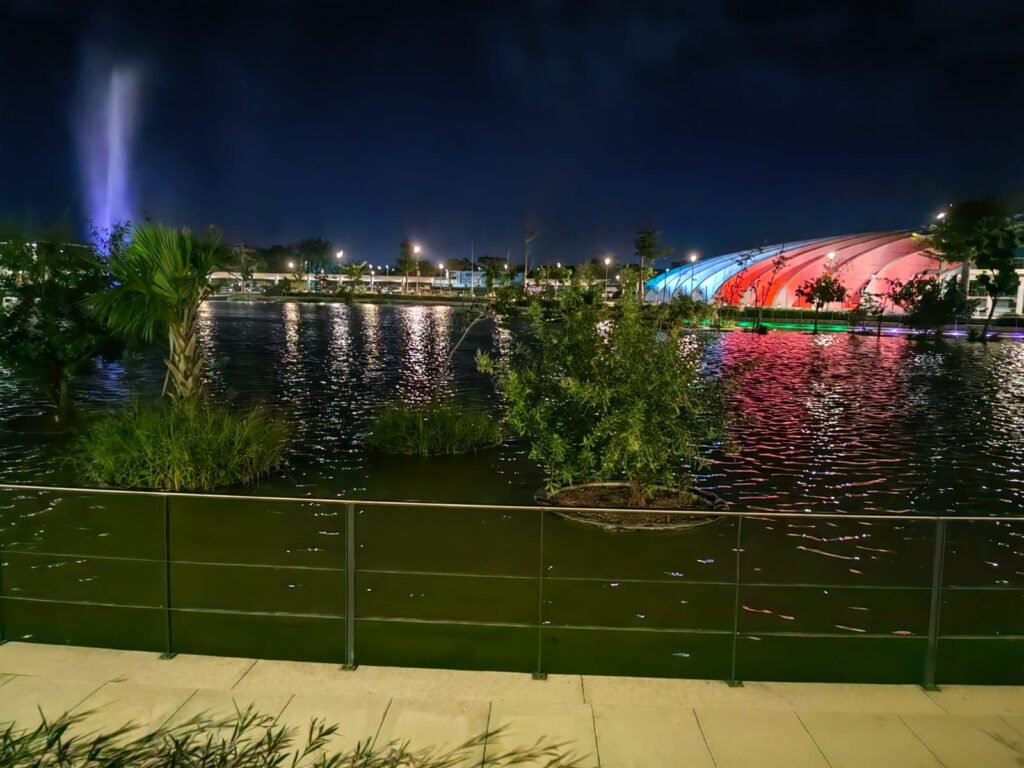
Begin at Gran Parque La Plancha, then cross toward Santa Ana and the Remate de Paseo de Montejo. Continue north along the boulevard to Palacio Cantón and Monumento a la Patria. This day deliberately feels longer than Day 1 because it shows how Mérida’s visitor geography stretches beyond Centro. The wide boulevard is easy to follow, but intersections and sun-exposed segments can slow the pace. End at Monumento a la Patria rather than walking the same corridor back.
When Va y Ven Helps
Walking works best inside Centro and along the southern Paseo corridor. Va y Ven becomes more useful for northern attractions, La Plancha connections when energy is limited, and airport travel. The system uses a general smart card for ordinary buses, with transfer discounts on standard services. Tourist routes have separate fares. The airport route is unusually visitor-friendly because it also accepts debit cards, credit cards and single-use e-tickets.
Arriving in Mérida Without a Car
Mérida International Airport has a direct public-transport option that materially lowers arrival friction. R907 links the airport with Plaza Grande, Santa Ana, Paseo 60, central hotels, ADO terminals and La Plancha. The route operates from early morning through late evening. Intercity ADO passengers can arrive at the Centro Histórico terminal on Calle 69. Tren Maya serves Mérida-Teya, but that station sits outside the center and still requires an onward transfer.
When a Car Helps
A private car is unnecessary for the standard central weekend described here. It becomes more useful for regional excursions that sit outside Mérida’s urban walking geography. Uxmal, Chichén Itzá, cenotes, Progreso and Izamal should be planned as separate trips. Bus and tour options can also work for those outings, so renting a car is a convenience choice rather than a requirement for seeing the city itself.
Walking Limitations and Practical Tips
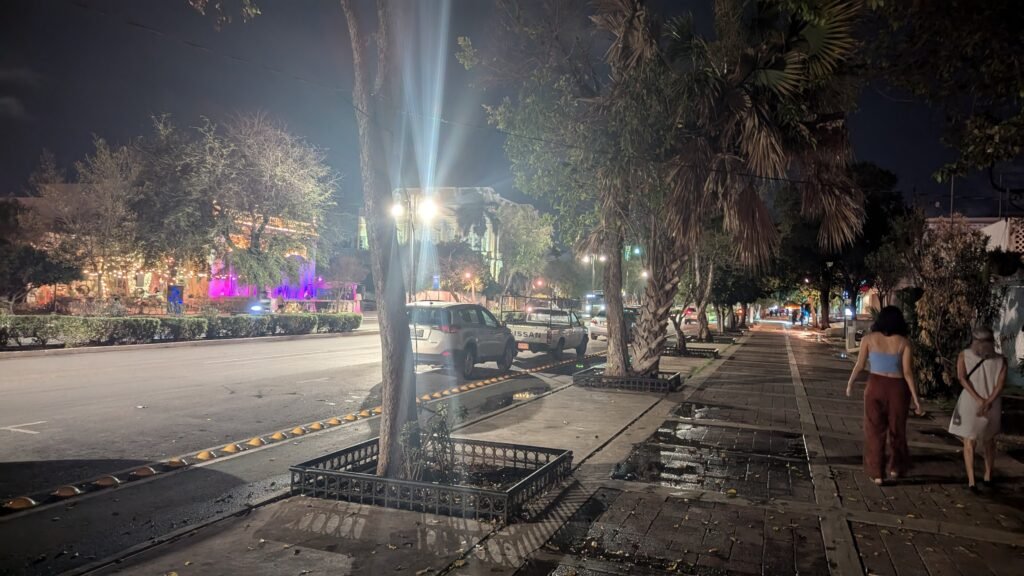
Mérida’s compact map can hide real differences in walking quality. Some historic sidewalks remain narrow even after major central upgrades. Crossings around broader roads deserve attention, especially as the route reaches Paseo de Montejo. Scheduled programs can temporarily make streets more comfortable: Corazón de Mérida closes part of Calle 60 on selected evenings, and Biciruta changes conditions on Sundays. These programs can make particular evenings or Sundays more pleasant on foot, but check their schedules before planning around them.
Seasonal Walking Context
Mérida remains practical for walking throughout the year, but heat, humidity, intense sun and heavy rain can substantially change comfort. Start longer walks earlier and use shaded parks or indoor stops between exposed segments. Trees, widened sidewalks and shade structures are especially valuable on hotter days.
Bottom Line
Mérida works best as two connected walking experiences. Spend one day inside the compact historic center, then use another for Santa Ana and Paseo de Montejo. Transit is most valuable for the airport and outer extensions rather than short trips within Centro. Choose a central hotel and a private car can stay out of the plan unless regional excursions become a priority.