
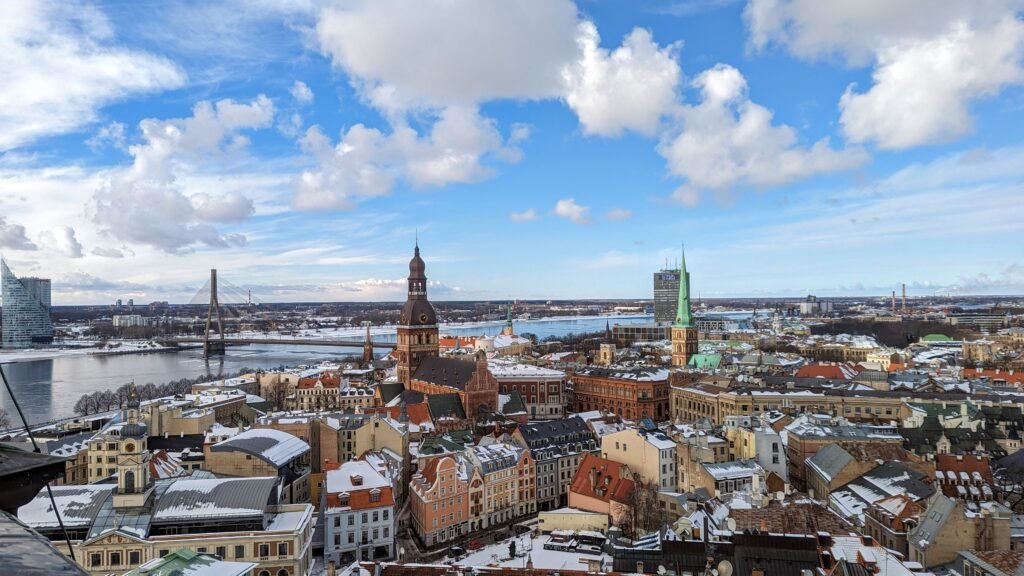

Riga’s medieval lanes open directly into a very different city of broad boulevards, green parks, and ornate early-1900s facades. Town Hall Square, St. Peter’s Church, and Dome Square occupy a tightly connected Old Town, with little distance between them. Across the canal, the Freedom Monument and Bastejkalns Park bridge that compact quarter to the wider center. Alberta Street and Elizabetes Street sit farther north, while Central Market spreads southeast beside the rail and coach stations. Those extensions remain walkable, but traffic junctions and uneven pavement prevent the wider center from feeling seamless.
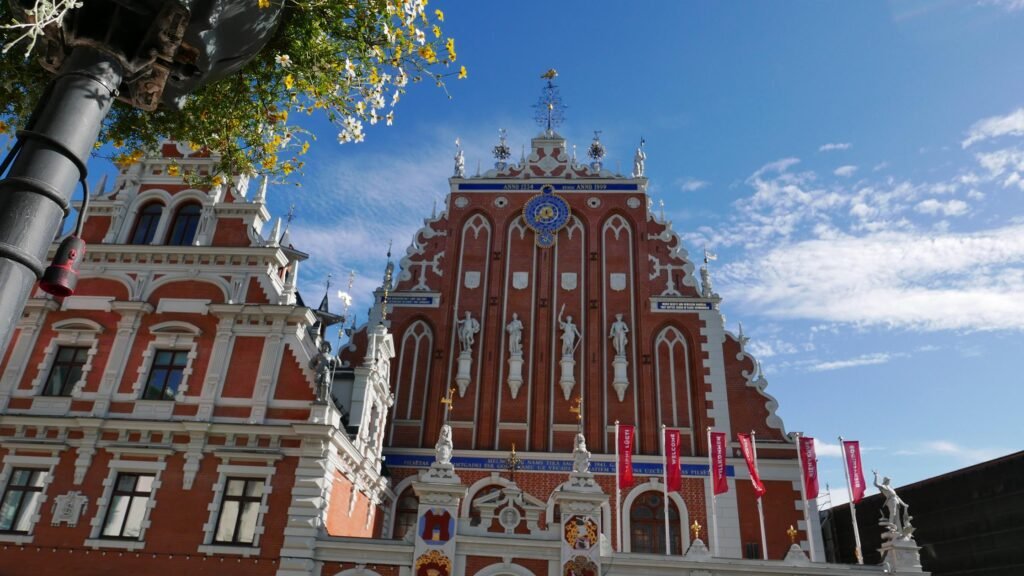
Why Riga Works on Foot Beyond Old Town
Inside Vecrīga, Riga’s practical walking advantage is immediate. Town Hall Square, the House of the Blackheads, St. Peter’s Church and Dome Square are only short stretches of medieval lanes apart. Many of these lanes and squares give pedestrians priority, but not every street is completely vehicle-free. Historic cobblestones and occasional service traffic matter, particularly with luggage, wheelchairs or strollers.
To the northeast, the canal gardens and Freedom Monument provide a pleasant transition from Old Town into the wider city. Bastejkalns Park has winding paths, small bridges and a modest hill; the level perimeter is easier than some hillside paths. The nearby boulevards introduce proper sidewalks and signalized intersections, but they also bring wider traffic corridors. Riga’s center is not one uninterrupted pedestrian precinct.
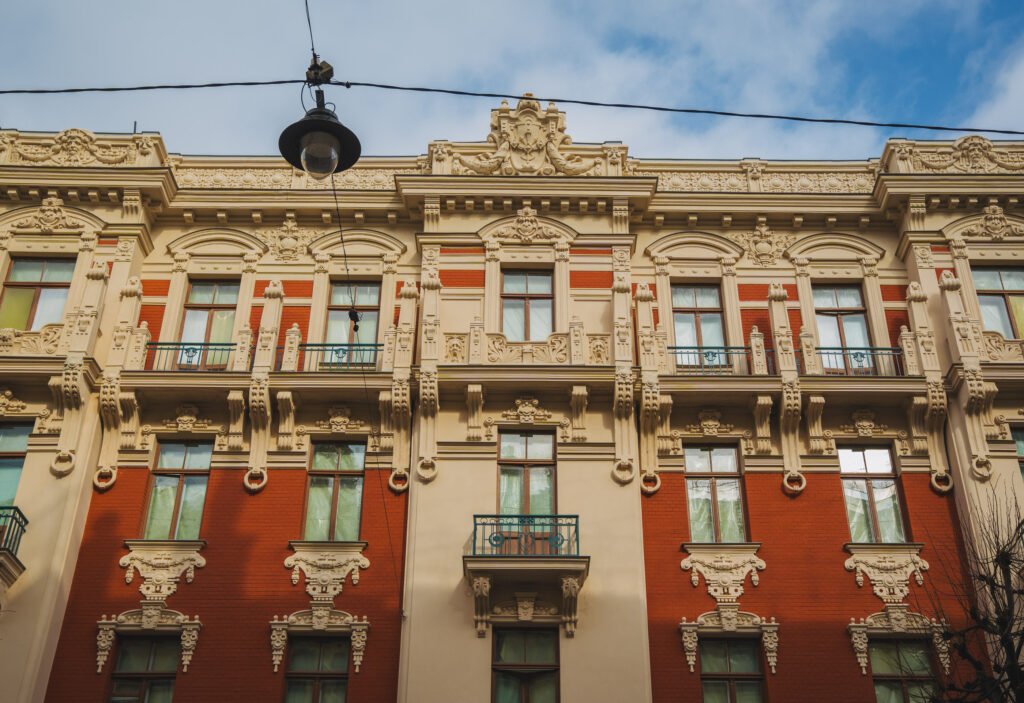
Two important areas extend this core in opposite directions. Central Market sits southeast beside the rail and coach stations, beyond busy streets and transport infrastructure. The Art Nouveau district lies north around Alberta and Elizabetes streets, roughly a 10–15 minute walk beyond the Old Town edge. Both are walkable from central accommodation, yet the distance between them is much greater than a stroll within Town Hall Square.
Best Areas to Stay Without a Car
Old Town (Vecrīga) is the easiest base for medieval sightseeing, evening squares and the Daugava. Check exact access if you have wheeled luggage, since cobblestones and restricted vehicle entry complicate some hotel approaches.
The Freedom Monument and Opera boulevard edge is the most balanced choice for linking Old Town, canal parks, the station and the Art Nouveau streets. Streets are generally easier underfoot than medieval lanes, although major crossings remain.
The Quiet Centre (Klusais centrs) suits architecture and museum-focused trips. Alberta Street and the Latvian National Museum of Art are nearby, while Central Market requires a longer walk or a short ride. The central station fringe is convenient for trains and coaches, but immediate streets feel busier and less scenic.
Walking Times Between Major Riga Sights
Town Hall Square to St. Peter’s Church: about 3–5 minutes. Town Hall Square to Dome Square: roughly 5–7 minutes. Dome Square to the Freedom Monument: around 10–12 minutes. Freedom Monument to Alberta Street: roughly 15–20 minutes. That last connection crosses into another central neighborhood, not another Old Town block.
Central Market to Town Hall Square: around 12–15 minutes. Riga Central Station to Central Market: roughly 5–8 minutes. Central Station to Town Hall Square: about 12–18 minutes, depending on crossings and luggage. Freedom Monument to the National Library: around 20 minutes across Stone Bridge. These are planning estimates, not live-navigation guarantees.
A Practical 2-Day Riga Walking Route
The first day links the market to the medieval core and ends in the canal gardens. The second follows the larger Art Nouveau and museum district before reaching the left-bank skyline. Both routes prioritize distinct sightseeing areas rather than retracing every Old Town landmark.
Day 1: Central Market, Medieval Riga and the Canal
Walking route
Day 1: Central Market, Old Town and canal parks
- Riga Central Market
- St. Peter's Church
- Town Hall Square (Rātslaukums)
- Stone Bridge eastern approach (Akmens tilts)
- Dome Square (Doma laukums)
- Three Brothers
- Swedish Gate (Zviedru vārti)
- Freedom Monument
- Bastejkalns Park
Begin at Riga Central Market near the train and coach stations, then walk northwest to St. Peter’s Church. Continue to Town Hall Square and the House of the Blackheads. Visit the eastern approach to Stone Bridge for river views, then follow the right-bank waterfront north briefly. Turn inland to Dome Square and the Three Brothers before reaching Swedish Gate. The Freedom Monument and Bastejkalns Park provide a natural green finish beyond Old Town. Use marked crossings around 13. janvāra iela and the waterfront roads.

Day 2: Art Nouveau Streets, Museums and Stone Bridge
Walking route
Day 2: Art Nouveau facades, parks and the Daugava
- Latvian National Museum of Art
- Esplanade Park
- Elizabetes iela 10b
- Alberta Street
- Riga Art Nouveau Museum
- Kronvalda Park
- Latvian National Theatre
- Riga Castle riverfront
- Stone Bridge (Akmens tilts)
- National Library of Latvia
Start beside Esplanade Park at the Latvian National Museum of Art. Continue north toward the Art Nouveau buildings on Elizabetes iela, then turn into Alberta iela and the Riga Art Nouveau Museum. From there, work west through Kronvalda Park toward the National Theatre and Riga Castle. Follow the Daugava south, cross Stone Bridge on its pedestrian route, and finish at the National Library. This is a longer, open-air day; the bridge crossing is optional in icy or windy weather.
How Riga’s Trams, Trolleybuses and Buses Help
Rīgas satiksme operates a broad network of trams, trolleybuses and buses. For a first-time itinerary concentrated in Old Town, Central Market and the Quiet Centre, walking usually remains simpler than boarding repeatedly. Transit becomes useful for distant neighborhoods, returning from a long day or avoiding exposed segments during poor weather.
A standard 90-minute municipal ticket is €1.50 and allows transfers across the operator’s modes, with validation at every boarding. Check current ticket conditions, routes and weekend or evening schedules before travel. Individual route timings can change, especially during works. Local public transport improves the car-free trip without making medieval cobbles or arterial crossings disappear.
Arriving in Riga Without a Car
Riga Airport (RIX): Municipal bus 22 connects the terminal with Old Town, the central bus and railway area, and Central Market. The airport estimates approximately 40 minutes to the city center, depending on traffic. The stop is across the P1 car park between arrival exits C and E. The €1.50 advance-purchased 90-minute ticket works on route 22; a single ticket bought from the driver costs €1.81 and requires a bank card. Overnight N22 service operates at hourly intervals, so check departure times rather than assuming a short wait.
Riga Central Railway Station: The station stands on the southeast edge of the walking area, close to the market and a manageable walk from Old Town. Regional rail and cross-border services need schedule checks. Vivi lists Vilnius connections and Estonia-bound services, including direct Riga–Tartu–Tallinn options and alternatives involving Valga. Railway works can affect platforms or departure times without changing the central location.
Riga International Coach Terminal: International coaches arrive beside Central Market and the rail station, making a walking transfer to many central hotels realistic. Some hotel entrances are still across broad roads. Confirm your exact arrival point and the best signalized crossing before walking with bags.
When a Car Helps—and When It Does Not
A car adds little to the standard Riga weekend: medieval Old Town, boulevards, the Art Nouveau facades and Central Market are accessible on foot. It also introduces parking and access problems in the historic core. Consider a rental car only for countryside plans or dispersed destinations outside the urban network. For the central sights, municipal transport and central rail or coach arrivals are more practical.
Walking Limitations and Practical Tips
Historic pavement: Many Old Town lanes retain irregular cobblestones; choose smoother parallel streets when available. Traffic corridors: Major junctions near 13. janvāra iela, the station and market require signals and attention to turning vehicles. River crossings: Stone Bridge is a usable pedestrian link but exposed to traffic noise and wind; bridges farther apart limit spontaneous river crossings.
Accessibility: Riga is relatively flat, yet flatness does not mean step-free access. Historic thresholds, cobbled lanes, curb edges, museum stairs and Bastejkalns hillside paths can be challenging. Temporary changes: Seasonal pedestrian weekends, transit diversions and street works should be checked for current dates rather than assumed permanent.
Seasonal Walking Conditions
Summer offers long daylight and easy use of the parks, although popular Old Town streets attract more visitors. In winter, snow, ice, river wind and early darkness make surfaces and bridge crossings more demanding. Around the December solstice, daylight lasts only about six hours and 44 minutes. Plan more indoor museum stops, allow extra time for cobbles and keep outdoor river viewpoints flexible.
Bottom Line
Riga is strongest as a compact medieval walking city with two worthwhile central extensions: the Art Nouveau Quarter and Central Market. A two-day route can cover these areas with little need for transit, provided you accept some traffic crossings and uneven paving. The Daugava adds appealing river views, but crossing Stone Bridge is a deliberate excursion rather than an invisible part of the Old Town grid.