

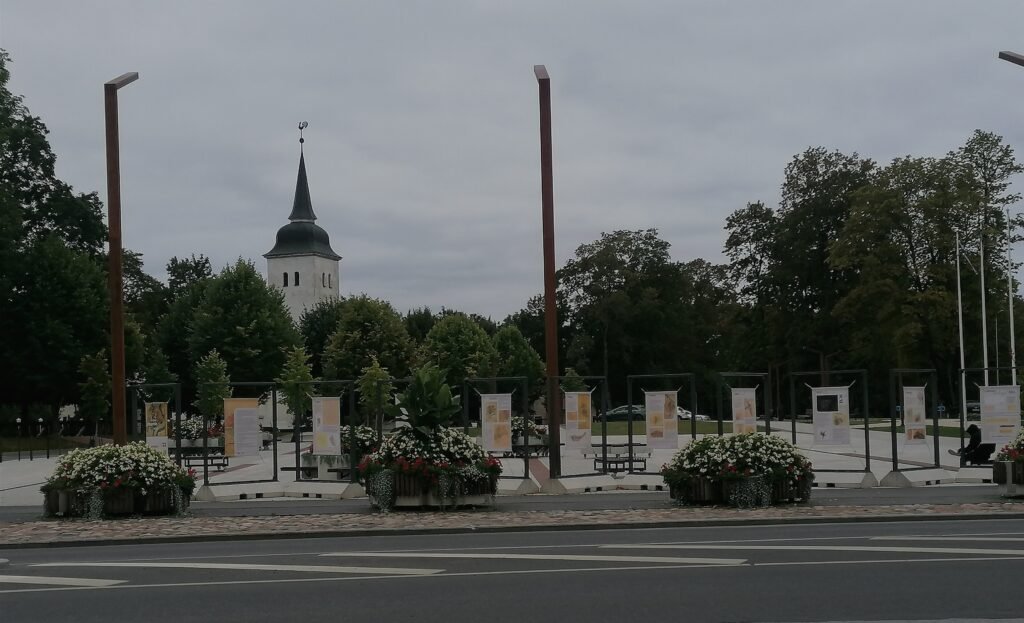
Viljandi’s most memorable walk follows the edge of a steep valley rather than a flat town grid. Town Hall, Kondas Centre, St. John’s Church, and the traditional music center cluster above the lakeshore. Castle Hills continues that upper-level route through historic ruins, wooded paths, and a suspension bridge. The lake beach sits below, reached directly from the old town by Trepimägi’s 158 steps. That staircase makes the distance deceptive, especially when the return journey climbs back uphill. Wider streets and gentler approaches exist, but they lengthen the connection. A satisfying weekend therefore separates the upper historic circuit from the lower lakefront rather than repeatedly climbing between them.
Why Viljandi Works on Foot
Viljandi’s sightseeing core is a linked set of elevated historic streets rather than a huge pedestrian-only district. Freedom Square, General Laidoner Square, Town Hall and the museums lie comfortably close. St. John’s Church and the traditional music center lead naturally to Castle Hills. Central sidewalks, short streets and park paths make the sequence easy to navigate, although traffic crossings and occasional uneven paving still require attention.
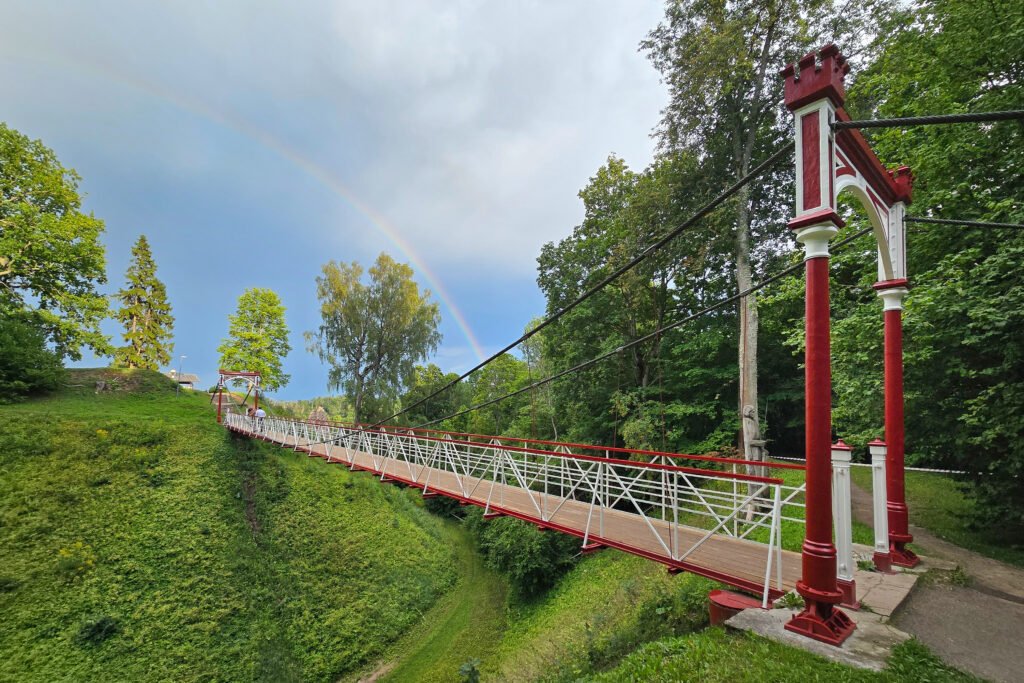
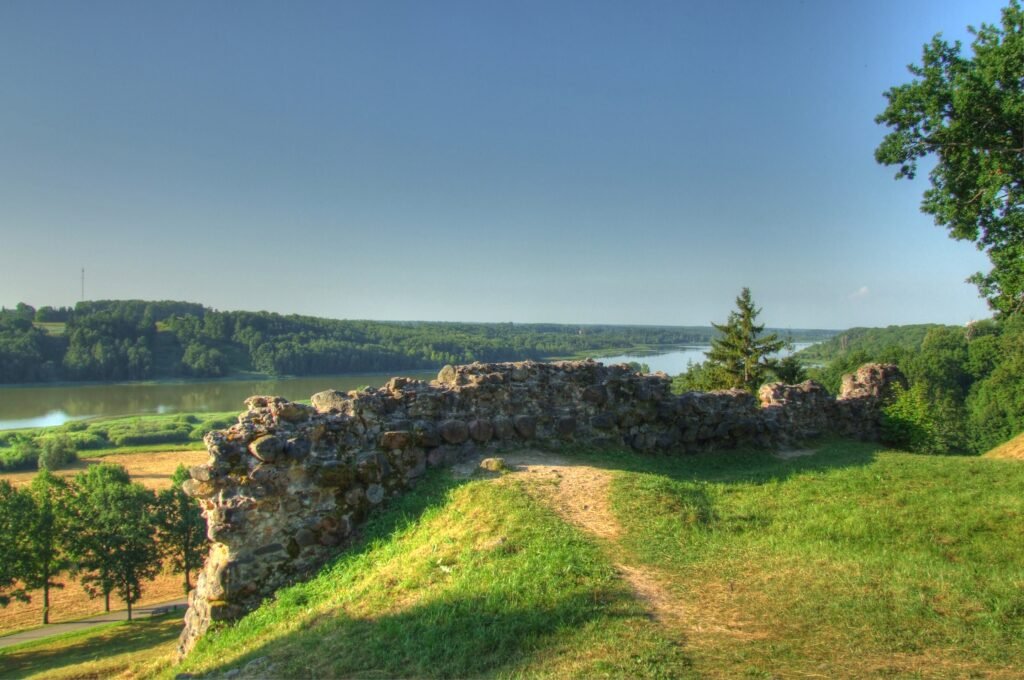
The medieval ruins, lookout points and suspension bridge make Castle Hills the key walking destination. The bridge spans a ravine within the park; it is not a bridge down to the lakeshore. Trails bend around slopes and ruined walls, so the shortest straight-line distance is not always the most comfortable route. Stay on established paths and avoid treating grassy embankments as shortcuts.
Castle Hills and the Lake: Close, but Not Level
Trepimägi links Old Town to the lake through five flights and 158 steps. It is an effective shortcut for confident walkers, but unsuitable for wheelchairs and difficult with heavy luggage. The descent can be quick; the same climb feels substantially harder on the way back. Alternatives on connecting streets avoid the staircase but add distance and still involve elevation. The castle park itself has changing grades, unpaved patches and exposed ruin edges.
The beach and the walkable western lakeshore remain worthwhile without completing the whole lake trail. Official listings differ on the full circuit length, placing it around 12–14 kilometers—an outing of its own. For a two-day visit, a shorter lakefront stretch provides the contrast without turning sightseeing into an endurance hike. This is one connected town-and-lake visit, not a single flat promenade.
Best Areas to Stay Without a Car
Old Town around Laidoner Square, Pikk Street and Linnu Street puts museums, historic houses, Castle Hills and cafes closest together. Park Hotel Viljandi is one centrally located example. Freedom Square and the Centrum area suit travelers arriving by intercity bus, with everyday shops close by and easy routes into Old Town. The Castle Hills edge near Tasuja puiestee suits a quieter heritage stay; Schloss Fellin is in this area. Choose the upper town unless lakeside access matters more than the return climb.
Walking Times Between Viljandi Sights
Bus station to Freedom Square: roughly 5–10 minutes. Freedom Square to Town Hall: 7–10 minutes. Town Hall to Kondas Centre: around 3–5 minutes. St. John’s Church to Castle ruins: roughly 8–12 minutes along park paths. Castle ruins to the suspension bridge: about 3–6 minutes, depending on viewpoint stops.
Town Hall to Lake Viljandi Beach: allow 15–22 minutes downhill using Trepimägi and the lower connecting streets. The climb back takes longer. Railway station to the Traditional Music Center: around 20 minutes on foot, or longer with luggage. These are practical planning ranges, not live navigation times; stairs, footing and your chosen entrance matter.
A 2-Day Viljandi Walking Route
Day 1: Historic Streets, Ruins and Suspension Bridge
Begin at Freedom Square before continuing through General Laidoner Square and Viljandi Museum. Visit the Old Water Tower when its seasonal opening allows, then move through Town Hall, Kondas Centre and St. John’s Church. Continue to the Traditional Music Center and enter Castle Hills. Cross the suspension bridge and finish among the castle ruins and lake viewpoints. This keeps the day on the upper level rather than requiring a lake descent and climb.
Walking route
Day 1: Old Town, Castle Hills and the suspension bridge
- Freedom Square (Vabaduse plats)
- General Laidoner Square and Viljandi Museum
- Viljandi Old Water Tower
- Viljandi Town Hall
- Kondas Centre
- St. John’s Church
- Viljandi Traditional Music Center
- Viljandi Suspension Bridge
- Viljandi Order Castle Ruins
Day 2: Local Art, Trepimägi and the Lakefront
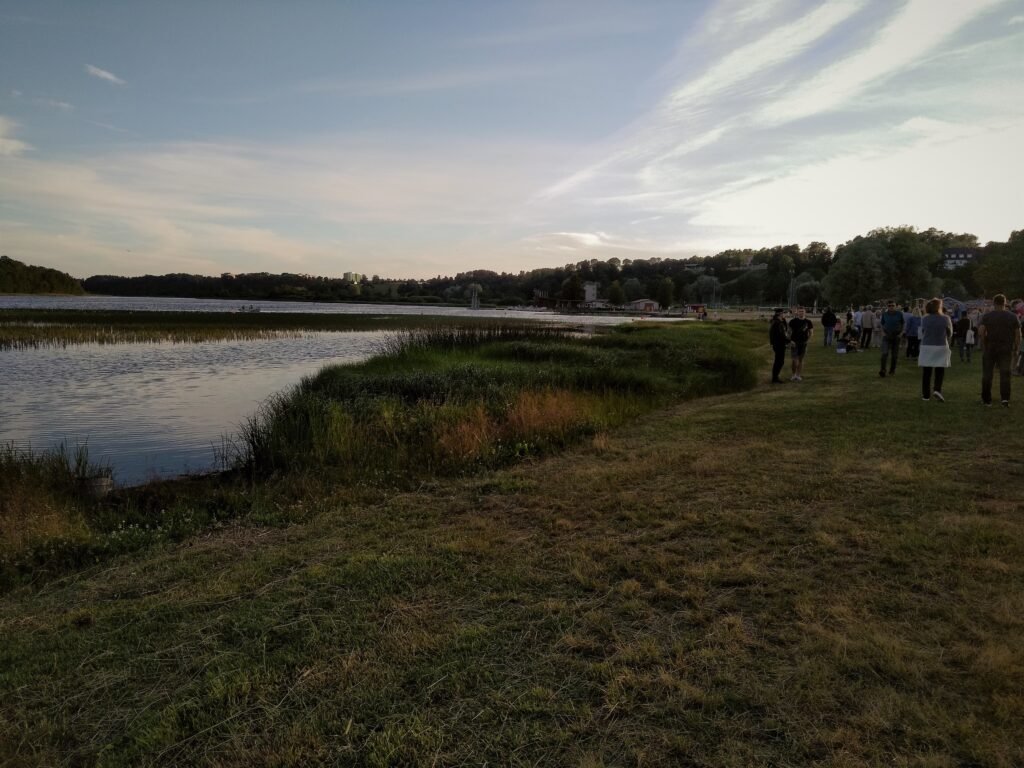
Start at Rüki Gallery when open and follow Old Town streets toward the Pikk Street viewpoint and the Kassisaba pedestrian connection. Descend Trepimägi carefully and follow the lower streets to Lake Viljandi Beach. Continue along the lakeside promenade for as much time as conditions allow. Return to the upper town by a gentler street route or local transport if climbing the stairs is uncomfortable. The full lake circuit is optional, not part of this city stroll.
Walking route
Day 2: Art, Trepimägi and Lake Viljandi
- Rüki Gallery
- Pikk Street viewpoint
- Kassisaba pedestrian lane
- Trepimägi staircase
- Runner sculpture at foot of Trepimägi
- Lake Viljandi Beach
- Lake Viljandi lakeside promenade
Getting Around Viljandi by Bus
Viljandi’s town and suburban buses can save a transfer from the railway station or serve accommodation outside the core. They are not essential for the Town Hall–Castle Hills walk. The regional transport center lists routes, schedules, fares and accessibility information. As researched in November 2026, a 90-minute electronic ticket costs €1.50 and a cash ticket from the driver costs €2 for standard adult fares. Check current service before boarding, particularly on Sundays and evenings.
Arriving Without a Car
Viljandi has direct rail service from Tallinn on Elron’s southwest corridor. Trains arrive at the station in Kantreküla, about a 20-minute walk from the Traditional Music Center. Local buses serve the station, although the connection should be checked against your specific train. The intercity bus station at Ilmarise 1 is more centrally positioned, making buses especially convenient with luggage.
Buses connect Viljandi with Tallinn and Tartu; allow roughly 2–2.5 hours from Tallinn or 1.5 hours from Tartu on typical intercity services. The direct railway option is from Tallinn, not a Tartu–Viljandi train link. International arrivals usually reach Viljandi after changing from an airport or ferry gateway elsewhere in Estonia. Always consult current departure times rather than relying on fixed daily frequency claims.
When a Car Helps—and When It Does Not
A car offers little benefit for the central Old Town and Castle Hills sequence, where parking cannot replace walking inside the ruins. It becomes more relevant for rural Mulgimaa sights, the Holstre-Polli recreation area or other regional excursions. Those journeys sit outside the practical city-core weekend, and travelers should plan them as separate outings.
Accessibility, Street Conditions and Seasonal Tips
Expect a mix of standard town sidewalks, crossings, historic paving, park tracks and steep flights. The suspension bridge is a pedestrian connection across a ravine, not a step-free solution for the entire castle landscape. Anyone avoiding stairs should explore the upper-town sights separately and plan a road-based approach to the lakeshore. For reduced mobility, confirm specific entrances and gradients before travel.
Summer gives the lake beach and wooded park paths their easiest leisure role. Autumn can leave slick leaves on slopes, while winter snow and ice make Trepimägi and the castle edges demanding. Do not assume that a path marked open year-round is cleared or safe after freezing weather. The lake’s recreational trail is separate from the central pedestrian circuit.
The Bottom Line
Viljandi is well suited to two relaxed days without a car, especially from an Old Town or bus-station-area base. Its short distances are genuine, but so are the steep stairway and uneven castle terrain. Walk the historic heights first, visit the lake separately, and use transport only when the arrival or return climb warrants it.