
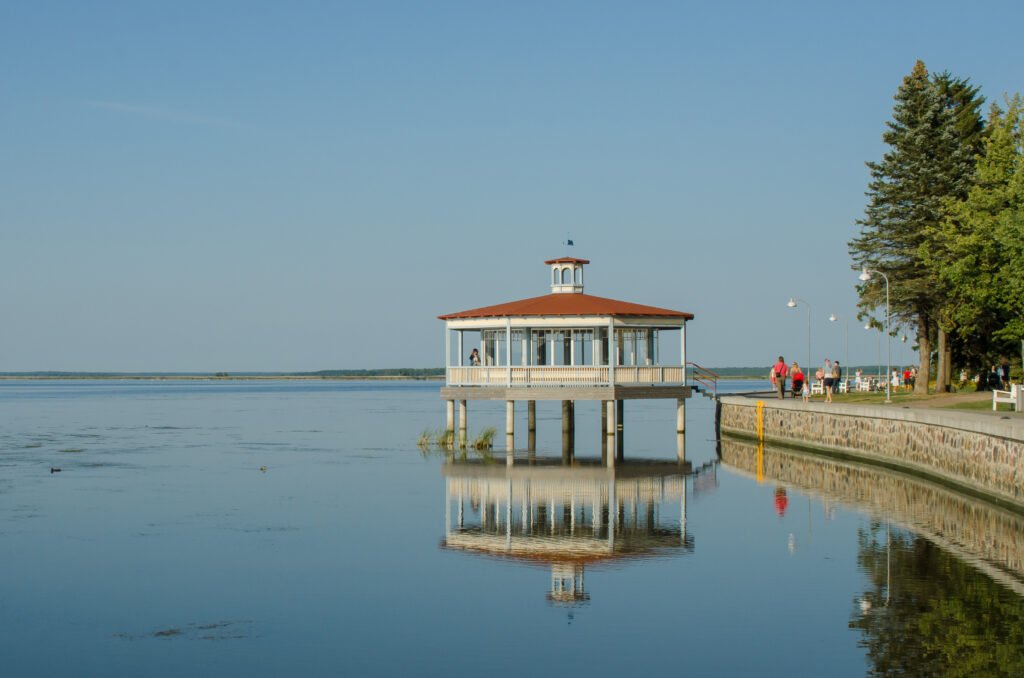

Haapsalu’s medieval streets and resort-era shoreline meet on a narrow peninsula rather than across a large city grid. Around the castle, Kooli and Jaani streets feed into Karja’s cafés and small shops. A short turn east reaches the waterfront, where the Kuursaal and Tchaikovsky Bench create a continuous promenade walk. The old railway station lies farther south, with its long platform now serving museum visitors instead of train passengers. Westward, Paralepa Beach requires a separate outing through quieter streets and coastal paths. Flat terrain helps, but historic paving and open shoreline exposure still shape the experience.
Why Haapsalu Works on Foot
The strongest walking area follows a simple chain: Karja Street, Haapsalu Castle, the Kooli Street museums and the seaside promenade. Old Town occupies a small peninsula, so the medieval quarter and the resort-era waterfront sit beside each other. From the castle, most core stops need only a few minutes on foot. The longer approaches lead south to the former railway station and west toward the beach, neither of which should be mistaken for the tightest central cluster.
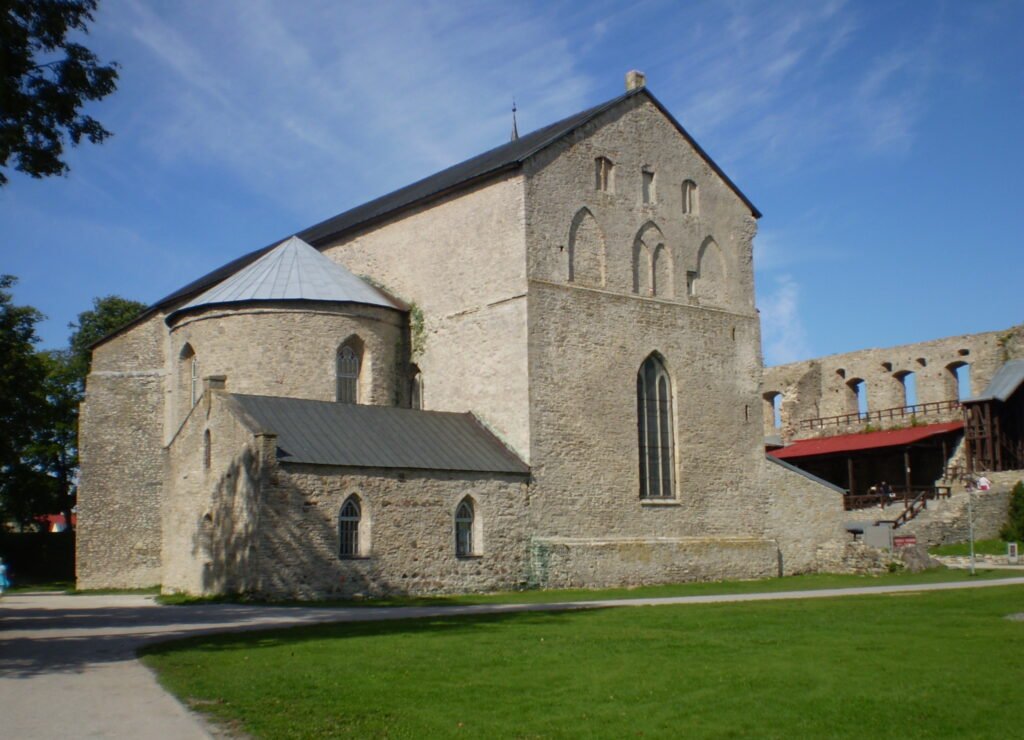
Karja is the traditional main street, with cafés and small shops. Kooli, Jaani and neighboring lanes retain the older street pattern around the castle. The castle courtyard can be visited independently of the indoor exhibitions; the cathedral and museum have their own access arrangements. These short connecting streets make it easy to spend time looking around instead of navigating a citywide transport network.
The Promenade, Kuursaal and Waterfront Connections
From the old town, walk toward Aafrika Beach and take the waterfront path past the ornate wooden Kuursaal. Continue along the shore toward the sundial and Tchaikovsky Bench, with nearby viewpoints and seating. The developed eastern promenade extends about 1.2 kilometers and has a paved, wheelchair-suitable route. That is stronger pedestrian evidence than the historic streets alone: a path can be level and accessible while adjoining old-town paving remains uneven. Waterfront paths are straightforward but exposed to coastal wind.
Väike Viik and the quieter western shore add another walking environment. Their lake and sea paths broaden a slow weekend, but their arcs around the water take longer than straight-line map distances suggest. The west-coast beach is a further excursion rather than an attraction just around the corner from the Kuursaal.
Where to Stay Without a Car
Choose accommodation near Karja Street or Lossiplats for the shortest walks to the castle, cafés and the start of the promenade. Around Sadama and Väike Viik, waterfront-focused stays remain close to the old town, although the shoreline feels windier. The Posti Street approach toward Raudtee suits travelers prioritizing the coach terminal. Paralepa-side spa stays work for beach time, but they trade central convenience for a quieter western setting. Check the actual entrance and walking route before booking, especially with luggage or mobility aids.
Useful Walking Times in Haapsalu
Allow about 5–8 minutes from central Karja Street to the castle gates. Haapsalu Old Town Hall lies another 3–6 minutes away. From the castle, the Kuursaal takes roughly 8–12 minutes, followed by about 7–12 minutes to Tchaikovsky Bench. The bus terminal and railway museum are around 18–25 minutes from the castle or central Karja area. Paralepa Beach is approximately 20–30 minutes from the former station and around 30–45 minutes from the old-town core.
These are practical walking estimates, not live navigation guarantees. Specific entrances, route choices, crossings, museum stops and walking pace affect the result. The Paralepa-to-Õhtu Kallas shore trail is about two kilometers and merits its own leisurely block of time.
A 2-Day Walking Route
The first day stays with the historic peninsula and eastern shoreline. The second starts at the old railway station and moves west, optionally reaching Paralepa before returning toward Väike Viik along the coast. This keeps the beach outside the essential city-center itinerary and avoids repeating the central promenade just to fill a second day.
Day 1 — Karja Street, Castle and Seaside Promenade
Walking route
Day 1 — Karja Street, castle and eastern seaside promenade
- Karja Street café and shop area
- Haapsalu Castle and Cathedral
- Haapsalu Old Town Hall
- Ilon's Wonderland
- Aafrika Beach and east promenade
- Haapsalu Kuursaal
- Tchaikovsky Bench
Begin on Karja Street and turn toward Lossiplats for the castle and cathedral. Continue along Kooli Street past the Old Town Hall and Ilon’s Wonderland, which is especially useful for families. Join the waterfront by Aafrika Beach, then follow the promenade to the Kuursaal and Tchaikovsky Bench. Finish beside the water instead of retracing the old-town streets. Castle and museum hours vary, so schedule indoor visits around their current opening days.
Day 2 — Railway Museum, Paralepa and the Western Shore
Walking route
Day 2 — Former railway station, Paralepa and western waterfront
- Haapsalu Railway and Communications Museum / Bus Station
- Paralepa Beach
- Õhtu Kallas western seaside path
- Ernst Enno Monument
- Väike Viik waterfront
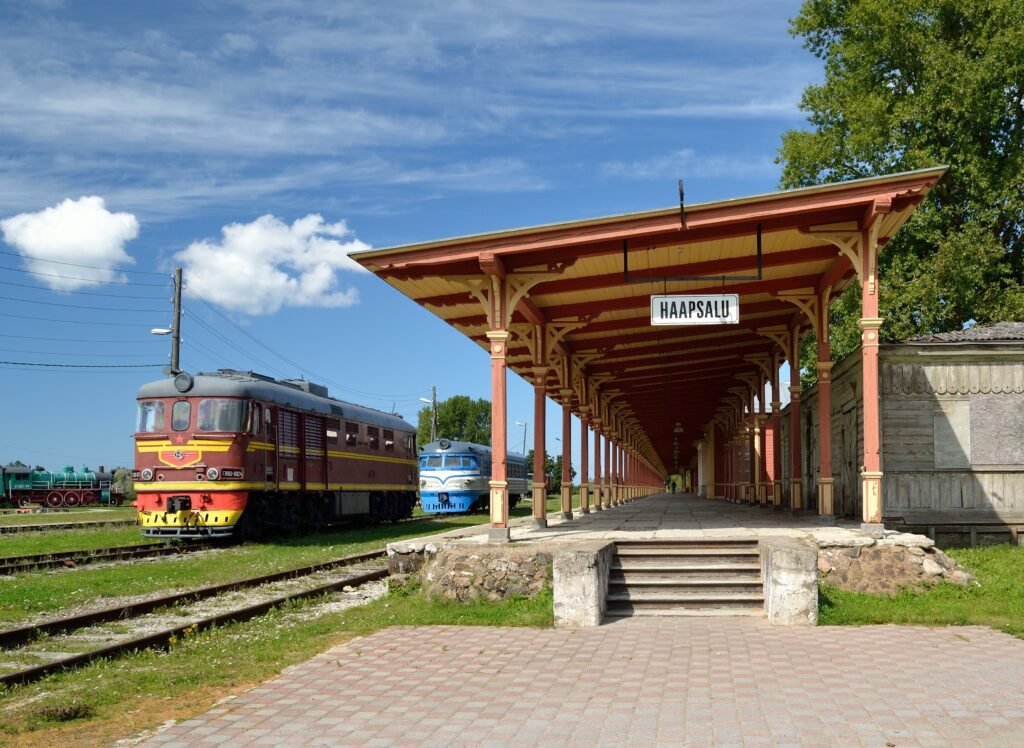
Start at Raudtee 2, where Haapsalu’s former railway station now contains the Railway and Communications Museum beside the bus terminal. Examine the long covered platform and preserved trains as museum exhibits, not current services. For a longer fair-weather walk, head west to Paralepa Beach and follow the coastal route toward Õhtu Kallas. Continue by the Ernst Enno Monument and finish at Väike Viik. Skip the beach in poor conditions for a shorter station-and-west-shore day.
Local Buses and Arrival From Tallinn
Direct intercity coaches are the practical car-free connection from Tallinn, normally taking around 1 hour 40–50 minutes. Buses serve the station precinct south of the old town, so a central hotel is usually a manageable walk after arrival. Travelers flying into Tallinn will generally need to connect to the city’s bus terminal before taking the regional coach. Check both legs rather than assuming airport-to-Haapsalu through service.
Local routes serve the town and surrounding Läänemaa, including services toward Rohuküla and through Uuemõisa and Holmi. They are helpful for some longer errands, but do not materially improve the already-walkable castle-to-promenade sightseeing chain. Weekday, weekend and seasonal schedules differ, so use Peatus to confirm actual departures. A beach trip should never depend on an assumed frequent shuttle.
The old station’s grand platform does not indicate an operating passenger railway. Rail service to Haapsalu ended decades ago. The proposed Turba–Haapsalu–Rohuküla restoration still depends on investment decisions, and no future trains should be built into present travel plans.
When a Car Helps
A private car adds little to the castle, Karja Street or eastern promenade. It can help when accommodation is far from the center, mobility makes longer distances impractical, or several scattered destinations must fit into one day. Matsalu National Park, Rohuküla ferry connections and island or coastal excursions should be planned separately. Their attractions and transport needs do not change how compact Haapsalu itself feels on foot.
Walking Limitations and Practical Tips
The terrain is notably flat, but smooth travel is not guaranteed everywhere. Expect varying historic surfaces, narrow sections of sidewalk and ordinary traffic crossings on the way from the bus station. The eastern promenade and a roughly two-kilometer route around Väike Viik offer accessible alternatives, with paved or gravel surfaces. Some museum interiors, older lodging entrances and winter paths may still create individual access barriers.
Bring wind protection for long stretches by the bay, even on relatively mild days. In winter, watch for ice on older paving and exposed waterfront sections. In summer, festivals can increase foot traffic and temporarily alter access around the castle or Karja Street. None of those temporary changes should be assumed to be permanent street conditions.
Best Season for a Walking Weekend
Late spring through early fall gives the most comfortable balance of daylight, promenade time and visitor facilities. Summer is the better season for making Paralepa Beach a major stop, since official bathing facilities operate seasonally. Outside summer, restaurants and some museums may have shorter calendars. Winter brings early darkness, wind and the possibility of snowy or icy routes, so plan shorter loops and confirm openings before departure.
Bottom Line
Haapsalu is most satisfying when the castle, medieval streets and promenade form the center of the weekend. Add the former railway station as a short southward museum outing, and save Paralepa Beach for a separate western walk. Direct buses make arriving from Tallinn practical, though local transport offers less freedom than in bigger cities. If you want a larger Baltic waterfront city with extensive transit, compare Gdańsk.