
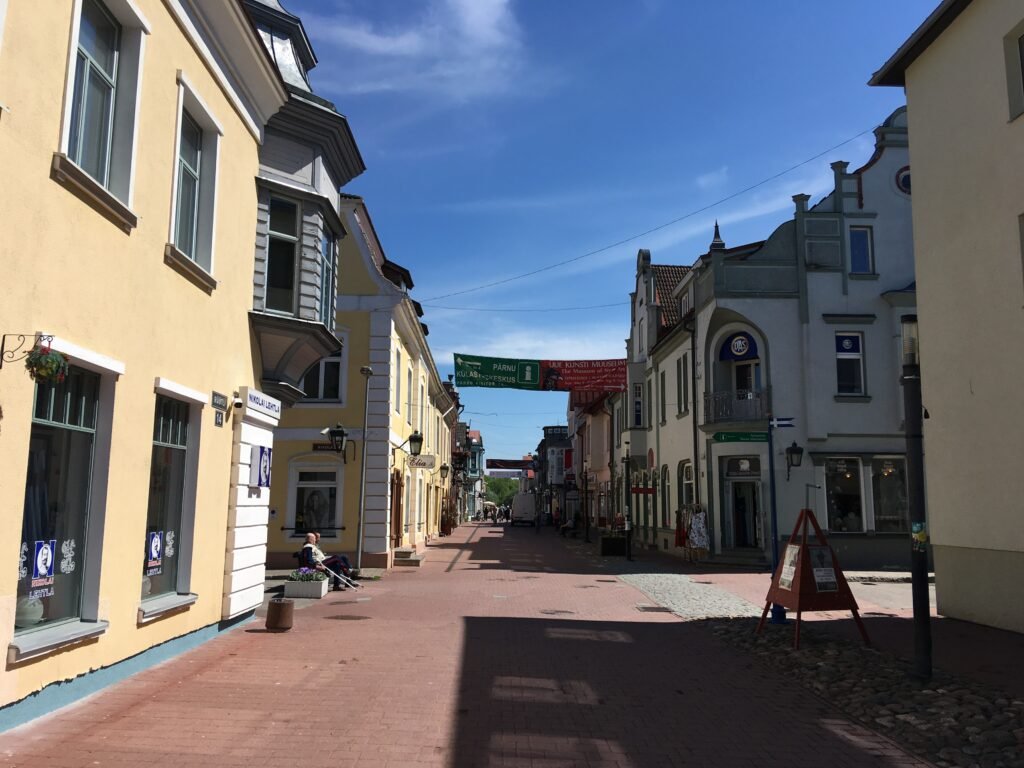

Rüütli Street anchors Pärnu’s historic center, while the seafront lies beyond a short belt of villas and leafy parks. That arrangement creates two complementary settings rather than scattered sightseeing zones. St. Elizabeth’s Church, the Town Hall, the Red Tower, and Tallinn Gate occupy a tight Old Town circuit. Supeluse Street then links the historic streets with Beach Park and the sand, about 15 minutes from central Pärnu. The mostly level terrain continues along a paved beach promenade and beside the Pärnu River. Longer riverside loops are enjoyable optional outings, not necessary links between the main sights.
Why Pärnu Works on Foot
Pärnu has a practical two-part visitor footprint: an old-town grid for history and shopping, followed by a broad park-and-beach district. Rüütli Street is the natural central spine, with the Red Tower, St. Elizabeth’s Church and the Town Hall nearby. The Town Hall and surrounding streets are ordinary short walks, not separate trips across the city. At the western side, Tallinn Gate opens toward the former fortifications and the paths around Vallikäär. The city’s riverside promenade adds a third waterside setting, but it need not be walked end to end.
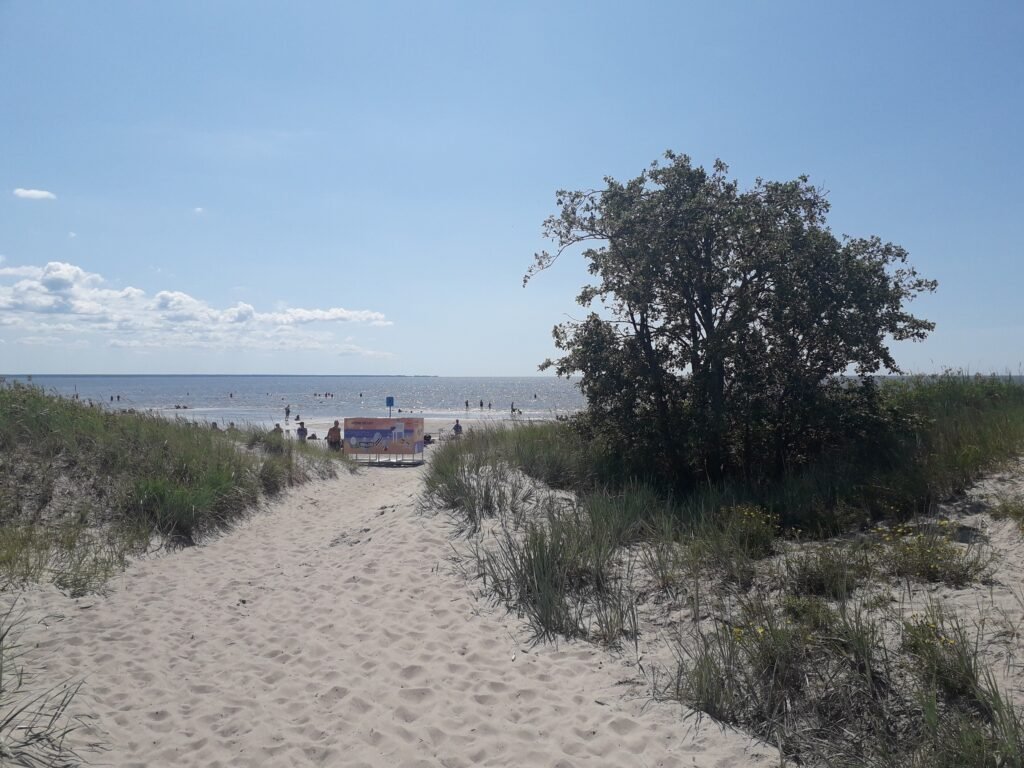
The transition to the beach matters more than the historic core’s small dimensions alone. Supeluse Street and connecting sidewalks carry walkers through the resort quarter toward Beach Park, the historic mud baths and the shore. The tourism office describes the beach as roughly a 15-minute walk from the city center; a specific hotel or bus-station start can take longer. Pärnu remains easy to explore by foot outside swimming season because the streets, parks and paths are permanent.
Sidewalks, Crossings and Accessibility
Rüütli’s pedestrian section and the paved beach promenade offer comfortable places to walk without mingling constantly with traffic. Elsewhere, use ordinary sidewalks and marked crossings, especially between Old Town and the seafront. Historic paving and occasional cobblestone strips can be awkward for small wheels. The city is notably flat, with no prolonged hillside climb between the main visitor areas. Beach sand is a separate accessibility challenge even when the promenade is easy underfoot.
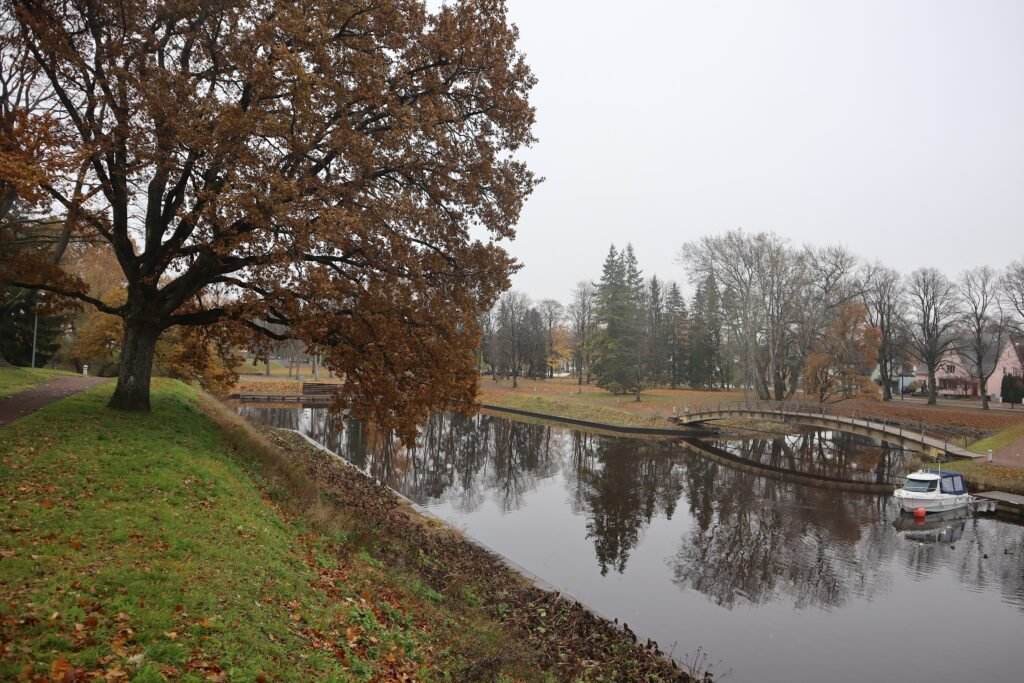
For a more accessible seaside nature stop, the 600-meter coastal meadow trail uses an elevated path and observation platform. Visit Pärnu identifies it as suitable for strollers and wheelchairs. Pärnu also has walkable riverbank paths, but the full Jaanson loop combines roughly four kilometers on each bank and is better treated as an optional longer outing. The operating Raba–Lai bridge provides another walkable river crossing into Rääma; crossing the river is not needed for the core Old Town-to-beach itinerary.
Best Areas to Stay Without a Car
Old Town around Rüütli and Nikolai streets is the most balanced all-season choice. You can reach the bus station, historic landmarks, shops and restaurants easily, then walk to the sea when you want. Supeluse Street and Beach Park split the difference between the older center and resort seafront. This area suits guests who want regular walks in both directions. Ranna puiestee and the beach quarter make sense for spa stays and beach-first mornings, though the bus station and town-center shops are farther away.
Choose a precise property address rather than relying on a broad “beach area” label. Hotels near the central beach and old mud-bath buildings are more walkable to the historic core than lodgings farther along the extended coast. For winter visits, check which on-site dining and spa services actually operate during your stay.
Walking Times Between Pärnu Sights
Bus Station to Rüütli Street: about 5–8 minutes. Across Rüütli’s pedestrian section: around five minutes. Old Town center to central beach: approximately 15–25 minutes, depending on the exact start and entrance. Town Hall to Tallinn Gate: about 5–8 minutes. Tallinn Gate to Vallikäär: just 2–5 minutes.
Villa Ammende to the central beach: around 10–15 minutes. Central Beach House to the coastal meadow trail: approximately 15–25 minutes along the promenade. Bus Station to the beach: allow roughly 20–30 minutes. These are practical planning estimates rather than live route calculations, and crossings or sand can change the time required.
A 2-Day Walking Route Through Pärnu
Day 1: Old Town, Tallinn Gate and the River
Start near Pärnu Bus Station and walk toward Independence Square, where the central pedestrian street begins. Visit the Red Tower on Hommiku Street, then take your time along Rüütli’s shops and historic facades. St. Elizabeth’s Church and the Town Hall fit into the same short central circuit. Continue toward Tallinn Gate and the peaceful moat paths at Vallikäär. Finish by walking toward the Pärnu River promenade, with the option to extend the waterfront stroll toward the city-center bridge. The route is roughly 3–4 kilometers before detours or museum time.
Walking route
Day 1: Old Town, the moat and the Pärnu River
- Pärnu Bus Station
- Independence Square (Iseseisvuse väljak)
- Pärnu Red Tower
- Rüütli Street
- St Elizabeth’s Church
- Pärnu Town Hall
- Tallinn Gate
- Pärnu Moat / Vallikäär Park
- Jaanson River Promenade, central section
Day 2: Resort Architecture, Parks and the Coast
Begin along Supeluse Street before visiting Villa Ammende, the Art Nouveau hotel near the resort district. Continue through tree-lined Beach Park, then pass the historic mud baths beside the coast. Reach the central Beach House and continue east along the paved promenade. Finish at the raised coastal meadow trail, where a viewing platform overlooks the wetlands. That progression avoids returning to Old Town between each stop. Allow roughly 3.5–5 kilometers of walking, depending on beach detours and how far you follow the shore.
Walking route
Day 2: Resort villas, Beach Park and the promenade
- Supeluse Street
- Villa Ammende
- Pärnu Beach Park (Rannapark)
- Historic Pärnu Mud Baths / Hedon Spa
- Pärnu Beach House
- Pärnu Beach Promenade
- Pärnu Coastal Meadow Hiking Trail
When Local Buses Help
Pärnu’s city and county buses are useful for outlying neighborhoods, longer residential trips and reducing walking effort after a full day. Most first-time visitors staying in the historic center, Supeluse area or central beach district can do the two routes without them. The Pärnumaa Public Transport Centre manages city, suburban and county services. Check Peatus for the specific stop and day, since evening and weekend departures vary by route.
Pärnu uses a shared public-transport card with ticket validation on boarding. A cash paper ticket is another option, though it is typically more expensive. Services are functional rather than metro-like; do not plan a tight late-night return from a distant stop without checking the last departure.
Arriving in Pärnu Without a Car
Intercity coach is the practical default. Pärnu Bus Station is at Pikk 13, close to the historic center. Direct coaches connect Pärnu with Tallinn and Riga, including Lux Express services; operator schedules and travel times should be checked for your actual day. Tallinn and Riga international airports are the main long-distance air gateways, followed by an onward bus or other ground connection. Tallinn’s harbor D-Terminal also has a direct Lux Express connection to Pärnu on published services.
No passenger train currently serves Pärnu. The former Tallinn–Pärnu service stopped in December 2018. A new Rail Baltica passenger terminal has planning and construction approvals, but that is future infrastructure, not a present arrival option. The Estonian regulator reported a new Pärnu terminal-area building permit in October 2026 and a planned 2027 start of terminal works.
Pärnu Airport is about 6–7 kilometers outside the city and operates a limited island-oriented service, including scheduled flights to Ruhnu. It is not a substitute for an international arrival hub. Visitor information identifies local bus 24 between the airport and Pärnu Bus Station; check its current departures against flight times. A taxi is the simplest fallback if the timetable does not connect.
When a Car Helps
A car is unnecessary for the central Old Town, park and beach sightseeing footprint. It becomes more useful for scattered Pärnu County attractions, remote nature areas or lodging outside the urban bus network. Visitors heading for Soomaa National Park or beaches well beyond the city should arrange a suitable tour, rural bus or car rather than assume those places belong to the city’s walkable core.
Seasonal Comfort and Practical Limitations
Summer brings the strongest beach atmosphere, busy promenades and fuller seasonal services. The central shore can feel crowded in warm weather, while restaurants may be busier. Supeluse Street is car-free only from June through August, so its summer pedestrian setup should not be expected year-round. The Old Town streets, beach promenade and park network remain usable outside that period, subject to conditions and normal access rules.
In autumn and winter, Pärnu is quieter, with fewer seasonal businesses, stronger coastal winds, earlier darkness and possible snow or ice. Year-round spas, museum visits and town-center cafés help make a shoulder-season or winter weekend worthwhile. As of October 2026, the city also reported street improvements around Aia and Esplanaadi; local work zones may temporarily affect a preferred sidewalk or crossing. Check current signs rather than treating a construction detour as permanent.
Bottom Line
Pärnu is a compact car-free destination because its historic streets and principal beach belong to one practical walking visit. Stay in Old Town for the best overall access, or between Supeluse and Beach Park for the easiest balance. Use local buses selectively, and arrive by direct coach rather than planning around an unbuilt railway. The seaside remains part of the itinerary even outside summer, though facilities and conditions change.