
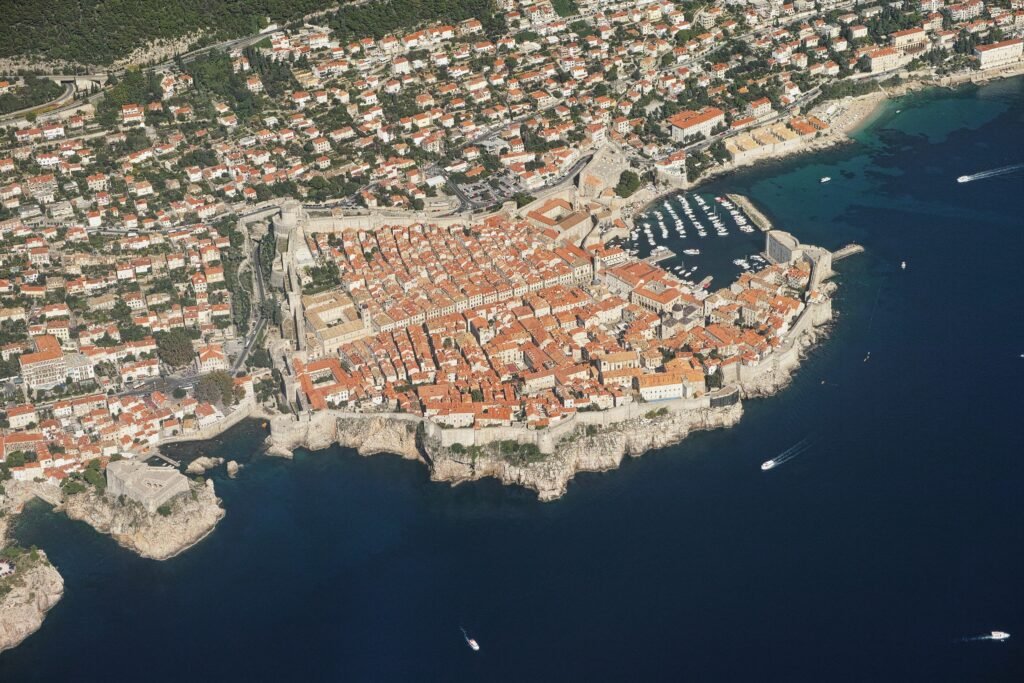

Dubrovnik’s walking map changes dramatically within a few hundred meters of Stradun. The main east-west spine is broad, pedestrianized, and almost level between the Old City’s principal squares. Rector’s Palace, the cathedral, Sponza Palace, both monasteries, and wall entrances sit inside this remarkably tight field. Turn away from that spine, however, and stone stairways climb sharply toward the upper lanes and fortifications. Outside the gates, visitor geography stretches toward Ploče, Gruž, Lapad, and Babin Kuk along a steep coastal city. Accommodation choice therefore matters more than straight-line distance suggests. Buses preserve a car-free weekend by handling those longer, hillier connections.
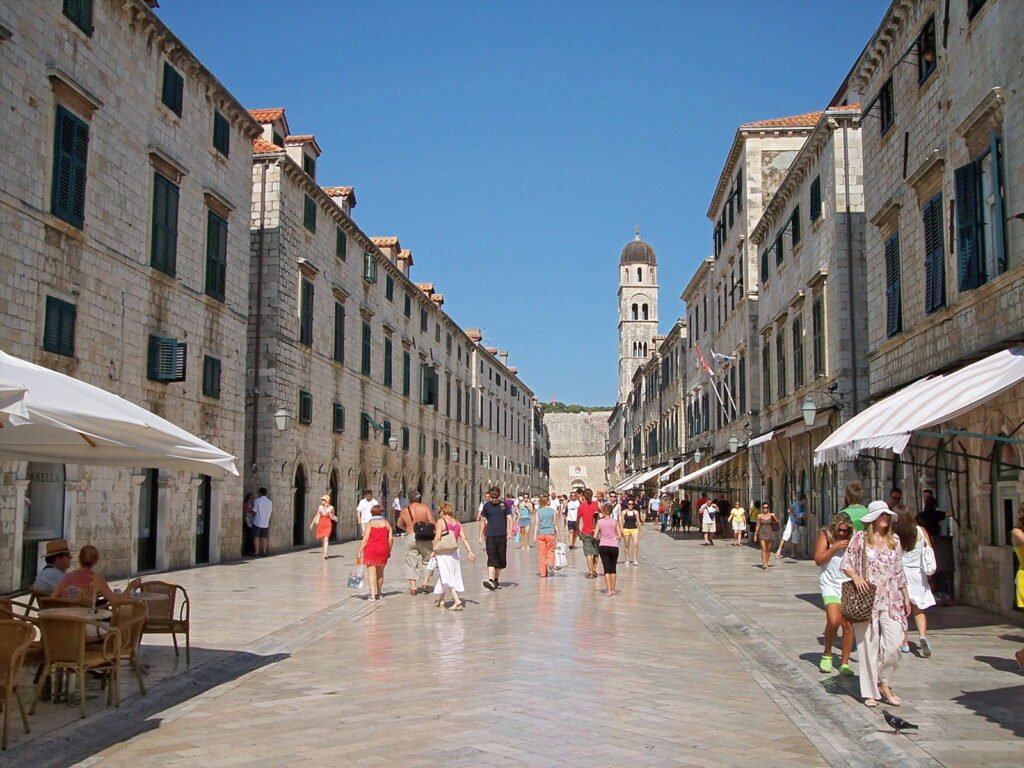
Why Dubrovnik Is So Compact on Foot
Dubrovnik’s entire Old City is a pedestrian zone, and its headline sights share one unusually small field. Enter through Pile and Stradun leads directly past the Franciscan Monastery toward Luža Square. Sponza Palace, Rector’s Palace, the cathedral, the Old Port, and the Dominican Monastery all sit near the eastern end. Ploče then provides another practical gateway beyond that cluster. Three city-wall entrances also meet the historic core rather than requiring a separate district trip. That concentration deserves a very high attraction-proximity score, but it describes the walled center more than the whole visitor city.
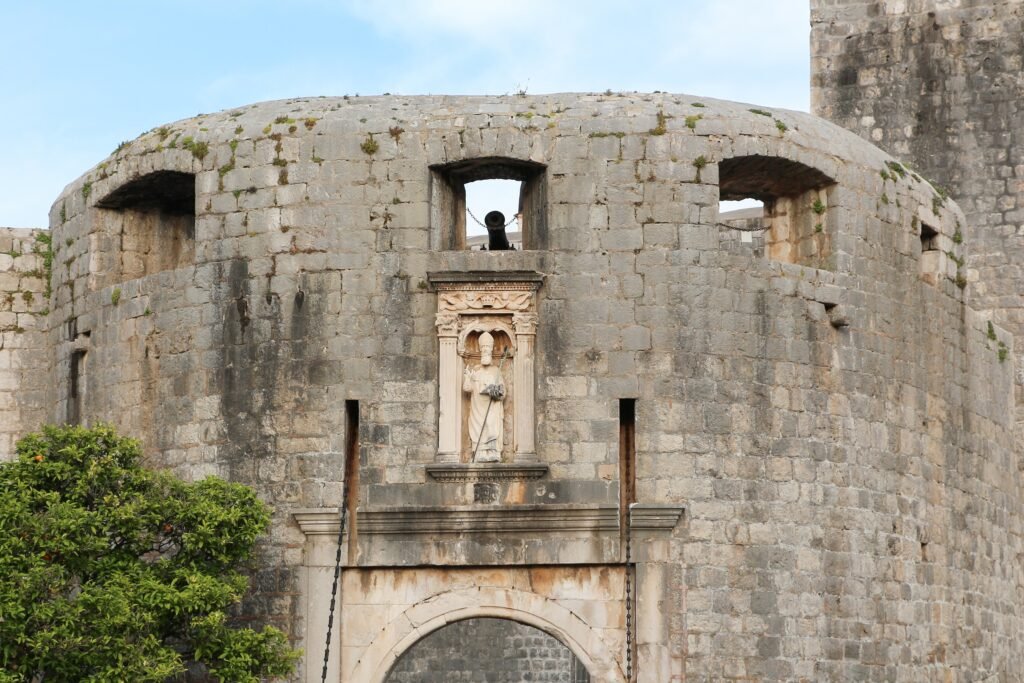
Where Walking Gets Harder
Flat Stradun can disguise how vertical Dubrovnik becomes one street away. Many northern side lanes climb by stone steps, while wall access itself begins with stairways. The fortified circuit adds repeated climbing above the city, so short map distances can demand much more energy than expected. Ploče also rises quickly outside the eastern gate, and hillside apartments may add a final climb after every outing. Heritage surfaces are another constraint: polished stone can be uncomfortable for wheels and slippery when wet. Pedestrianization removes traffic from the core, but it does not remove these physical barriers.
Best Areas to Stay Without a Car
Old Town and the immediate Pile area maximize sightseeing convenience, especially when lodging sits near the lower streets. Ploče is also close, with direct access to the eastern gate, airport shuttle, hotels, and nearby beaches. Check the exact elevation before booking there because upper properties can involve steep approaches. Lapad and Babin Kuk trade instant Old City access for flatter promenades, resort hotels, and frequent buses to Pile. Gruž works well for the main bus station, port, and practical services, but it is a separate base rather than an extension of the historic core.
Typical Walking Times in Dubrovnik
Pile Gate to the Franciscan Monastery: roughly 2–4 minutes. From Pile Gate to Luža Square, Rector’s Palace, and the cathedral: about 8–10 minutes without sightseeing stops. Crossing the Old City from Pile to Ploče Gate: roughly 12–15 minutes. Gruž Harbour to Lapad Bay: under 30 minutes, according to official tourism guidance. The walk from Gruž Harbour to the city walls: about 40 minutes at a leisurely pace. Treat the Old City figures as practical route estimates, not live-navigation guarantees.
A 2-Day Walking Route
Day 1: Old Town Spine, Monasteries and Walls
Walking route
Day 1 — Old Town spine, monuments and eastern gate
- Pile Gate
- Big Onofrio's Fountain
- Franciscan Church and Monastery
- Stradun
- Sponza Palace
- Rector's Palace
- Dubrovnik Cathedral
- Old Port
- Dominican Monastery
- Ploče Gate
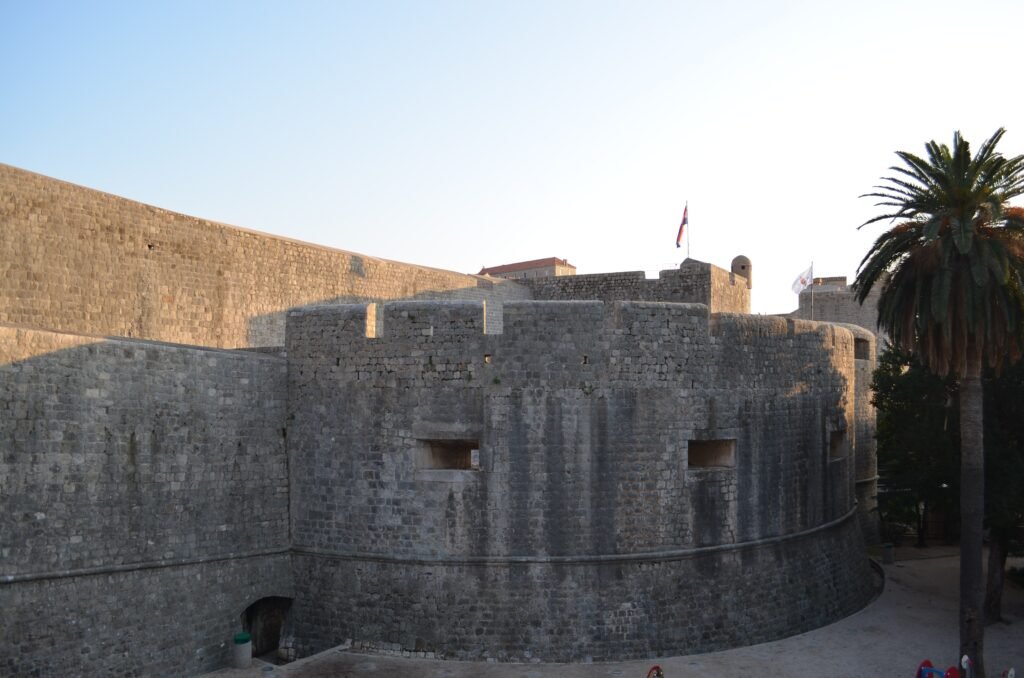
Start at Pile Gate and pass Big Onofrio’s Fountain and the Franciscan Monastery before following Stradun east. Continue through Luža Square to Sponza Palace, Rector’s Palace, and the cathedral, then reach the Old Port. Finish by the Dominican Monastery and Ploče Gate rather than retracing Stradun. If energy and mobility allow, add the city walls from the St. Luke entrance near the Dominican complex. Treat that circuit as a separate stair-heavy layer because its elevation is very different from the streets below.
Day 2: Gruž, Lapad and Babin Kuk
Walking route
Day 2 — Gruž waterfront to Lapad and Babin Kuk
- Dubrovnik Main Bus Station
- Gruž Port
- Gruž Market
- Lapad pedestrian promenade
- Uvala Lapad
- Babin Kuk
- Copacabana Beach
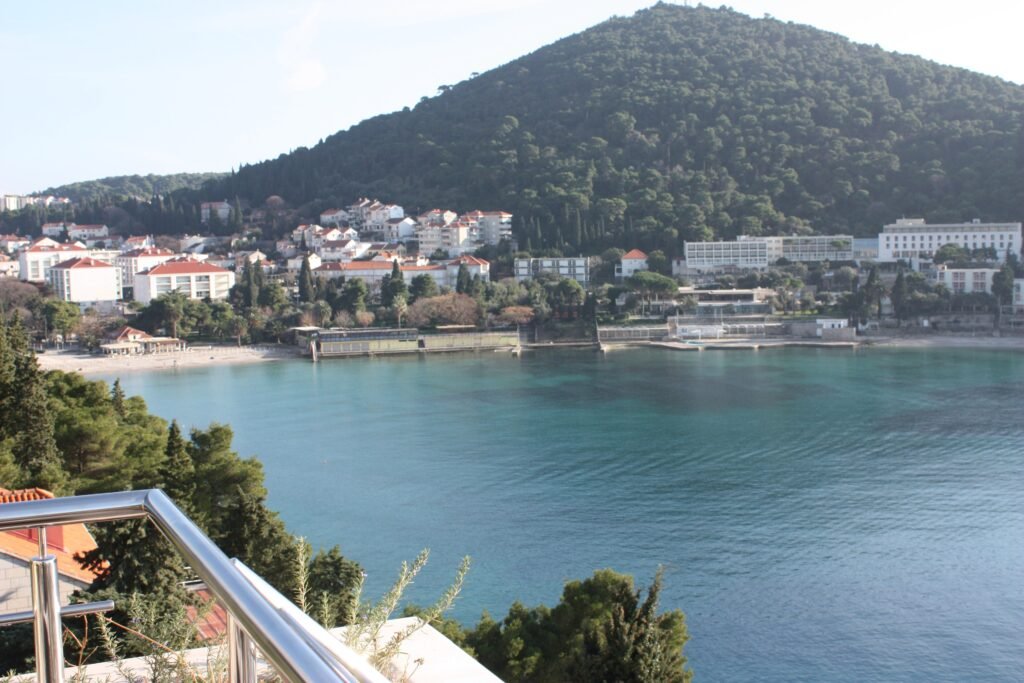
Use a bus from Pile or the Old City edge to Gruž instead of spending the morning on low-value cross-city mileage. Begin near the main bus station and port, then pass Gruž Market before walking toward Lapad. Continue along the pedestrian promenade to Uvala Lapad, then extend through Babin Kuk toward Copacabana Beach. Official tourism guidance places Gruž Harbour and Lapad Bay within a sub-30-minute walk. This route shows why Dubrovnik remains car-free friendly even though its visitor geography extends well beyond the walls.
When Transit Helps
Libertas buses become valuable as soon as the Old City’s compact geography ends. Line 4 connects the Hotel Palace end of Lapad with Pile, while line 6 links Babin Kuk and Pile. Both currently run every day from early morning until after midnight, with frequent daytime departures. Other city routes connect Gruž, Kantafig, Viktorija near Ploče, and hillside neighborhoods. Use buses for Old City-to-Lapad, Babin Kuk, Gruž, or higher lodging areas. Inside the walls, boarding transit would add friction because the pedestrian core is already faster on foot.
Arriving in Dubrovnik Without a Car
Dubrovnik Airport has a direct shuttle operated by the licensed airport-bus provider. After flight arrivals, buses run toward the city and stop first at Ploče Gate, then at Gruž main bus station. The operator gives roughly 30 minutes to the Old Town area and about 35 minutes to Gruž. Traffic can stretch the overall trip toward 40 minutes. Ploče is excellent for eastern Old City lodging, while Gruž suits western bases and onward buses. The remaining burden is the last walk: pedestrian streets, steps, or hillside accommodation can make luggage more difficult than the airport transfer itself.
When a Car Helps
A private car adds little to a weekend centered on Dubrovnik itself. It cannot improve movement inside the pedestrian Old City, while parking and access around the walls create extra logistics. Dubrovnik also operates a seasonal traffic-management zone around the historic core in 2026, but that temporary regime is not part of the structural score. A car becomes more useful for self-directed coastal or inland excursions beyond the useful urban and regional bus network. For the standard two-day city visit, buses and the airport shuttle cover the important gaps more efficiently.
Walking Limitations and Accessibility
The easiest mobility corridor is the lower Old City around Stradun, Od Puča, Luža Square, and the Old Port. The city walls and many upper northern lanes are stair-heavy and unsuitable for step-free touring. Official visitor information notes a southern ramp into the cathedral and access support at Rector’s Palace. The Franciscan Monastery and Sponza Palace can also be easier with assistance. Travelers with reduced mobility should verify the exact route from gate to accommodation before booking, because a nearby address may still sit above a long staircase. Lapad can offer a flatter alternative base.
Seasonal Comfort
Summer sun makes the exposed city walls more tiring than the shaded lanes below, while peak crowds can slow narrow gateways. Rain can make polished stone slick, especially on slopes and steps. Shoulder-season conditions may feel easier for long walking days, but daily weather and crowd levels change too much for structural scoring. Recheck current wall hours, transport notices, and any temporary access restrictions before travel.
Bottom Line
Dubrovnik combines extraordinary historic-core compactness with unusually high walking effort. Stradun places major monuments within minutes, but stairs, wall climbs, and hillside lodging prevent the city from feeling effortless. Pile and Ploče make strong Old City gateways, while Libertas buses connect the separate Gruž, Lapad, and Babin Kuk zones. Choose accommodation by both distance and elevation, and a private car is unnecessary for a first weekend.