
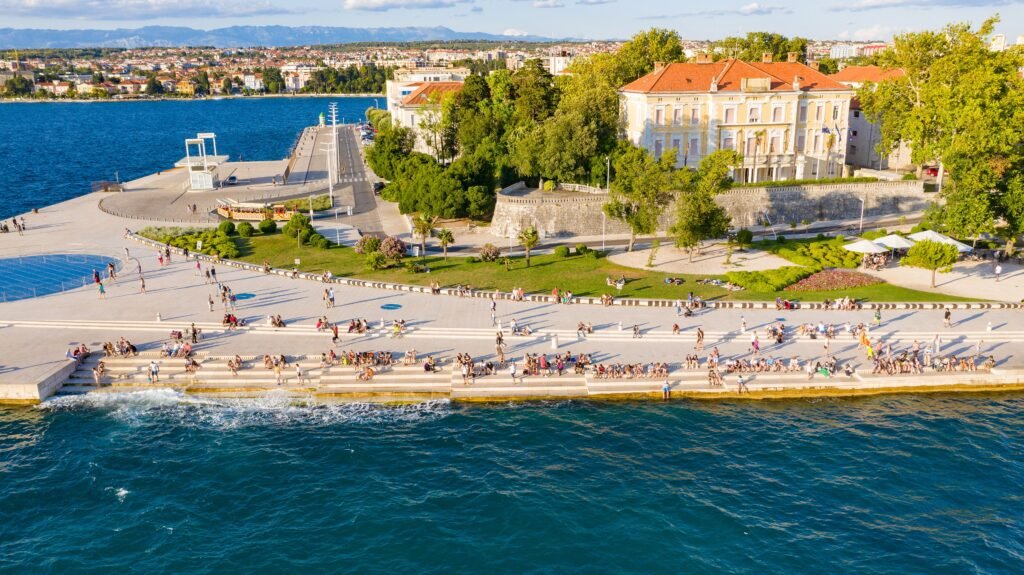

Zadar compresses its visitor geography onto a narrow peninsula where Roman streets still shape the modern walking pattern. The tourist board’s heritage route links 14 central stops across just 2.1 kilometers. The Forum, St. Donatus, cathedral, Kalelarga, People’s Square, and waterfront fit inside that same compact circuit. Land Gate and the city bridge provide clear entries from the mainland, while level terrain keeps effort low. Stone paving and occasional vehicle interfaces need attention, especially where the peninsula meets busier roads. The pattern stretches south toward the bus station and north toward Borik and Diklo.
Why Zadar Works So Well on Foot
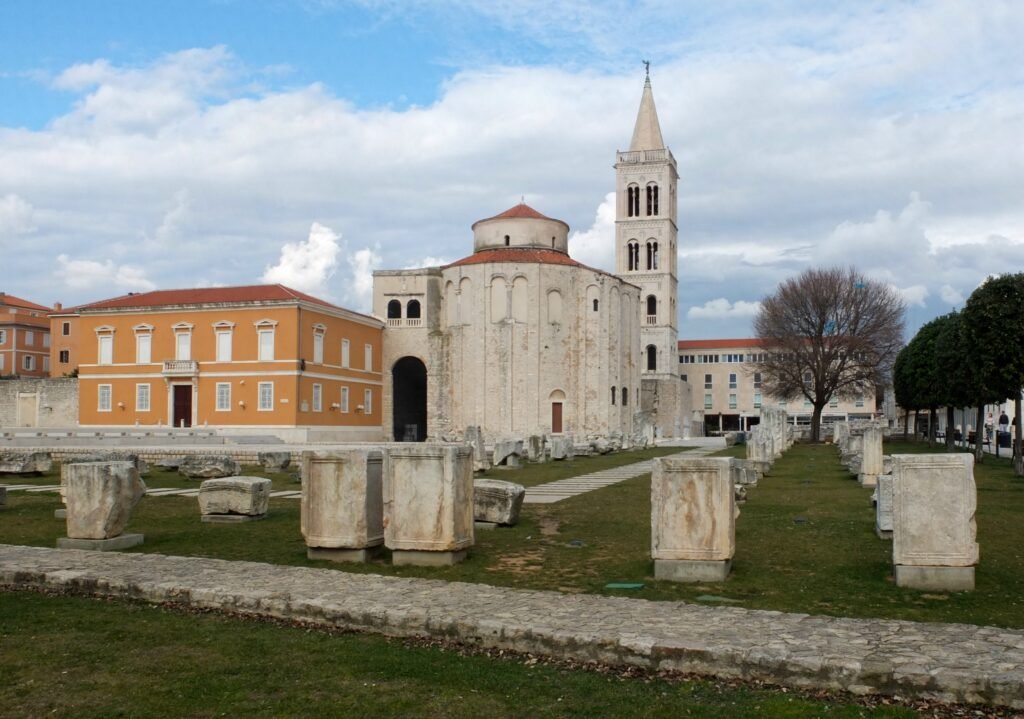
The peninsula is the decisive feature of a Zadar weekend. The tourist board’s UNESCO and heritage route links 14 stops across only 2.1 kilometers, showing how little dead mileage separates the main sights. The Roman Forum, St. Donatus and St. Anastasia Cathedral form one tight cluster. Kalelarga then connects that cluster with People’s Square and the eastern entrances, while the waterfront carries the route toward the Sea Organ and Greeting to the Sun. Most visitors can spend a full sightseeing day here without needing a bus.
Walking quality is also stronger than historic-center distance alone suggests. The preserved Roman grid keeps routes direct, and much of the core functions as pedestrian public space. Zadar Tourist Board’s accessible route connects the walls, waterfront, Forum, cathedral, Kalelarga, People’s Square and Land Gate. That does not make every surface barrier-free. The lower Forum level lacks a ramp, and the Sea Organ’s lower steps are not independently accessible for every traveler.
Best Areas to Stay Without a Car
Old Town / the peninsula is the strongest base for pure sightseeing efficiency. The main historic sights, waterfront installations, markets and restaurants sit within a short walk. Jazine and the City Bridge mainland edge trade a little atmosphere for easier luggage handling and quicker access toward the bus station. Kolovare works well when beach access matters, while remaining close to Land Gate. Borik and Puntamika suit a beach-first stay, but they make local buses much more important for daily Old Town sightseeing.
Walking Times Between Major Zadar Sights
Treat these as practical planning estimates rather than live-navigation guarantees. Land Gate to People’s Square is about five minutes. People’s Square to the Forum and St. Donatus is another five minutes. The cathedral is only a couple of minutes from the Forum. From the Forum, allow roughly five to seven minutes for the Sea Organ and Greeting to the Sun. Kolovare Beach is about 10–15 minutes from Land Gate. The main bus station to Old Town Center is the meaningful longer approach: roughly 1.7 kilometers or 20 minutes on foot.
A 2-Day Walking Route
Day 1: The Historic Peninsula
Walking route
Day 1 — Historic Peninsula from Land Gate to the Sea Organ
- Zadar Land City Gate, Zadar, Croatia
- Five Wells Square, Zadar, Croatia
- People's Square, Zadar, Croatia
- Široka ulica (Kalelarga), Zadar, Croatia
- Roman Forum, Zadar, Croatia
- Church of St. Donatus, Zadar, Croatia
- Cathedral of St. Anastasia, Zadar, Croatia
- Sea Organ, Zadar, Croatia
- Greeting to the Sun, Zadar, Croatia
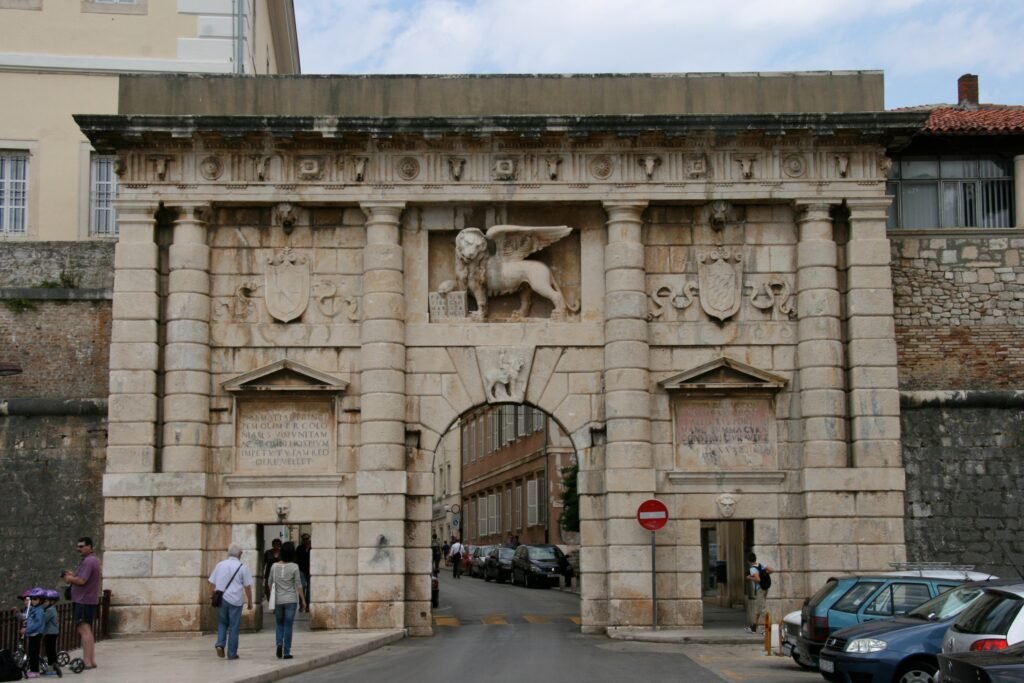
Start at Land Gate and move through Five Wells Square toward People’s Square instead of zigzagging across the peninsula. Follow Kalelarga to the Roman Forum, then see St. Donatus and St. Anastasia Cathedral within the same compact cluster. Continue west and northwest to the waterfront. Finish at the Sea Organ and the adjacent Greeting to the Sun. This ordering uses Zadar’s street grid naturally and avoids repeating the central spine.
Day 2: Kolovare and the Eastern Edge
Walking route
Day 2 — Kolovare, Parks, Markets and the Eastern Walls
- Kolovare Beach, Zadar, Croatia
- Vladimir Nazor Park, Zadar, Croatia
- Queen Jelena Madijevka Park, Zadar, Croatia
- Petar Zoranić Square, Zadar, Croatia
- Museum of Ancient Glass, Zadar, Croatia
- Zadar City Market, Zadar, Croatia
- Sea Gate, Zadar, Croatia
- Zadar City Walls, Zadar, Croatia
- City Bridge, Zadar, Croatia
Begin at Kolovare Beach, the closest major beach that still fits naturally into a walking weekend. Walk north through Vladimir Nazor Park and Queen Jelena Madijevka Park to Petar Zoranić Square. Continue to the Museum of Ancient Glass and the city market, then turn toward Sea Gate and the walls. Finish at City Bridge, which leaves you on the mainland edge without retracing the whole peninsula. Borik and Diklo are better treated as separate bus-assisted beach outings rather than forced into this walking route.
Using Local Buses in Zadar
Buses matter less inside the peninsula than they do around its edges. Liburnija lists 11 city lines and a daily network span from 05:00 to 24:00. Line 2 is the most useful first-time visitor link because it connects the main bus station with Poluotok, the peninsula center. For northern beaches, lines 5A and 8A cover Puntamika, Borik and Diklo, with 8A carrying weekend and holiday service through Puntamika. Line 9A reaches Gaženica ferry port.
The system is usable without special preparation, but it is not a high-frequency metro substitute. One-way tickets can be bought in cash from the driver, and the Zadar City app sells digital tickets. Current line-specific timetables still matter, especially on weekends and for beach trips. Check Liburnija before departure because temporary roadworks and events can change stops without altering the city’s underlying transit structure.
Arriving in Zadar Without a Car
Zadar Airport has a direct public bus that runs through Gaženica and the main bus station before reaching Old Town. The airport currently quotes about 20 minutes from the terminal to Old Town and a €5 one-way fare including baggage. Its timetable is published in date ranges and changes with the flight schedule, so verify the active period before travel. The airport ticket is currently valid for onward city transport for 90 minutes.
Intercity bus travelers arrive south of the historic core. Walking from the main bus station to Old Town Center is about 1.7 kilometers and roughly 20 minutes. That is manageable with light luggage, but line 2 is the better choice for many arrivals. This separation is Zadar’s main arrival burden: once you reach the peninsula, the core becomes dramatically more compact.
When a Car Helps
A car adds little value for a two-day Zadar city break. It becomes useful when the trip expands beyond the urban core to scattered coastal stops, inland destinations or nature-focused day trips. Even within the city, Borik and Diklo do not require a car because buses cover them. Keep the car decision tied to excursions rather than to Old Town sightseeing.
Limitations and Practical Tips
Zadar’s compactness has clear boundaries. The bus station is outside the peninsula, and Gaženica sits farther southeast. Borik, Puntamika and Diklo extend north along the coast and should not be treated as part of one seamless Old Town walk. Historic stone surfaces can be smooth or uneven, while the lower Forum and Sea Organ levels present accessibility limits. Around Land Gate, the bridge and mainland approaches, pay more attention to traffic and crossings than you need inside the pedestrian core.
Seasonal Context
High summer brings heat and heavier pedestrian crowds, which can slow otherwise short walks. Rain can make polished stone more slippery, while exposed waterfront sections can feel windy outside summer. Those conditions affect comfort and pacing, not Zadar’s underlying visitor geography. The peninsula remains compact in every season.
Bottom Line
Zadar’s strongest walking advantage is compression: a large share of the first-time visitor experience fits on one flat, legible peninsula. Kolovare extends that footprint without breaking it, while the bus station and northern beaches are the points where transit becomes genuinely useful. Travelers comparing Zadar with other European city breaks can also see our ranking of walkable European cities.