


Pula’s visitor map splits into two distinct scales. Roman-era landmarks occupy a dense central loop between the Arena, Forum, Giardini, and Kaštel hill. The Forum and Temple of Augustus share one square, while Sergijevaca leads directly to the Arch of the Sergii. A permanent network of pedestrian streets protects much of this historic center from through traffic. Kaštel adds the main central climb, rising only about 34 meters above sea level. South of the core, the pattern changes sharply. Aquarium Pula and Verudela beaches sit roughly four kilometers away, turning buses into useful extensions rather than substitutes for walking.
Why Pula Works Well on Foot
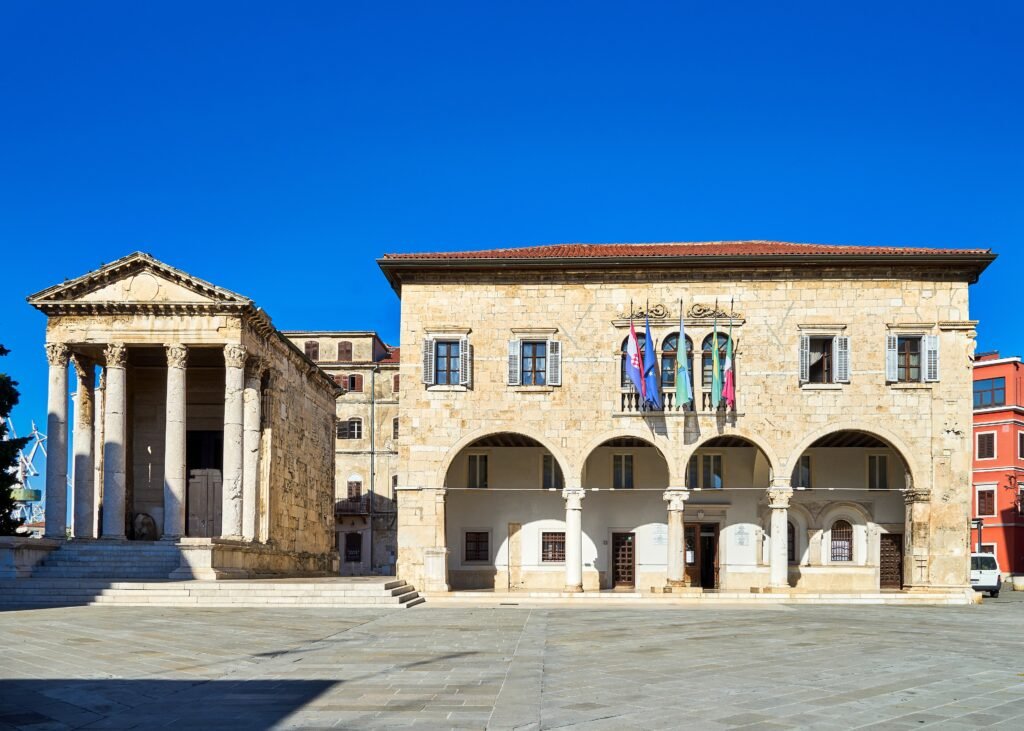
The historic center is not merely small; much of its useful visitor spine is protected from ordinary through traffic. City rules list Forum, Sergijevaca, Portarata, Giardini, parts of Kandlerova, and adjoining lanes among permanent pedestrian zones. That creates strong continuity from the Forum toward the Arch of the Sergii and market area. The Arena sits outside the former city walls, but its approach remains close to the same sightseeing network. Twin Gates, the Small Roman Theatre, and Kaštel then form a compact upper-center branch rather than a separate district.
Best Areas to Stay for a Walking Weekend
Old Town and Forum offer the shortest walks to the Temple of Augustus, Sergijevaca, waterfront, and Kaštel approaches. Giardini and the market area balance central walking with convenient bus stops for Verudela. The Arena and bus-station edge work especially well for travelers arriving by coach or airport shuttle. The main bus station is about 800 meters from the Arena, so luggage transfers stay manageable. Verudela suits a beach-first trip, but it shifts the Roman core from doorstep walking to a bus ride.
Walking Times Between Major Pula Sights
Arena to Forum takes roughly 10–12 minutes by the flatter waterfront approach. From Forum, Sergijevaca reaches the Arch of the Sergii in about five to seven minutes. The Arch to Twin Gates is another short central link of roughly five minutes. Forum to Kaštel usually takes about eight to ten minutes, with the climb doing more work than the distance. The main bus station sits around 800 meters from the Arena, usually a 10–12 minute walk with luggage. Aquarium Pula is different: its official location is four kilometers south of central Pula, so use a bus for that transfer.
A 2-Day Walking Route
Day 1: Roman Pula and the Central Hill
Walking route
Day 1 — Roman Pula and the Central Hill
- Pula Arena
- Twin Gates
- Small Roman Theatre
- Kaštel, Historical and Maritime Museum of Istria
- Church and Monastery of St. Francis
- Forum and Temple of Augustus
- Sergijevaca Street
- Arch of the Sergii
Start at Pula Arena before following the old city edge toward Twin Gates. Continue to the Small Roman Theatre and climb once to Kaštel, avoiding repeated hill approaches. Descend through the St. Francis area to Forum and the Temple of Augustus. Finish eastward along Sergijevaca at the Arch of the Sergii and Portarata. The route concentrates nearly all climbing in the middle and avoids retracing the same central streets.
Day 2: Verudela Coast Without a Car
Walking route
Day 2 — Verudela Coast
- Aquarium Pula
- Havajsko Beach
- Ambrela Beach
- Zlatne Stijene
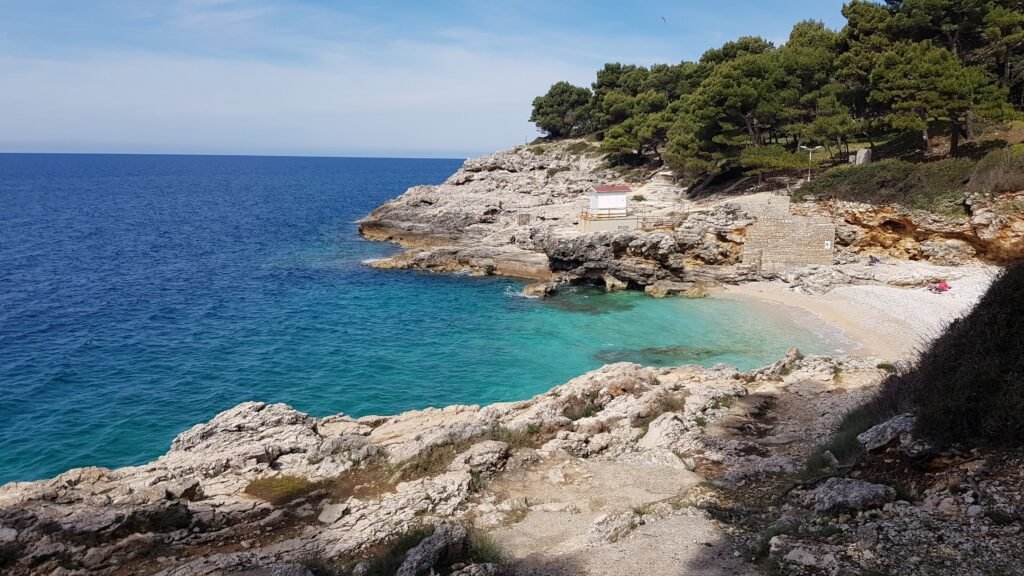
Use Pulapromet line 2a or 3a from central Pula to Verudela rather than walking four urban kilometers. Begin the mapped walk at Aquarium Pula in Fort Verudela. Continue around the peninsula toward Havajsko Beach and Ambrela, then work north toward Zlatne Stijene. This keeps the day focused on coastal walking instead of a long approach through ordinary city streets. From Zlatne Stijene, line 2a provides a practical return toward central Pula.
When Local Buses Matter
Pula does not need buses for the Forum-to-Arena sightseeing core, but they become important once the trip reaches the coast. Line 2a links the main bus station and Giardini with Verudela, while line 3a also serves central Pula and the Arena. Pulapromet’s summer timetable strengthens key weekend service, including frequent Sunday departures on lines 1, 2a, and 3a. Winter service continues, but the network is less intensive and schedules should be checked for the travel date. That makes transit a useful extension of walking rather than the engine of central sightseeing.
Arriving in Pula Without a Car
The main bus station is the most useful all-purpose gateway for many visitors. Arriva places it about 800 meters from the Arena and roughly one mile from the city center. Pula Airport runs a direct shuttle to the same station, with departures from the airport tied to arriving flights. Current shuttle tickets cost €6, and the timetable changes with the flight schedule. Pula railway station is physically close to the city, but rail is a weaker national gateway. Direct Zagreb–Pula trains currently run toward Pula on Fridays and back toward Zagreb on Sundays.
When a Car Helps
A private car adds little to a two-day trip focused on central Pula and Verudela. The Roman core works better on foot, and city buses cover the main southern beach cluster. A car becomes more useful when the itinerary expands across several Istrian towns, rural wineries, remote coves, or nature areas. Even then, compare the regional bus network before renting solely for one excursion. Do not rent simply to reach the Arena, Forum, aquarium, or the main city beaches.
Practical Walking Limitations
Kaštel is the main central effort point, with a short climb to a hilltop about 34 meters above sea level. Historic paving can be uneven, and the lower old town includes narrow lanes despite extensive pedestrian restrictions. The Arena and bus-station approaches involve more conventional traffic and crossings than Forum or Sergijevaca. On the coast, paths and beach approaches can be rougher than the central pedestrian streets. Travelers with limited mobility should favor the flatter Arena–Forum waterfront connection and use buses for Verudela.
Seasonal Walking Context
Summer brings the strongest bus service toward the beaches, but also more heat and visitor pressure around the Arena and Forum. Early starts make exposed stone streets and the Kaštel climb more comfortable. Outside peak season, central walking remains structurally straightforward while coastal services and visitor activity become quieter. Because airport shuttles follow flight schedules, always check the current timetable rather than assuming a fixed daily pattern.
Bottom Line
Pula is strongest when treated as a compact historic center plus a separate coastal cluster. Walk the Arena, Forum, Roman gates, Sergijevaca, and Kaštel as one coherent central experience. Then use local buses to preserve your walking time for Verudela itself. That combination makes a car unnecessary for a focused two-day visit, without pretending every major visitor attraction sits within the same walk.