
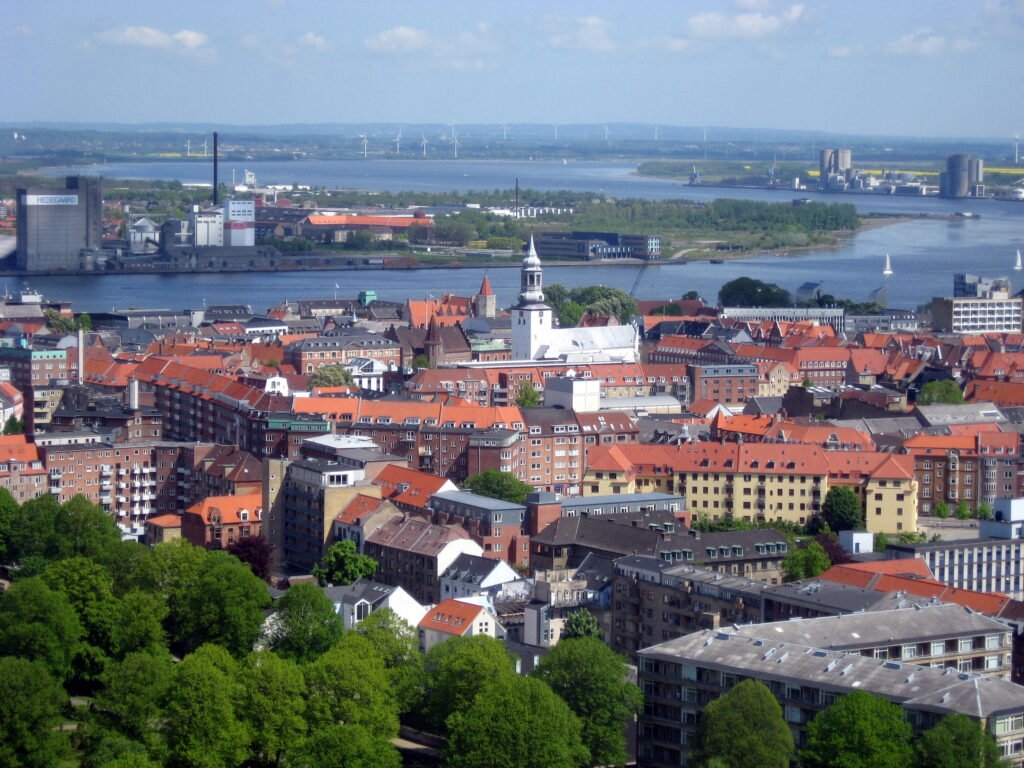
From the station plaza, the visitor core unfolds northward through shopping streets before turning east along the Limfjord. Algade, Bispensgade, Budolfi, Nytorv, and the old merchant streets sit close enough for frequent stops without route planning. At the harbor, Aalborghus, Utzon Center, Nordkraft, and Musikkens Hus continue the same pedestrian sequence rather than forming another district. South of the station, Kildeparken and Kunsten remain manageable, but the zoo adds climbing and more deliberate mileage. Across the fjord, Nørresundby and Lindholm Høje belong to a separate outing, not the everyday sightseeing core.
Why Aalborg Works Well on Foot
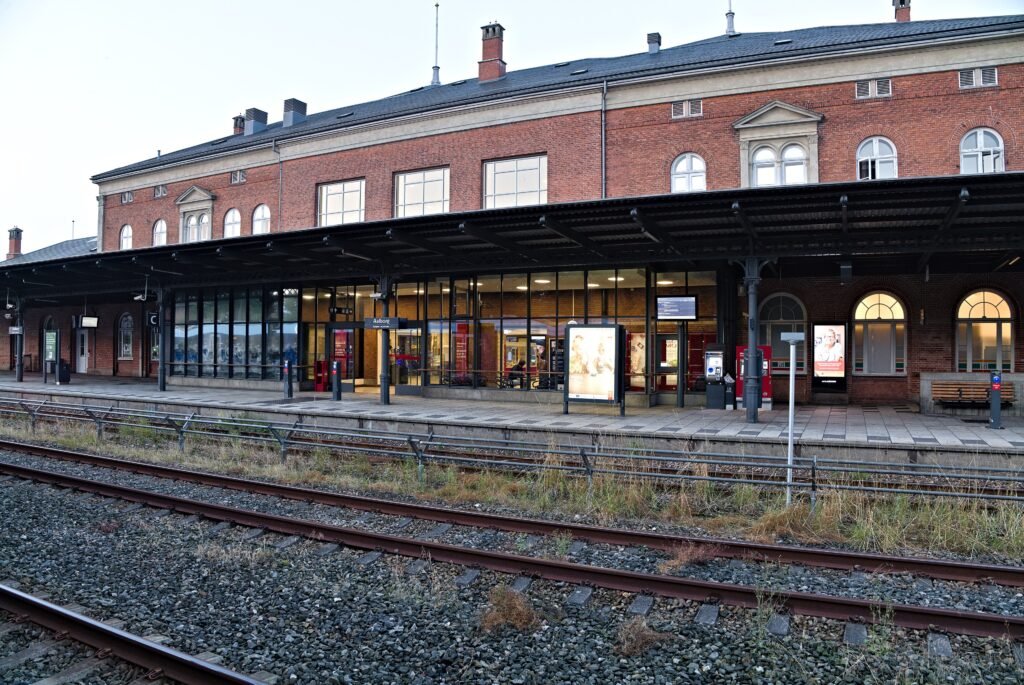
The strongest part of Aalborg is the relationship between its arrival point and visitor core. From the station, Boulevarden leads directly toward the central shopping streets, while Bispensgade and Algade organize the historic center. Budolfi, Aalborg Historical Museum, Jens Bang’s House and Nytorv sit close together, so sightseeing rarely requires a long connector walk. VisitDenmark’s current highlights route then carries the same walking network toward Aalborghus and the waterfront.
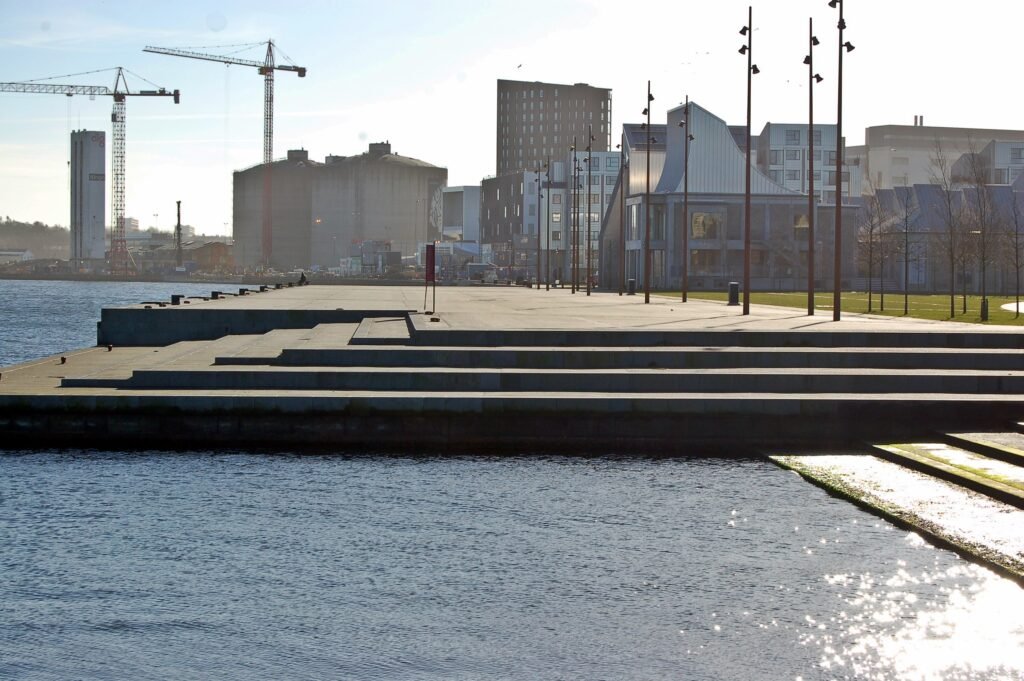
The Limfjord works mainly as an orientation edge for a standard first visit, not a daily obstacle. Most headline central sights stay on the south bank, where the waterfront promenade links Aalborghus, Utzon Center, Nordkraft and Musikkens Hus. Crossing into Nørresundby is possible on Limfjordsbroen, but it changes the scale of the day. That distinction matters: the waterfront improves the central route without making cross-fjord destinations geographically close.
The Best Areas to Stay for Walking
Stay around Nytorv or the historic center for the shortest walks to Algade, Bispensgade, Budolfi and the waterfront. The waterfront itself is another strong base, especially around Slotspladsen and Rendsburggade, where Pier 5 sits near Utzon Center and Musikkens Hus. Around John F. Kennedys Plads and Kildeparken, rail access is strongest and Kunsten is closer. The tradeoff is only a slightly longer walk north to the historic core.
Jomfru Ane Gade is extremely central, but its location is not the same as universal comfort. Weekend evenings can become crowded because the street concentrates bars and clubs. Travelers who value quiet nights can keep the same walking advantages by staying a few blocks away around Nytorv, the waterfront or Kildeparken.
Realistic Walking Times
Utzon Center states that Aalborg Station is about one kilometer away, or roughly a 15-minute walk via Boulevarden and Østerågade. Aalborg Zoo says the walk from the center takes less than half an hour. Comwell Hvide Hus, beside Kildeparken, is about five minutes from the station. Inside the historic core, Bispensgade leads directly into Nytorv, and distances between Budolfi, the museum and Jens Bang’s House are much shorter than those outer southern walks.
These are practical planning estimates rather than guaranteed walking times. Crossings, weather and individual pace can change the actual time.
A 2-Day Walking Route
The two days use different halves of Aalborg’s visitor footprint. The first follows the compact northbound and waterfront sequence from the station. The second uses the greener southern extension, where hills become more noticeable and a bus return saves low-value backtracking.
Day 1: Station, Historic Core and Waterfront
Walking route
Day 1: Station, historic core and the Limfjord waterfront
- Aalborg Station / John F. Kennedys Plads
- Bispensgade
- Jomfru Ane Gade
- Aalborg Historical Museum
- Budolfi Church
- Nytorv and Jens Bang’s House
- Aalborghus Castle
- Aalborg Waterfront / Jomfru Ane Park
- Utzon Center
- Nordkraft
- Musikkens Hus
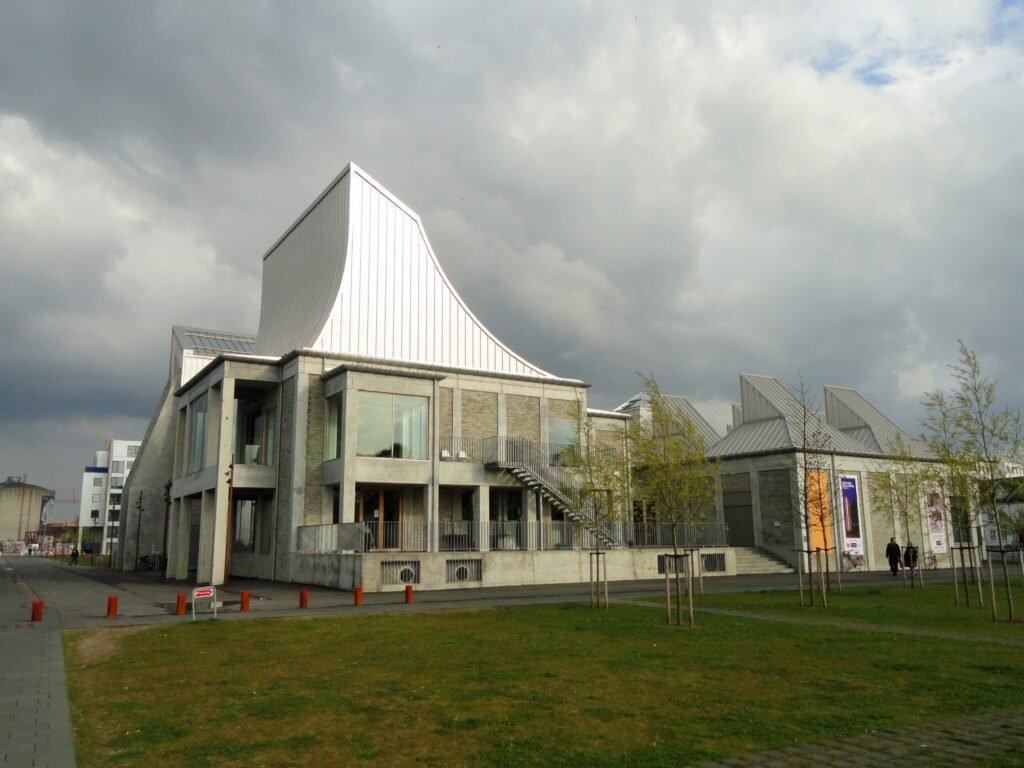
Start at Aalborg Station and John F. Kennedys Plads, then enter the center through Bispensgade. Use Jomfru Ane Gade as a short side-street detour before continuing through the museum and Budolfi area. Follow Algade toward Nytorv and Jens Bang’s House, then turn north for Aalborghus. From there, the rest of the day is a simple eastward waterfront progression through the promenade, Utzon Center, Nordkraft and Musikkens Hus.
Day 2: Kildeparken, Kunsten and Aalborg Zoo
Walking route
Day 2: Kildeparken, Kunsten, Mølleparken and Aalborg Zoo
- Kildeparken
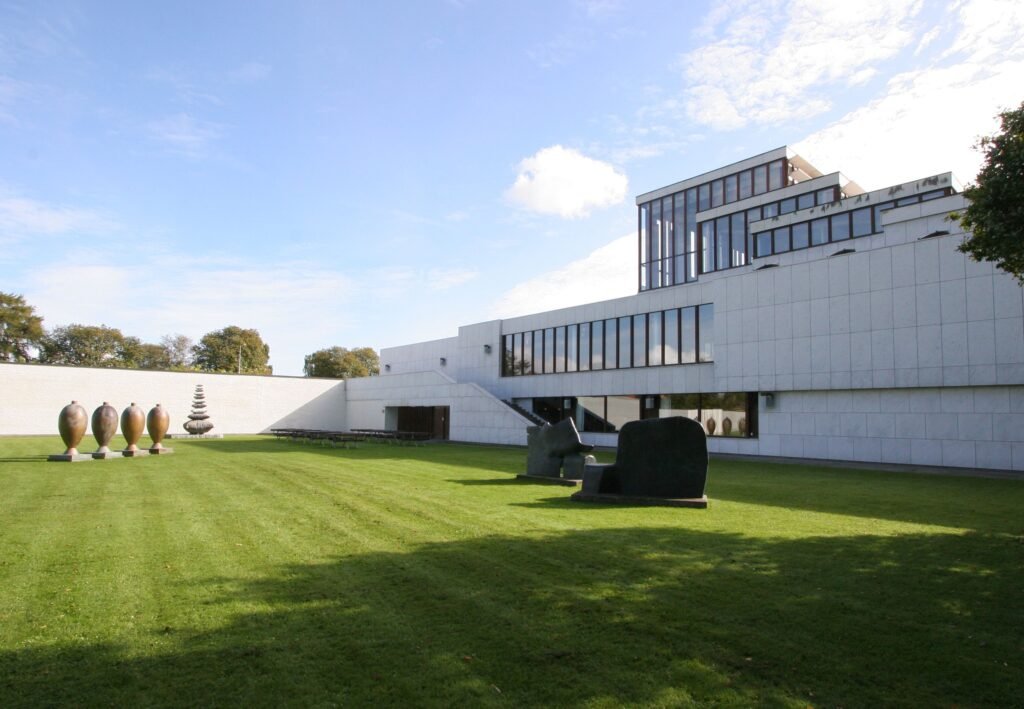
- Kunsten Museum of Modern Art Aalborg
- Mølleparken
- Aalborg Zoo
Begin in Kildeparken beside the station area, then walk south to Kunsten. Continue through Mølleparken, where Aalborg’s terrain becomes more obvious as paths rise over the chalk hill. Finish at Aalborg Zoo rather than walking back toward the center. A local bus makes an efficient return after the museum-and-zoo day if you do not want to retrace the hillier approach.
When Transit Saves Time
Aalborg does not need public transport for most central sightseeing. Buses become more useful for the zoo, university districts, Nørresundby, Lindholm Høje and other destinations beyond the compact historic center and waterfront.
Plusbus and the wider city-bus network provide useful coverage across Aalborg, including connections beyond the central walking area. Service frequency varies by route and time of day, so check current NT information before travel.
Tickets can be purchased through current regional ticketing options for buses and trains. Fare products and purchase rules can change, so check NT or Rejseplanen before boarding rather than relying on fixed payment details in the guide.
Arriving in Aalborg Without a Car
Aalborg Airport has direct public-transport connections toward the city, including rail and bus options. The airport station sits close to the terminal, making a taxi unnecessary for most centrally based visitors. Check current airport, DSB and NT information for the best connection on your travel date.
Rail arrival is especially convenient because Aalborg Station opens onto John F. Kennedys Plads at the southern edge of the visitor core. From there, the historic streets and waterfront are within practical walking distance. Check current DSB timetables for long-distance services.
What Belongs Outside the Core
Lindholm Høje deserves attention, but it belongs outside a normal central walking day. The museum and burial ground sit in Nørresundby, north of the Limfjord, and work better as a separate transit-assisted outing. The same principle applies to university districts farther east. They remain straightforward to reach without a car, but work better as separate extensions from the historic center.
The Limfjord crossing itself is manageable. Limfjordsbroen is open to pedestrians around the clock except during bridge openings or repairs, and Kulturbroen provides another narrower connection. Limfjordsbroen provides a pedestrian connection across the fjord, with Kulturbroen offering another crossing. Check current local information if bridge works affect your visit.
Walking Limitations and Practical Tips
Aalborg’s main walking limitation is not the size of its center. It is the change in conditions once routes leave the pedestrian streets and waterfront. Vesterbro carries heavy traffic, historic side streets can be cobbled, and cycle crossings require attention. The Mølleparken and zoo direction also adds real elevation. None of these problems breaks the weekend, but they keep the pedestrian environment from feeling uniformly effortless.
On weekend evenings, Jomfru Ane Gade can become intensely crowded. Use parallel streets if you are simply crossing the center rather than joining the nightlife. Around the waterfront, exposed wind can also make the same distance feel longer. These comfort factors are worth planning around, especially when choosing routes between the busiest central streets and the waterfront.
When a Car Actually Helps
A private car adds little to the standard two-day Aalborg itinerary. The historic core, waterfront, Kunsten and zoo are all reachable by walking and local transit, while the airport and station already connect directly without driving. A car becomes more useful for multi-stop North Jutland day trips, rural coastal routes or combinations involving places such as Rebild Bakker, Blokhus, Løkken or other regional destinations.
Seasonal Walking Context
The Limfjord makes the waterfront more exposed to wind, while winter brings shorter daylight and summer offers much longer evenings. Poor weather can make the same flat waterfront route feel more tiring. These conditions change walking comfort rather than the distances between Aalborg’s main visitor areas.
Bottom Line
Aalborg is at its best when you treat the station, historic streets and south-bank waterfront as one continuous pedestrian district. Use the second day for Kunsten and the zoo, then take the bus back rather than retracing the hillier approach. Save Lindholm Høje for a separate transit-assisted outing. That strategy keeps most of a two- or three-day visit on foot without pretending every worthwhile attraction sits inside the compact center.