
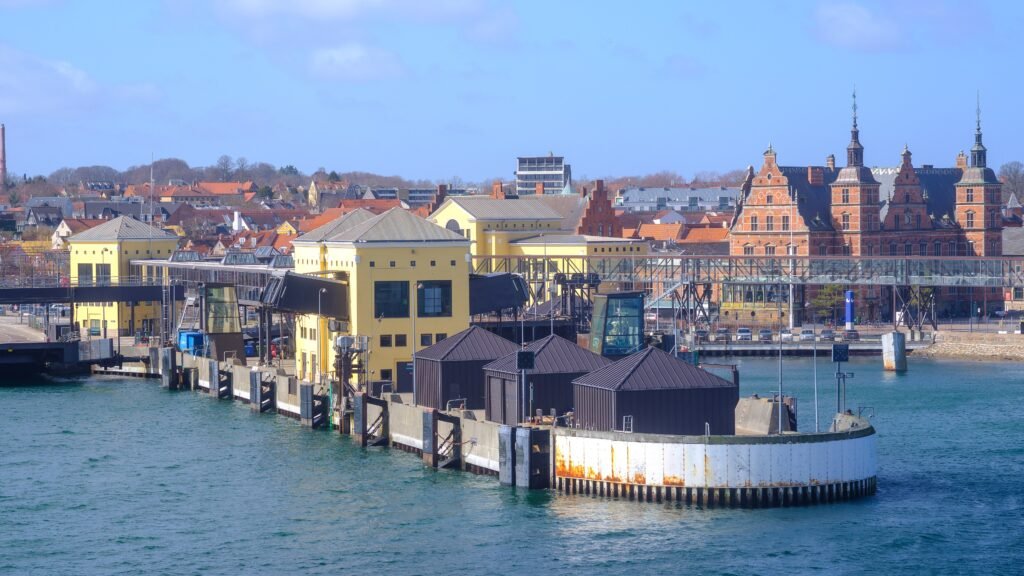
Rail, ferry, shopping streets, museums, and a Renaissance fortress meet within a remarkably short stretch of waterfront. The old town begins almost outside the station, then Stengade leads through a web of pedestrianized lanes and squares. A few blocks north, Kulturværftet becomes the hinge between historic streets and the harbor route toward the Maritime Museum. Kronborg then sits another short walk beyond, visible along much of the approach. This continuity matters more than the city’s small size alone. Cobbles, gravel, and busy transport edges add some friction, yet sustained climbs are largely absent from normal visitor routes.
Why Helsingør Works Well on Foot
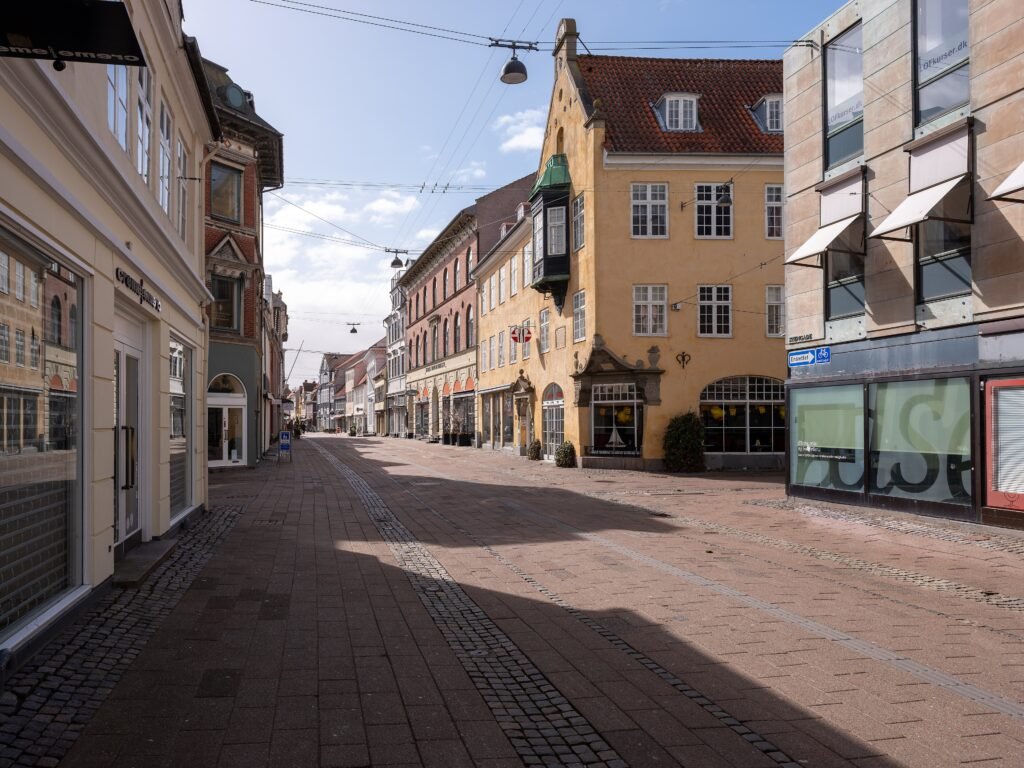
The station-to-castle chain is the defining feature of Helsingør’s walkability. From the station and Havnepladsen, Stengade quickly enters the historic center and connects with Axeltorv, the cathedral and the Carmelite complex. Municipal bollards restrict ordinary vehicle access across much of the pedestrian zone during shopping and weekend hours. Continuing north, Kulturværftet links the old streets with the culture harbor, where the Maritime Museum and Kronborg sit close together. The official Helsingør Walk reinforces this geography with a marked route through twenty cultural stops.
Best Areas to Stay Without a Car
The easiest base is the historic center around Stengade, where hotels, restaurants, shops and major sights sit within short walks. Staying by Helsingør Station or Havnepladsen minimizes luggage effort while keeping the old town immediately accessible. Hotel Skandia is listed about two minutes from both the railway station and ferry terminal. Hotel Hamlet places you beside the pedestrian streets, while Marienlyst is a quieter waterfront option about ten minutes from the main core.
Useful Walking Times
Helsingør Station to Stengade: about 4–5 minutes. Station to Kulturværftet: about 8–10 minutes. Station to Kronborg: about 10 minutes along the harbor. Kulturværftet to the Maritime Museum: roughly 3–5 minutes. Maritime Museum to Kronborg: roughly 4–5 minutes. These are practical planning estimates rather than guaranteed walking times. Crossings, exact entrances and individual pace can add a few minutes.
A 2-Day Walking Route
The two days divide the compact visitor footprint by character rather than forcing extra mileage. The first day stays inside the old town before finishing at the harbor. The second focuses on the closely grouped culture-harbor attractions and Kronborg.
Day 1 — Station, Stengade and the Old Town
Walking route
Day 1: Station, Stengade and the old town
- Helsingør Station
- Havnepladsen
- Stengade
- Axeltorv
- Helsingør Cathedral (St. Olaf’s Church)
- St. Mary’s Church and Carmelite Priory
- Strandgade
- Kulturværftet
Start at Helsingør Station and cross the short arrival edge toward Havnepladsen and Stengade. Follow the pedestrian spine through Axeltorv, then turn through the cathedral area and St. Mary’s Church with the Carmelite Priory. Use nearby lanes such as Anna Queens Stræde for historic texture without creating a long detour. Finish along Strandgade at Kulturværftet, where the old town opens directly onto the harbor.
Day 2 — Culture Harbor, Maritime Museum and Kronborg
Walking route
Day 2: Culture Harbor, Maritime Museum and Kronborg
- Kulturværftet
- M/S Maritime Museum of Denmark
- Kronborg Castle
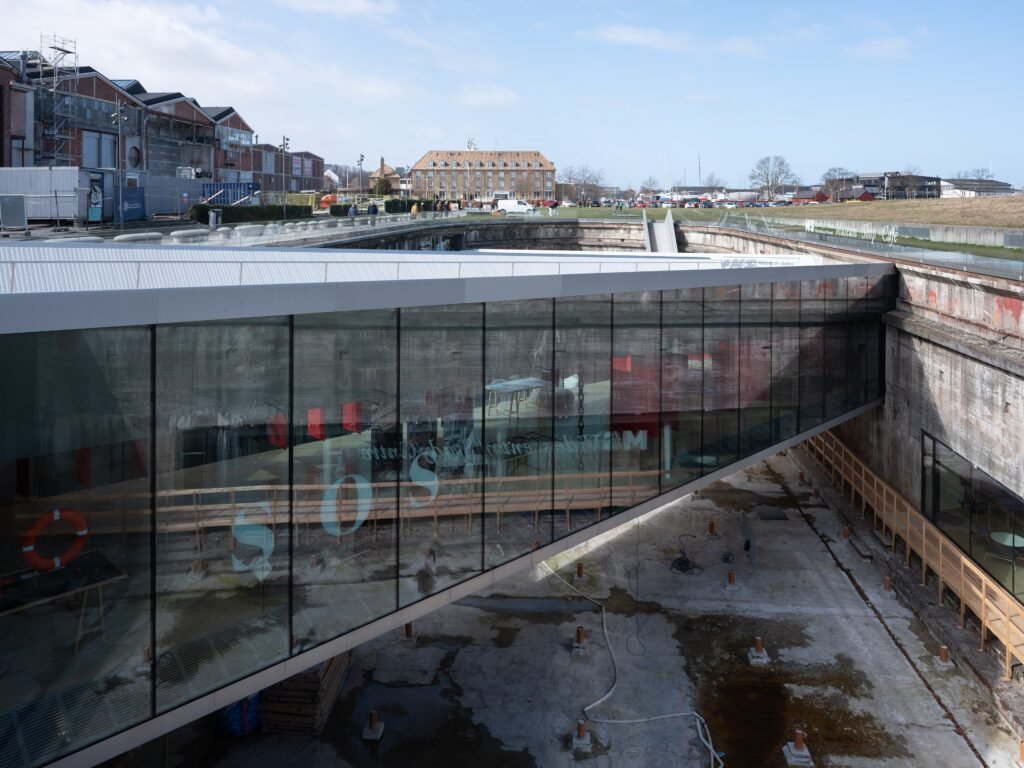
Begin at Kulturværftet and continue through the culture harbor to the M/S Maritime Museum of Denmark. Its exhibition spaces sit below grade around the former dry dock, reached by sloping bridges and ramps. From there, continue directly to Kronborg rather than returning through the old town. The castle is the natural endpoint, and the station is only about ten minutes back along the harborfront. This is intentionally a shorter day because adding distant regional sights would weaken the walking route.
When Transit Helps
Most first-time sightseeing inside Helsingør does not require public transport. Buses and local trains become more useful for outer stops, luggage-heavy journeys or regional extensions. Check current Rejseplanen information for routes, frequencies and ticket options before travel.
Arriving Without a Car
Direct rail services connect Copenhagen with Helsingør, and the station sits immediately beside the historic center and ferry terminal. Copenhagen Airport is also accessible by public transport, usually with a connection in central Copenhagen. Check current DSB and Rejseplanen schedules before travel, especially when rail works affect the route.
What the Ferry Changes — and What It Does Not
Foot passengers from Helsingborg arrive beside Helsingør Station, making the ferry a convenient option for cross-Øresund travel. Sailing times and frequency can change, so check the current operator timetable before travel. Helsingborg remains a separate destination rather than part of the Helsingør walking itinerary.
When a Car Helps
A car adds little to the station, old town, culture harbor and Kronborg itinerary. It becomes more useful when a weekend expands into dispersed North Zealand destinations or rural coastal stops. Louisiana Museum of Modern Art, Fredensborg Palace and Frederiksborg Castle are regional excursions, not extensions of Helsingør’s pedestrian core. For a city-focused two-day visit, parking and vehicle access can create more friction than they solve.
Walking Limitations and Accessibility
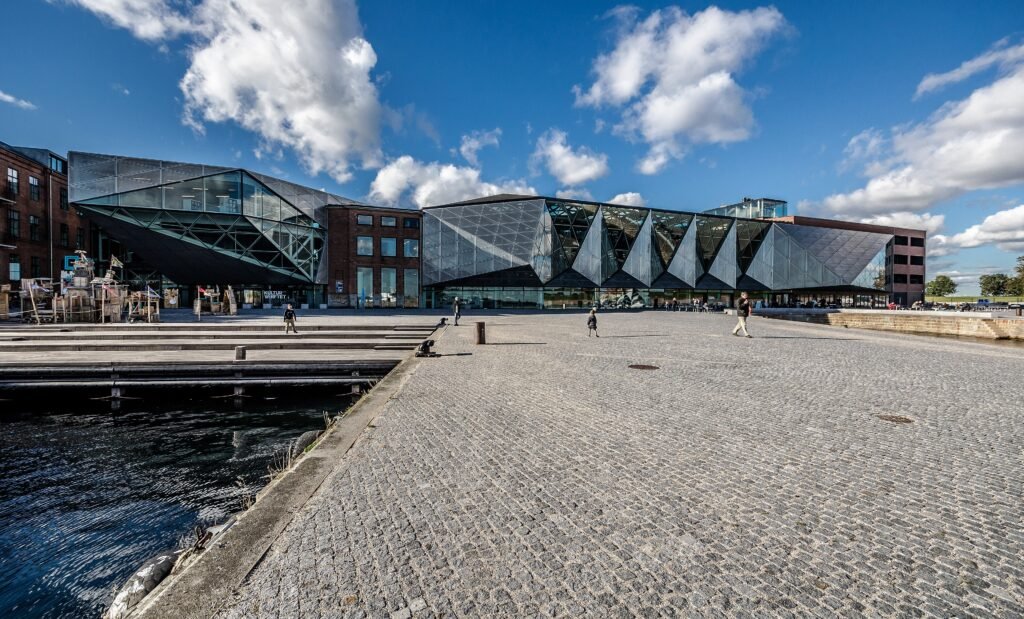
The main walking issue is surface quality rather than hills. Historic lanes contain cobbles, the plaza at Kulturværftet is cobbled, and paths around Kronborg include gravel. These surfaces can slow wheelchairs, strollers and rolling luggage even when distances are short. The Maritime Museum’s ramps make its unusual dry-dock setting navigable, but the approach is less conventional than a street-level entrance. Busy transport space around the station and ferry also requires more attention than the pedestrian streets.
Seasonal Note
The harborfront and castle approach are more exposed to wind and rain than the sheltered old-town streets. Winter moisture can make cobbles and gravel less comfortable, while summer crowds can slow the narrowest lanes. Even in poor weather, the main station-to-old-town-to-Kronborg route remains compact.
Bottom Line
Helsingør works because its essential visitor places form one continuous pedestrian chain rather than several disconnected sightseeing zones. The station, old town, culture harbor, Maritime Museum and Kronborg can all fit into a weekend without a private car. Transit is useful mainly for arrival and selective extensions, while cobbles and gravel are the main reasons to plan footwear and mobility carefully.