
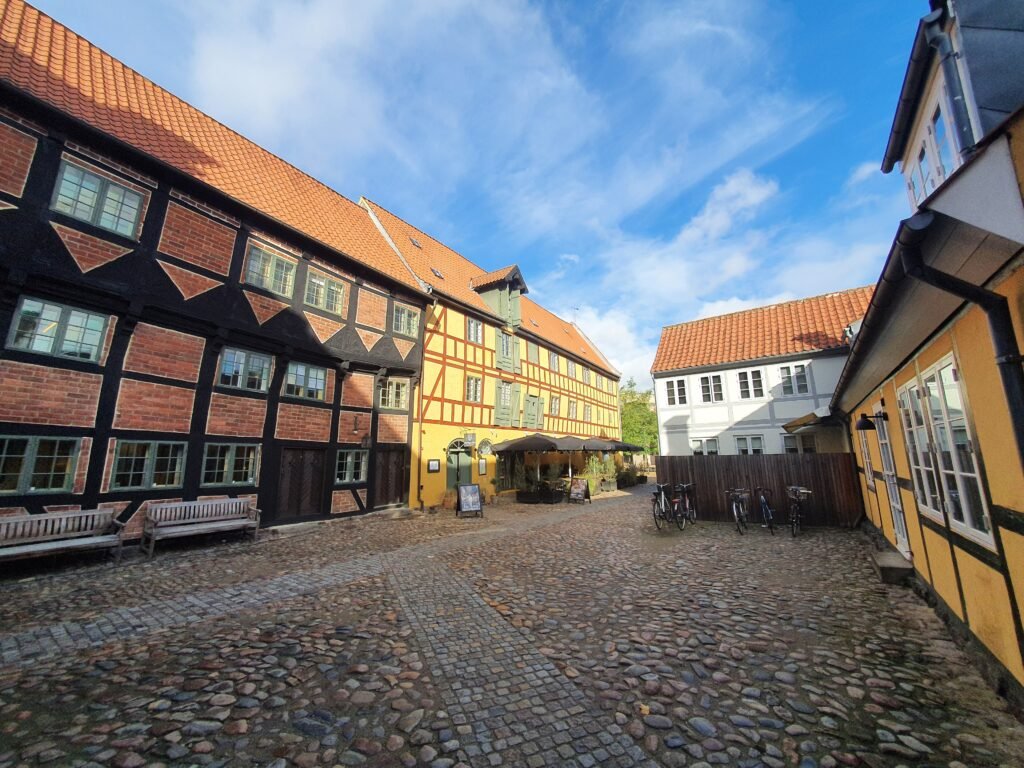
A restored east–west pedestrian spine now links the city center sections once divided by Thomas B. Thriges Gade. From the station, Kongens Have leads quickly into Brandts, Vestergade, Flakhaven, and the cathedral before the old town continues east. Hans Christian Andersen House and TID sit inside that same compact network, rather than forming separate museum districts. South of the cathedral, Eventyrhaven and Munke Mose bring the river into an ordinary sightseeing walk. The harbour is different: Byens Bro makes it accessible, but crossing the railway pushes it beyond the tightest central loop.
How Odense Works on Foot
The visitor core runs from the station through Kongens Have and Brandts, then east along Vestergade toward Flakhaven. City Hall, St. Canute’s Cathedral, the Andersen Quarter, Sortebrødre Torv and TID follow without a long transfer. The former Thomas B. Thriges Gade no longer severs this east–west line. Odense reopened the rebuilt center in 2021, restoring a continuous Vestergade–Overgade connection.
Pedestrianization is substantial rather than symbolic. Central walking streets limit ordinary traffic, and several squares work as low-traffic gathering spaces. Surfaces vary, however. Cobbles remain common in the old town, while TID also has stairs and cobbles inside its historic complex. Bicycle passages cross parts of the pedestrian network, and tram-track crossings require normal city awareness.
Best Areas to Stay for Walking
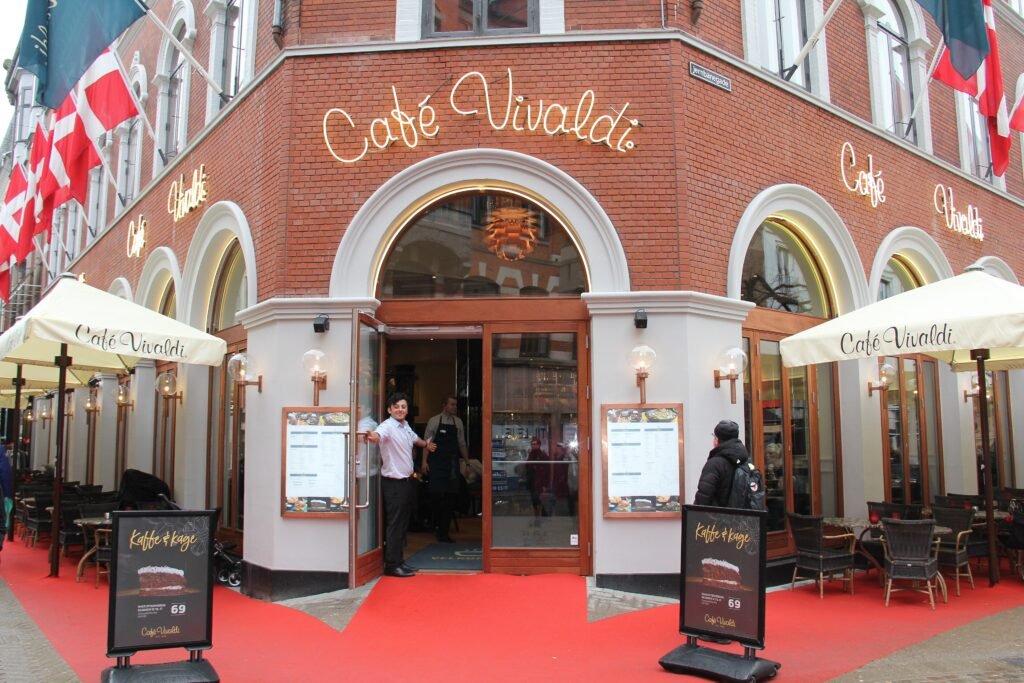
The historic center around Flakhaven is the most balanced base for a short visit. It places Brandts, the cathedral, Andersen attractions and old-town streets inside an easy daily walking radius. The H.C. Andersen Quarter and ODEON side suit museum-focused stays, while Brandts favors cafés, shopping and western-center culture. Hotels near the station and Kongens Have trade a few minutes of extra walking for the easiest luggage arrival.
Useful Walking Times
VisitOdense places H.C. Andersens Hus about a 10-minute walk from Odense Station. Museum Odense puts the Childhood Home about five minutes from the main Andersen museum. Munke Mose is only a few minutes from the pedestrian streets. Those relationships explain why most first-time sightseeing works as one central walk rather than a sequence of transit trips.
These are practical planning estimates rather than guaranteed walking times.
A 2-Day Walking Route
The first day sweeps across the compact cultural core from west to east. The second moves from the river parks northward, crossing the railway once for the harbour extension.
Day 1 — Station, Brandts and the historic core
Walking route
Day 1 — Station, Brandts and the historic core
- Odense Station / Odense Banegård Center
- Kongens Have
- Brandts
- Vestergade pedestrian street
- Flakhaven and Odense City Hall
- St. Canute’s Cathedral
- H.C. Andersen’s Childhood Home
- H.C. Andersens Hus
- Sortebrødre Torv
- TID – Museum for Odense
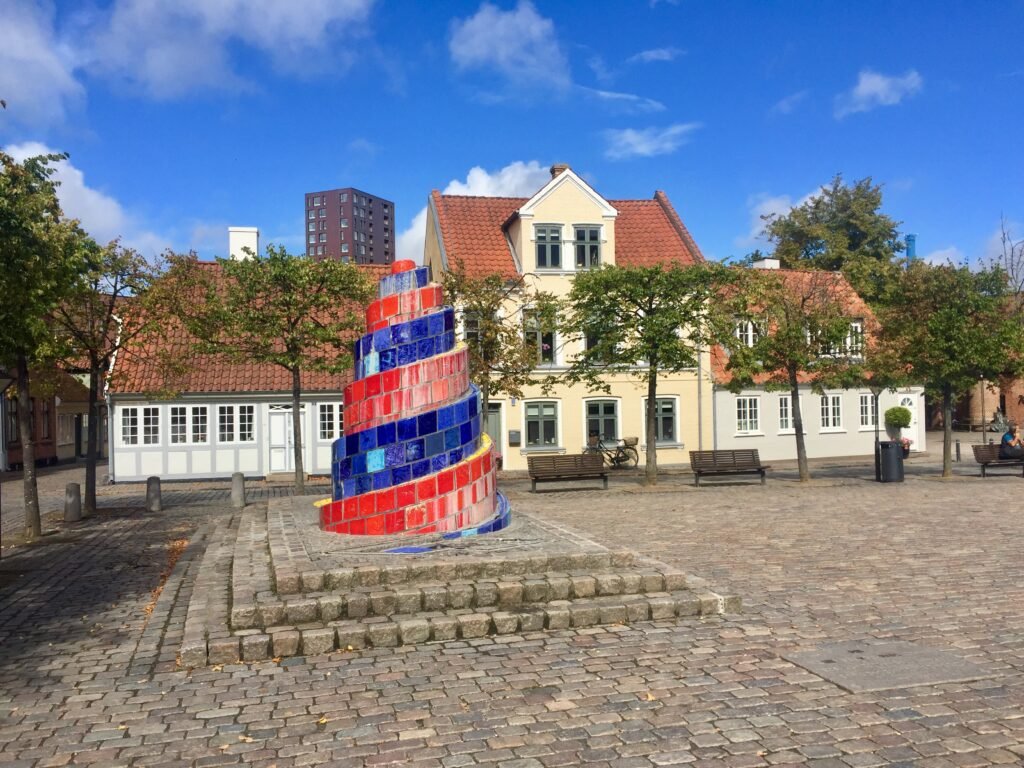
Start at Odense Station and use Kongens Have as the transition into the center. Walk west to Brandts, then turn east along Vestergade through the pedestrian quarter. Flakhaven and St. Canute’s Cathedral follow naturally. Continue to the Childhood Home, then finish through the Andersen Quarter, Sortebrødre Torv and TID. This route uses the restored east–west connection instead of doubling back across the center.
Day 2 — River parks and the harbour extension
Walking route
Day 2 — River parks and the harbour extension
- Munke Mose
- Odense Aafart / Odense River
- Eventyrhaven
- Albani Torv
- ODEON
- Odense Station / Odense Banegård Center
- Byens Bro
- Storms Pakhus
- Odense Harbour Bath
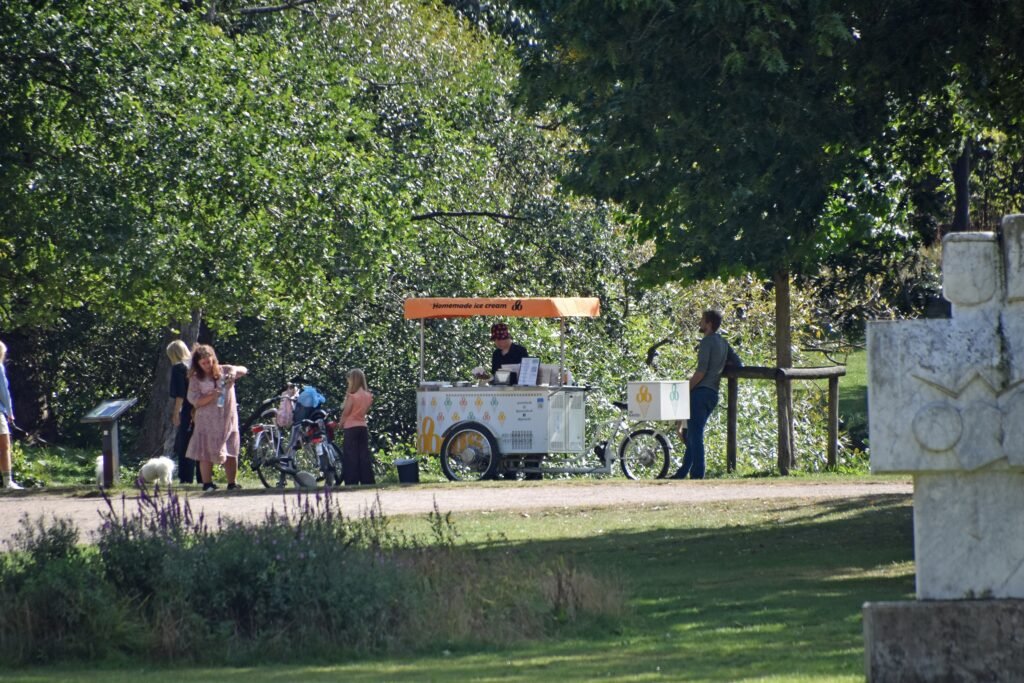
Begin in Munke Mose beside Odense River, then follow the green corridor toward Eventyrhaven. Continue north through the central connector streets toward ODEON and the station. Byens Bro carries pedestrians over the railway to the harbour side. Storms Pakhus makes a useful break before finishing at Odense Harbour Bath. The route keeps the harbour as an extension rather than pretending it belongs to the tightest historic core.
When Transit Helps
Odense Letbane is useful without being necessary for central sightseeing. It works best for outer districts, tired-leg returns and trips beyond the compact historic-center area. Service frequency varies by day and time, so check the current timetable before travel.
Local bus and tram tickets are available through FynBus and digital ticketing options. Ticket types, validity and rail coverage vary, so check current fare information rather than relying on fixed durations or products in the guide.
Arriving Without a Car
Odense Station is one of the city’s strongest car-free advantages. The historic center and H.C. Andersen attractions are within easy walking distance, while frequent intercity rail services connect Odense with Copenhagen and other Danish cities. Check current DSB timetables for your travel date.
Copenhagen Airport is a practical international gateway, with rail connections available toward Odense. Some journeys may require a change depending on the timetable. Billund Airport can also be considered depending on your route, so compare current airport and public-transport connections before booking.
Temporary rail works can occasionally affect late-evening or overnight services. Check DSB or Rejseplanen shortly before travel when your itinerary depends on a specific train.
When a Car Helps
A private car adds little to the standard central weekend. It becomes more useful for regional Funen trips such as Egeskov Castle, Kerteminde or Faaborg, where city-center walking is no longer the relevant question. The Funen Village also works better as a separate outing than as part of the central walking itinerary.
Walking Limitations and Practical Tips
The main limitations are small but specific. Old-town cobbles and historic thresholds can slow some travelers. Several pedestrian-street sections also function as bicycle passages, so walkers should watch for cyclists even where cars are restricted. Letbane crossings are clearly managed, but the tram receives priority at many signals.
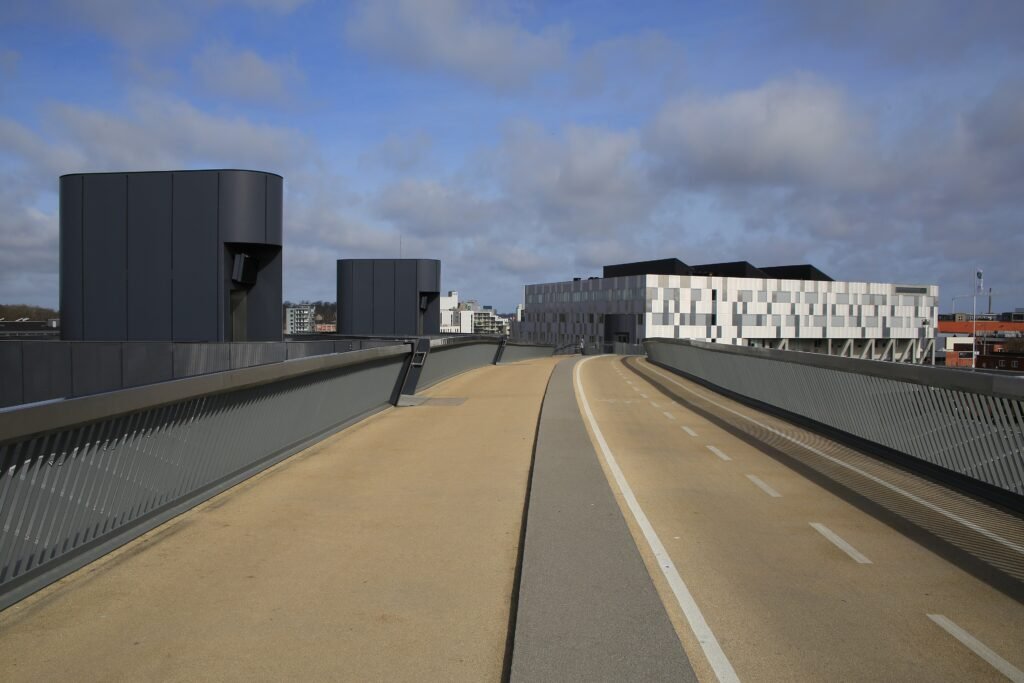
The harbour requires more effort than the center because the railway forms a genuine edge. Byens Bro provides a convenient pedestrian crossing, but the extra distance remains. Temporary works can occasionally alter the harbour-side approach, so follow current local signs when necessary.
Seasonal Walking Context
Rain, wind and shorter winter daylight can make river and harbour walks less comfortable. In colder or wetter conditions, keep the river segment flexible and use public transport for optional outer trips. Seasonal weather changes comfort rather than the distances between Odense’s main sights.
Bottom Line
A first-time Odense weekend works best as one compact central walking network plus two extensions. The river parks remain close enough to fold into ordinary sightseeing, while the harbour deserves its own northbound leg. Staying near the historic center, Brandts or the station keeps nearly every essential city sight within a practical walk.