
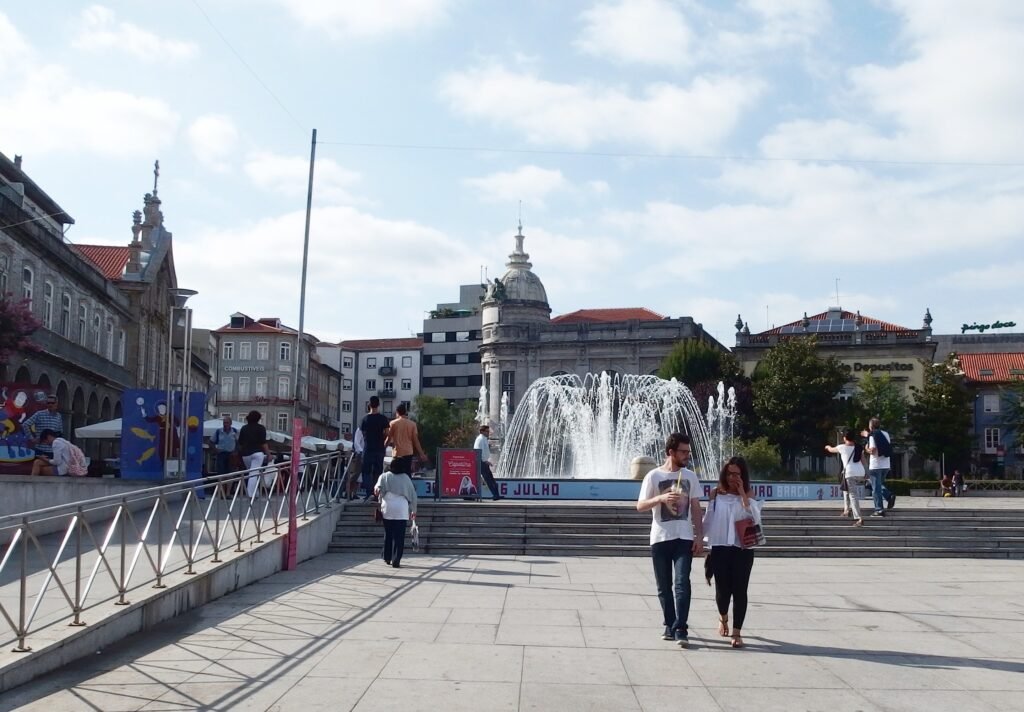
Braga concentrates much of its first-time sightseeing inside a remarkably small historic footprint. Porta Nova, the cathedral, Largo do Paço, Santa Bárbara Garden, Rua do Souto, and Praça da República connect within minutes. The railway station sits just west of this core, functioning as a close gateway rather than its center. That easy geometry changes at Bom Jesus do Monte, where distance and elevation shift the trip toward transit-assisted sightseeing. Sameiro sits higher again and works better as a separate extension. The result is a city that feels exceptionally compact downtown without pretending its sanctuaries belong to the same walking cluster.
Why Braga’s Core Works So Well on Foot
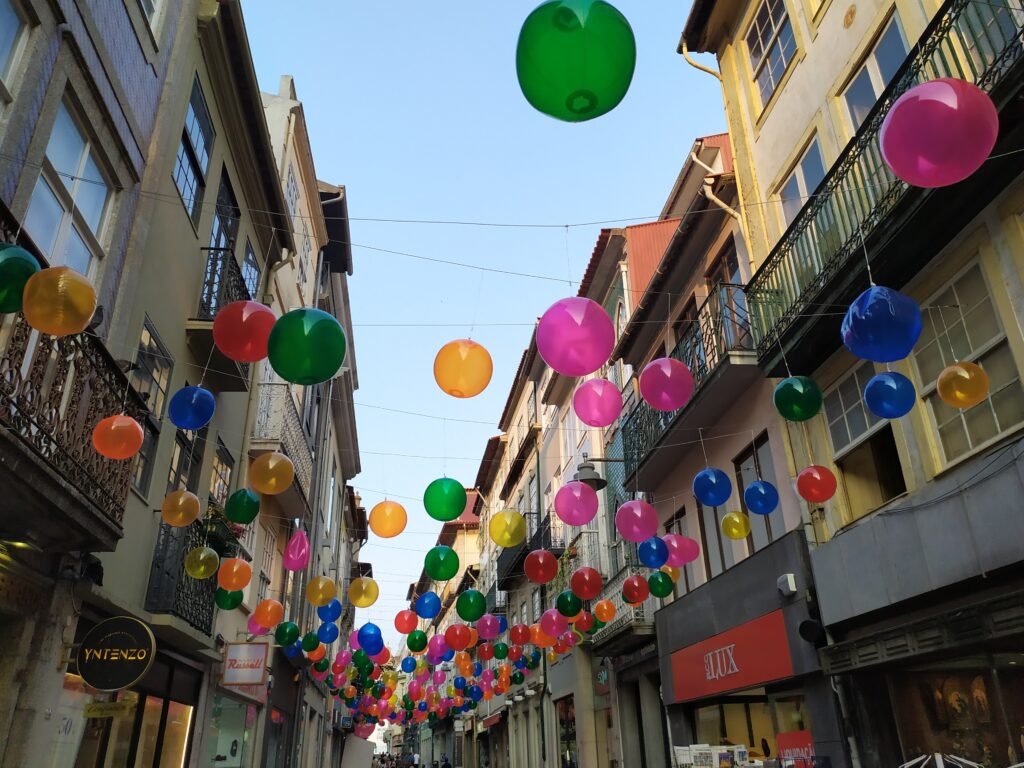
Braga’s strongest visitor chain is unusually concentrated. Rua do Souto connects the central pedestrian geography around Praça da República with the cathedral-side streets, while Santa Bárbara Garden and Largo do Paço sit only minutes away. Palácio do Raio is a short southeastern extension, and Porta Nova marks the western edge. Municipal rules confirm a permanent pedestrian area with controlled vehicle access, rather than an event-only closure. That does not make every surface effortless. Historic stone paving and mixed-traffic edges still matter for mobility and comfort.
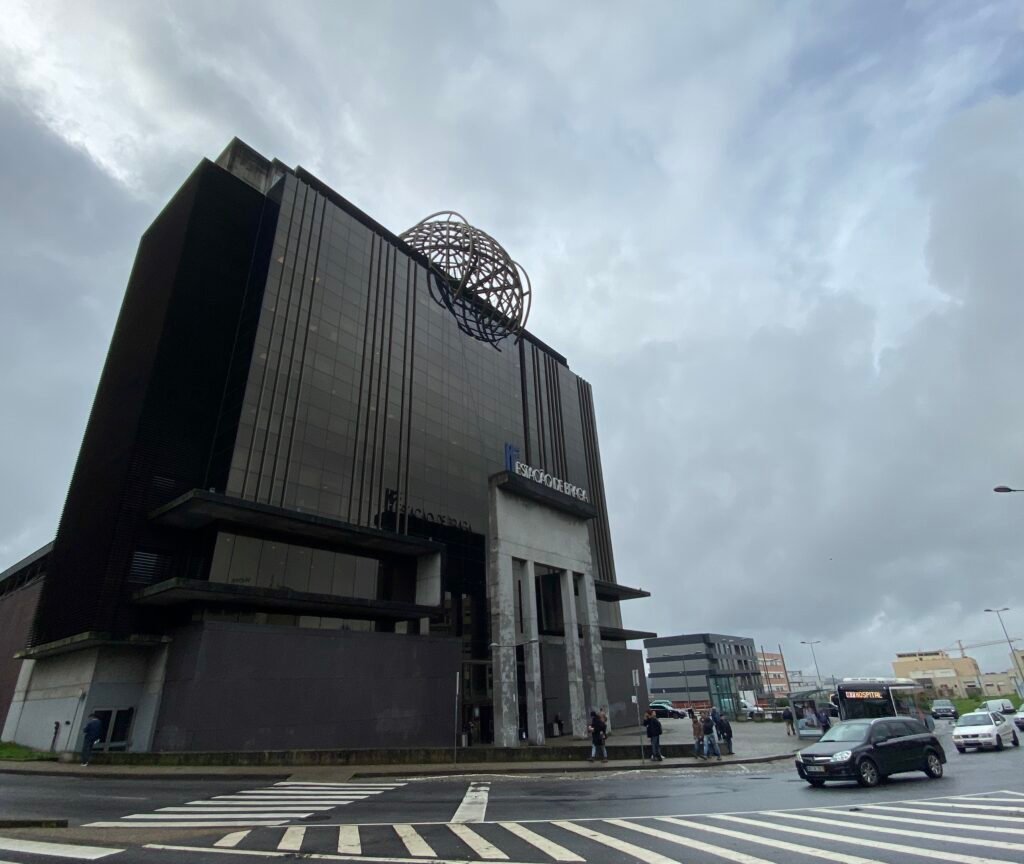
Braga Railway Station belongs close to this geography without sitting at its center. Porta Nova is roughly seven walking minutes away, while Praça da República is about fifteen minutes. The first blocks feel like a normal station approach, with sidewalks and crossings rather than the pedestrian emphasis found farther east. That makes the station an excellent arrival point without making it part of the historic sightseeing core.
Best Areas to Stay for a Walking Weekend
Praça da República and the surrounding historic center give the shortest access to Braga’s main walking loop. Avenida Central and Largo Carlos Amarante are similarly practical, with official lodging directly beside the core. Station-facing accommodation can suit rail travelers, but it places more of the center to the east. Properties farther from these areas can still work well because TUB is useful, though they should not all be treated as equally central.
Useful Walking Times
| Walk | Typical time |
|---|---|
| Braga Railway Station → Arco da Porta Nova | about 7 min |
| Braga Railway Station → Praça da República | about 15 min |
| Arco da Porta Nova → Braga Cathedral | about 3 min |
| Braga Cathedral → Jardim de Santa Bárbara | about 4 min |
| Jardim de Santa Bárbara → Praça da República | about 4 min |
| Praça da República → Palácio do Raio | about 5 min |
These are practical planning estimates rather than guaranteed walking times. The central chain is generally manageable on foot; Bom Jesus is excluded because its transit approach and staircase effort need separate treatment.
A 2-Day Walking Route
Day 1 — Braga’s Compact Historic Core
Walking route
Day 1 — Station gateway through Braga’s historic core
- Braga Railway Station
- Arco da Porta Nova
- Braga Cathedral — Sé de Braga
- Largo do Paço
- Jardim de Santa Bárbara
- Rua do Souto
- Praça da República
- Arcada da Lapa
- Avenida Central
- Palácio do Raio
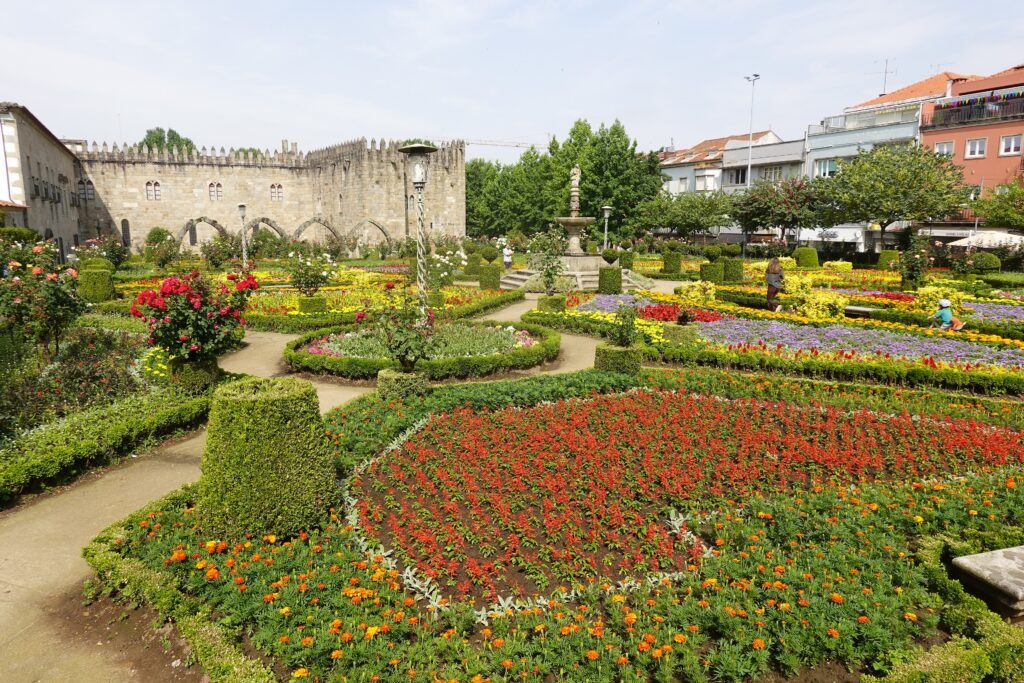
Start at Braga Railway Station only when it matches your arrival or lodging. Walk east to Arco da Porta Nova, then continue to the cathedral and Largo do Paço. Move north to Jardim de Santa Bárbara before joining Rua do Souto toward Praça da República and Arcada. Cross the Avenida Central side of the core and finish at Palácio do Raio. The sequence stays inside central Braga and avoids repeating the same streets. Palácio dos Biscainhos is an easy optional detour near the western section when opening hours suit.
Day 2 — Bom Jesus Without the Low-Value Approach Walk
Walking route
Day 2 — Bom Jesus stairways, basilica and park
- Pórtico do Bom Jesus do Monte
- Escadório do Bom Jesus do Monte
- Basílica do Bom Jesus do Monte
- Miradouro do Bom Jesus do Monte
- Lago do Bom Jesus do Monte
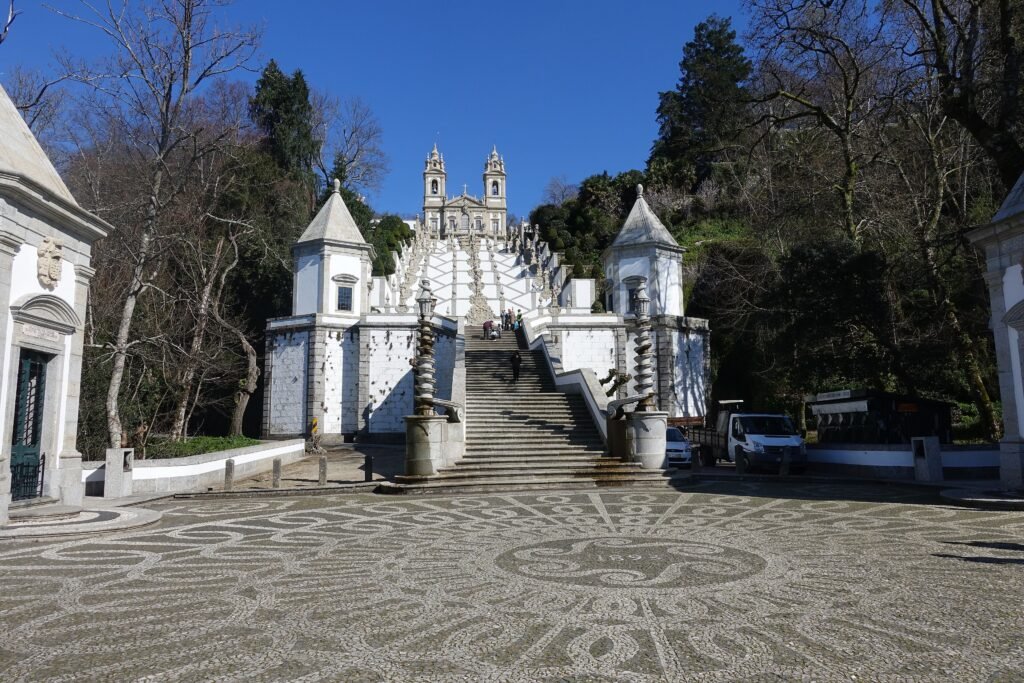
Take TUB Line 2 to Bom Jesus before starting the mapped walk. The route begins at the monumental approach and follows the staircase toward the basilica, viewpoint and park. The stairway has more than 500 steps, so effort matters more than the short map distance suggests. The water-powered funicular provides an alternative to the steepest vertical section when operating. Check current fares and hours before travel. Sameiro is better treated as an optional separate extension rather than forced into this walking loop.
Funicular operating hours and maintenance periods can change during the year. Check the official Bom Jesus information before visiting if you plan to depend on it for the ascent or descent.
When TUB Buses Matter
Central Braga is compact enough that buses add little to ordinary sightseeing. Their value appears when the itinerary reaches Bom Jesus, Sameiro, outer accommodation or other noncentral stops. Line 2 is the key connection to Bom Jesus, while Sameiro uses different routes and should be checked separately.
TUB offers single and multi-day ticket options, with digital purchase and validation available through TUBmobile. Check current fares and service times before travel rather than relying on fixed prices or frequencies in the guide.
Arriving in Braga Without a Car
Braga has no major commercial airport, so Porto Airport is a practical international gateway for many visitors. Direct coach services connect the airport with Braga Bus Station, close to the northern side of the historic center. Check the current operator timetable for departure times.
Rail is equally useful from Porto, with direct CP services connecting Braga with São Bento and Campanhã. Braga Railway Station sits within walking distance of the historic center, while long-distance rail also links Braga with Lisbon on selected services. Check the current CP timetable for your travel date.
When a Car Helps
A car adds little to the standard Braga weekend. It becomes more useful for regional trips that fall outside this city guide. Guimarães, Porto, Barcelos, Ponte de Lima and Peneda-Gerês are separate excursions, even when public transport can reach them. Their accessibility does not change how compact Braga’s own visitor core is.
Walking Limitations and Practical Tips
Braga’s strongest central streets are pedestrian or traffic-restricted, but that quality is not universal. The station approach and larger corridors require ordinary sidewalk and crossing attention. Historic granite paving can be attractive yet less forgiving when joints are uneven or surfaces are wet. Authorized vehicle access also exists inside parts of the pedestrian area, so pedestrian priority does not mean every lane is completely vehicle-free.
Bom Jesus is the main exception to Braga’s compact central walking pattern. Use the bus for the cross-city approach, then choose stairs or funicular by energy and mobility. Sameiro sits higher again and uses different bus patterns, so check its service separately. Holy Week, São João and other event closures or crowds can change travel conditions temporarily without redefining the city’s permanent walking layout.
Seasonal Walking Context
Summer sun makes the exposed Bom Jesus staircase more tiring, while rain can make historic stone surfaces feel slicker. Short central distances remain unchanged. In wet weather, allow extra time on slopes and polished paving, and use the funicular when the stair climb is unnecessary.
Bottom Line
Braga gives first-time visitors an unusually concentrated historic center, with the railway station close enough to walk in. Bom Jesus is the clear exception, and TUB makes that outer attraction practical without a car. Stay near Praça da República or Avenida Central, walk the center by cluster, and treat Sameiro as an optional extension rather than mandatory mileage.