
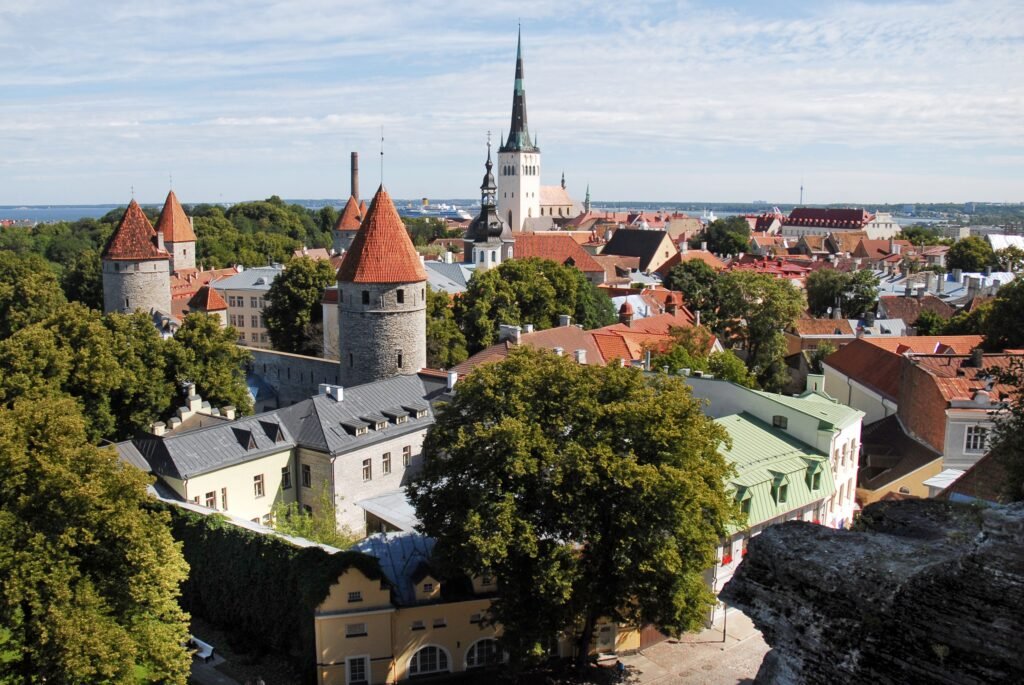

Tallinn’s medieval center sits on two levels, with merchant streets below a fortified hilltop. Viru Gate opens into the Lower Town, where St. Catherine’s Passage and Town Hall Square are minutes apart. Toompea rises immediately west, making its cathedral and viewpoints close on a map but less effortless underfoot. Northwest of the walls, Balti Jaam Market leads naturally toward Telliskivi and Kalamaja. The Rotermann Quarter occupies a separate, flatter transition toward the port. Kadriorg, farther east, needs its own outing rather than an extension of a short medieval stroll. That contrast defines how a rewarding weekend should be organized.
Where Tallinn Works Best on Foot
Lower Town does most of the work for a first-time visitor. Viru Street, the Town Hall Square, St. Catherine’s Passage, Pikk Street, and nearby churches form a close-knit pedestrian circuit. Cafés and shops sit between the sights, so even short stops fit naturally into a walk. The medieval streets are atmospheric but not uniformly smooth: cobbles, high curbs, and occasional deliveries are part of the experience. A compact historic center should not be mistaken for universally easy access.
Toompea adds a second layer rather than an entirely separate district. Pikk jalg provides a sloping ascent from Lower Town toward Alexander Nevsky Cathedral and Toompea Castle. Kohtuotsa and Patkuli viewpoints lie nearby once the climb is complete. Patkuli’s direct connection to Toompark uses 157 steps, making the quickest downhill route unsuitable for many visitors. The hill is short in horizontal distance but substantial in walking effort.
The Outer Neighborhoods Are Connected, Not Identical
Balti Jaam Market sits across the railway edge northwest of Old Town. From there, Telliskivi Creative City is a short walk, while Kalamaja’s wooden-house streets continue farther north. This is a coherent pedestrian extension, especially when approached after Toompea. Farther on, the Seaplane Harbour and Noblessner waterfront require additional time and distance. Choose them instead of another museum cluster, not as automatic additions to a tightly timed weekend.
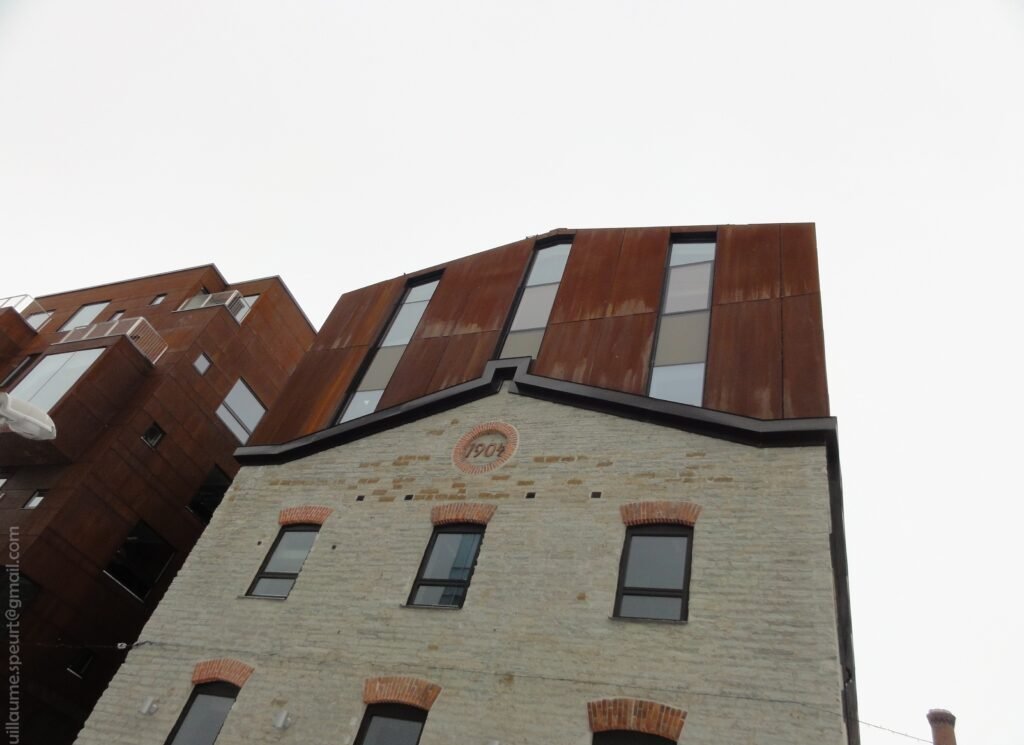
Rotermann is an easier eastward extension from Viru Gate. Its restored industrial buildings and pedestrian lanes lead toward the modern center and Old City Harbour. The harbor is reachable on foot, but port traffic, larger crossings, and the separation between ferry terminals interrupt the seamless medieval-street feeling. Kadriorg is different again: its park, palace, and Kumu museum form a pleasant local walking area after a tram ride from the center.
Where to Stay Without a Car
For the easiest balance, choose the Viru Gate or Rotermann side of central Tallinn. These bases put Lower Town sights within walking range while keeping airport, port, and Kadriorg trams handy. Staying inside Old Town is attractive for medieval atmosphere, but luggage wheels and uneven street surfaces can be frustrating. Balti Jaam and the southern Kalamaja edge are good alternatives for railway arrivals and Telliskivi visits. Kadriorg suits travelers prioritizing parks, though it adds transit to most first-day sights.
Walking Times Between Major Sights
Viru Gate to Town Hall Square: about 7–10 minutes. Town Hall Square to Alexander Nevsky Cathedral: around 12–18 minutes, including the climb. Cathedral to Patkuli viewpoint: roughly 6–9 minutes across Toompea. Patkuli to Balti Jaam Market: about 8–12 minutes using the direct staircase. Those steps are optional, not an accessibility shortcut.
Balti Jaam Market to Telliskivi: about 7–10 minutes. Town Hall Square to Rotermann: around 12–17 minutes. Rotermann to Terminal A: roughly 12–17 minutes. Old Town to Kadriorg Park: around 35–45 minutes on foot, depending on the start point. These are practical planning estimates, not live turn-by-turn navigation times.
A 2-Day Tallinn Walking Route
Day 1: Lower Town, Toompea and Telliskivi
Start at Viru Gate, enter St. Catherine’s Passage, and continue toward Town Hall Square. Climb Pikk jalg once, then visit Alexander Nevsky Cathedral and the upper viewpoints. Take in Kohtuotsa before continuing to Patkuli. If the staircase is dry and appropriate for your group, descend toward Toompark and Balti Jaam Market. Finish at Telliskivi Creative City, with time for a meal or one gallery. This sequence avoids an unnecessary return across the medieval center.
Walking route
Day 1 — Medieval Lower Town, Toompea and Telliskivi
- Viru Gate
- St. Catherine's Passage
- Tallinn Town Hall Square
- Pikk jalg
- Alexander Nevsky Cathedral
- Kohtuotsa viewing platform
- Patkuli viewing platform
- Patkuli staircase / Toompark
- Balti Jaam Market
- Telliskivi Creative City

Allow half a day for the streets and viewpoints, with more time for interiors. The direct Patkuli descent has 157 steps. Visitors avoiding stairs should choose a gentler, longer return or skip that connection entirely. The Old Town’s narrow streets and museums are not uniformly wheelchair accessible.
Day 2: Rotermann, the Harbor and Kadriorg
Begin at Rotermann to see how the city’s former industrial quarter joins the modern center. Continue toward the Admiralty Basin and Terminal A, checking your ferry terminal separately if sailing. From Vanasadam, take tram T2 back to Hobujaama and connect to tram T1 toward Kadriorg. Explore the Swan Pond, Kadriorg Palace grounds, and the park paths before finishing at Kumu. The tram removes an otherwise repetitive cross-city stretch; the Kadriorg sights remain a walkable cluster of their own.
Walking route
Day 2 — Rotermann, Old City Harbour and Kadriorg
- Rotermann Quarter
- Old City Harbour Terminal A
- Vanasadam tram stop
- Hobujaama tram stop
- Kadriorg tram stop
- Kadriorg Park / Swan Pond
- Kadriorg Palace
- Kumu Art Museum

The harbor section is optional for travelers without a ferry connection. A shorter second day can begin directly with tram T1 to Kadriorg. Museum admission and interior opening hours should be checked individually; the park provides a worthwhile walk even without entering every building.
Using Trams, Buses and Trolleybuses
Tallinn’s tram network is valuable because it connects distinct walking districts rather than replacing sightseeing within Old Town. Tram T1 serves Kadriorg, while T2 connects the airport, central interchange, and Old City Harbour. T4 also serves the airport and city center. Buses reach more distant districts and harbor-side destinations; trolleybuses add network coverage elsewhere. Public transport does not run through the medieval Old Town itself.
Most city routes operate from early morning until around midnight, with route-specific weekend schedules. Friday and Saturday night buses provide an additional late option. Visitors can purchase a one-hour ticket using a contactless payment card at a vehicle validator. Check the official journey planner for exact departures and boarding points, especially on weekends.
Arriving in Tallinn Without a Car
Tallinn Airport is about 4 kilometers from the city center. Current T2 and T4 tram service connects the airport with central stops near the historic district. Follow the terminal signs to Lennujaam and allow a short final walk to your hotel. Airport access is unusually straightforward for a two-day visit, although luggage still matters on Old Town cobbles.
Balti Jaam is immediately beside the northwest edge of the medieval center. Official visitor guidance places the nearest city walls roughly 300 meters from the station. Elron runs domestic trains including routes toward Tartu, Narva, and Viljandi. Tallinn Central Bus Station is farther southeast, but central buses and trams provide practical connections.
The Old City Harbour’s Terminals A and D serve ferries including connections with Helsinki. Both are within a roughly 15–20-minute walk of Old Town, depending on the terminal and starting point. Tram T2 serves Vanasadam near Terminal A; Terminal D is a further walk across the harbor-side pedestrian connections. Check the terminal on your ticket before leaving. Visitors connecting between Estonia and Finland can also read our Helsinki walking guide.
When a Car Helps — and When It Does Not
A private car adds little to the Old Town, Telliskivi, Rotermann, harbor, and Kadriorg itinerary. Medieval access restrictions and central parking make it a poor tool for visiting short urban streets. Transit handles the useful long jumps. A car becomes relevant for countryside excursions or remote coastal stops outside the main visitor area, but those are separate trips rather than a requirement for Tallinn itself.
Accessibility and Seasonal Walking Conditions
Tallinn’s historic center poses genuine barriers for reduced-mobility visitors. Uneven cobblestones, high curbs, steep Toompea approaches, and stairs complicate routes that look simple on a map. Official visitor advice identifies Viru and Harju streets as smoother Lower Town options. Many medieval interiors have narrow doorways or steep internal steps. Check each venue’s access details rather than assuming that a short route is step-free.
Winter changes the pace without changing the layout. Snow and ice can make the Patkuli stairs and polished cobblestones hazardous; short daylight limits scenic stops. The waterfront is exposed to wind in any season, particularly in cold weather. Wear grippy shoes, allow extra time on Toompea, and keep a lower-slope alternative in reserve. Summer crowds can also slow movement through the tightest lanes.
Bottom Line: How to Spend a Walkable Weekend in Tallinn
Use Old Town as the main walking anchor, but plan the upper hill as a distinct physical effort. Extend one day northwest through Balti Jaam to Telliskivi, and another east through Rotermann and Kadriorg. The city’s trams and nearby travel gateways make a car unnecessary for this plan. Tallinn is most rewarding when its compact medieval core and its wider visitor neighborhoods are treated as connected, but different, experiences.