
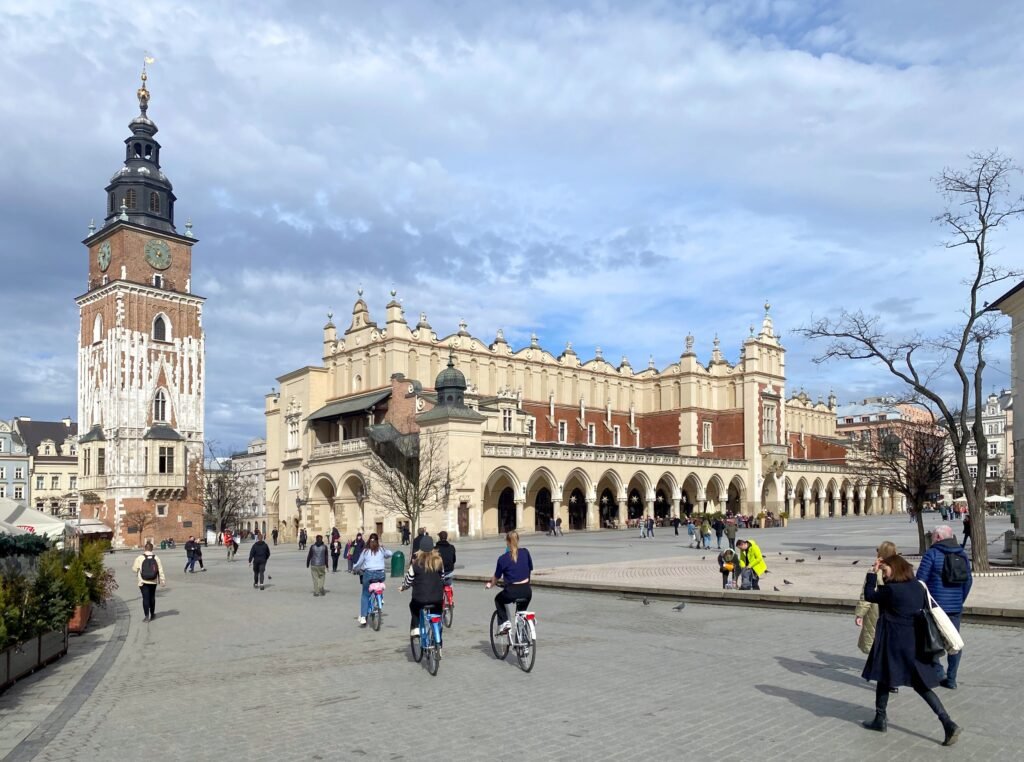
From the main station, Kraków’s first-time sights line up southward through Old Town, Wawel, and Kazimierz. Kraków Główny sits close enough to Planty and Florian Gate to feed directly into the historic core. From Rynek Główny, Grodzka continues naturally toward Wawel, with Kazimierz extending the same walking day farther south. Bernatek Footbridge then makes Podgórze a practical continuation across the Vistula, though Zabłocie adds more distance. Beyond that central chain, places such as Nowa Huta and the mounds become transit-supported extensions. Historic paving, tram tracks, and localized Wawel gradients add friction without changing the city’s overall pedestrian logic.
Why Kraków Works So Well on Foot
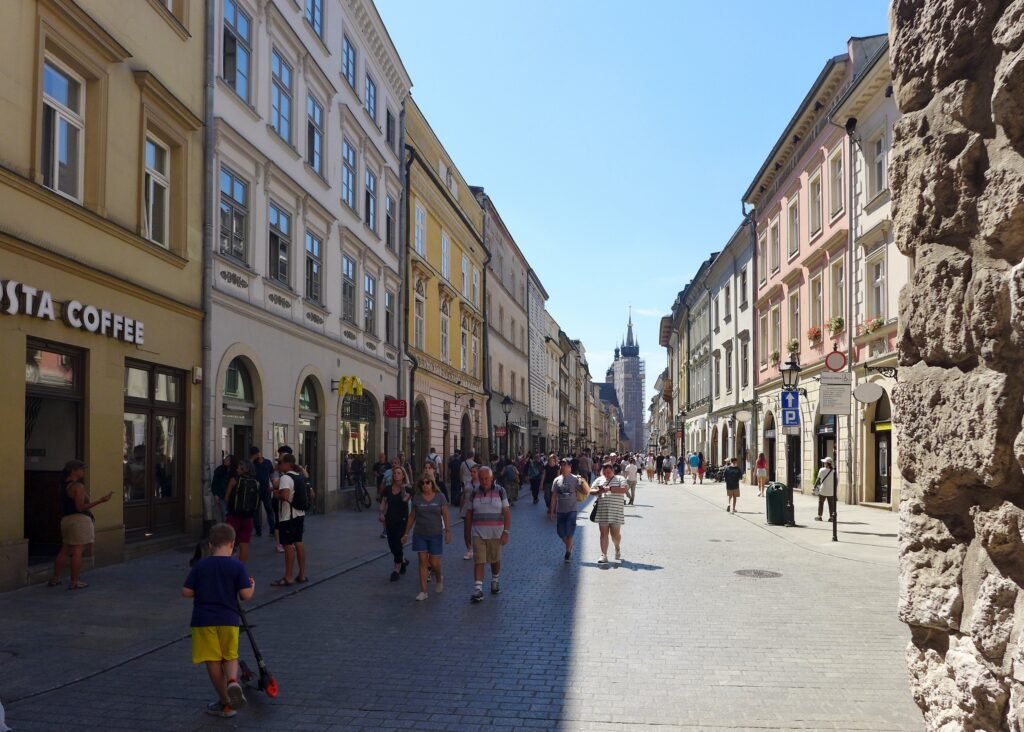
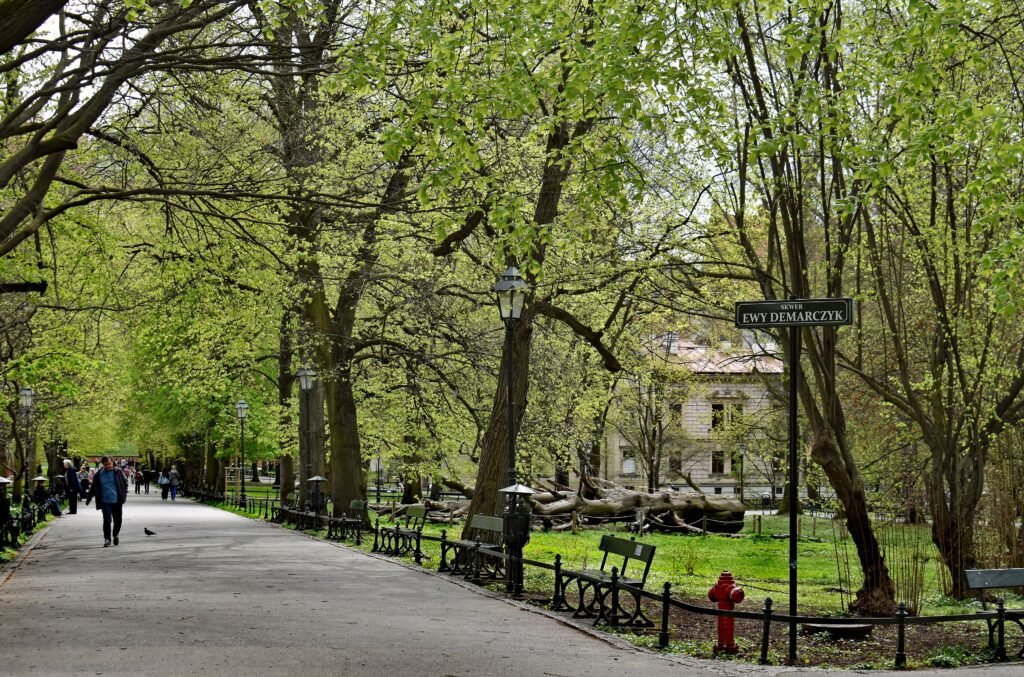
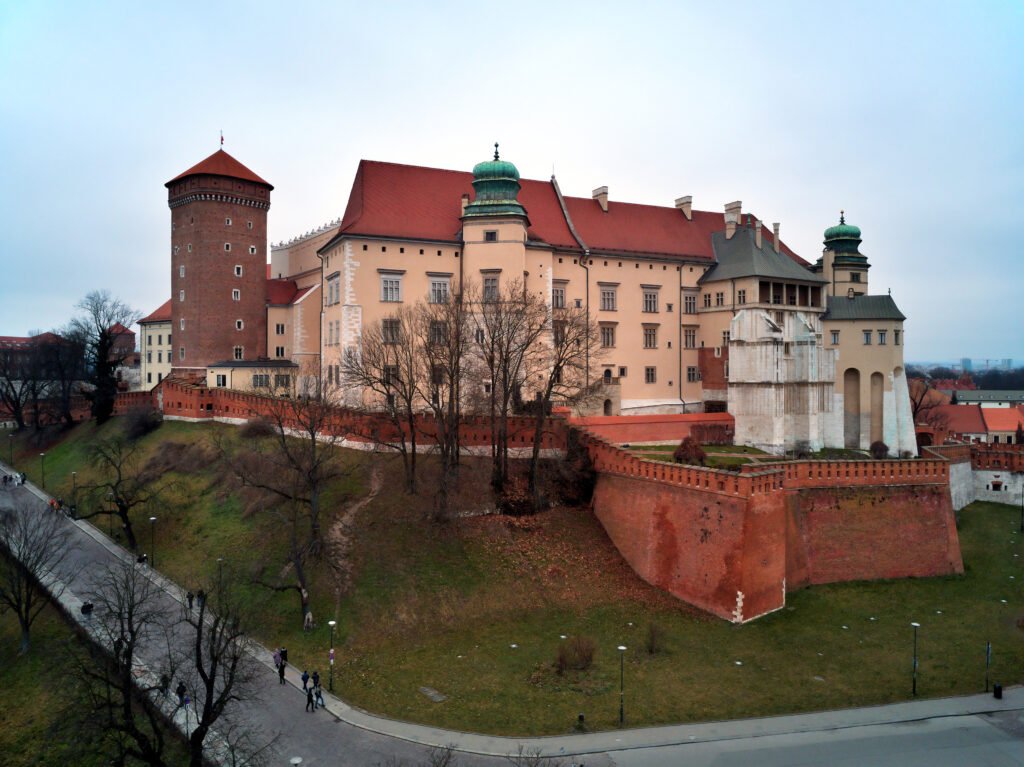
The strongest walking chain begins almost immediately after a rail arrival. Planty wraps the Old Town with a continuous green path, while Florian Gate opens directly onto Floriańska. Rynek Główny then concentrates several first-visit landmarks within one large pedestrian-priority space. Grodzka continues south toward Wawel without requiring a transport jump. Official Wawel guidance places the castle about ten minutes from Rynek and twenty minutes from the rail-and-bus hub.
Central traffic restrictions strengthen that geography without making every street car-free. The Old Town zone inside the First Ring Road limits ordinary driving, while defined access exceptions remain. A smaller restricted zone also covers parts of Kazimierz around Plac Nowy. That distinction matters because sidewalks, tram tracks and vehicle access become more noticeable south of the Old Town.
Where the Continuous Walking Core Ends
Wawel does not end the central walking system. Stradom leads naturally into Kazimierz, whose synagogues, squares and museums sit within a realistic continuation. Bernatek Footbridge extends that route across the Vistula into Podgórze. The dedicated crossing keeps the river from acting like a major pedestrian barrier between those two districts.
Zabłocie is the point where the geometry starts to loosen. Schindler’s Factory and MOCAK remain practical on one south-bank day, but larger blocks and rail infrastructure lengthen the approach. Nowa Huta sits clearly outside this central chain and works better after a tram ride. The mounds are also optional outer extensions, with much stronger climbing than the everyday center.
Best Areas to Stay for a Walking Weekend
Old Town and the Planty edge provide the simplest base for first-time sightseeing. Station-facing streets around Pawia reduce arrival friction while keeping Florian Gate close. Stradom balances Rynek, Wawel and Kazimierz particularly well for a two-day plan. Kazimierz is stronger for evening wandering and the Podgórze route, although Kraków Główny sits farther away.
The city’s lodging pattern supports these choices. Municipal data show a particularly high concentration of short-term accommodation in central District I. A property advertised as central can still sit well outside the best two-day walking chain, so check its exact map position.
Useful Walking Times
These are practical planning estimates rather than guaranteed walking times. Crowds, cobbles, museum entrances, tram crossings and station passages can change the pace
A 2-Day Walking Route
The two days follow one-way geographic progressions rather than returning repeatedly to Rynek. The second day crosses the Vistula once and finishes in Zabłocie.
Day 1: Kraków Główny, Old Town, Wawel and Kazimierz
Walking route
Day 1: Kraków Główny, Old Town, Wawel and Kazimierz
- Kraków Główny
- Barbican
- St. Florian's Gate
- Rynek Główny
- St. Mary's Basilica
- Cloth Hall
- Wawel Royal Castle
- Plac Wolnica
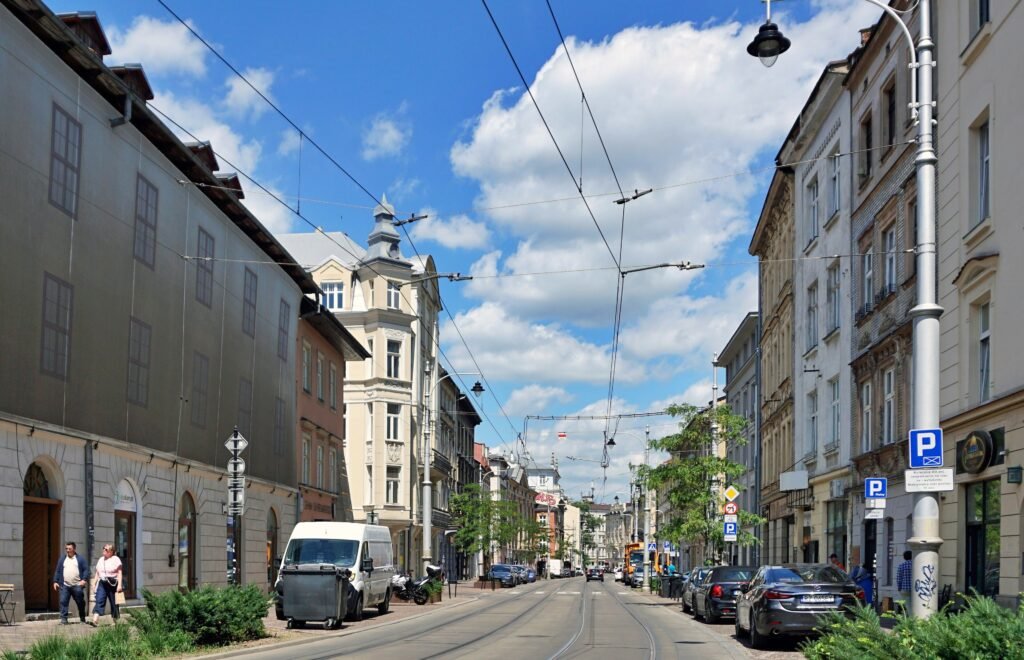
Start at Kraków Główny and enter the Old Town through Planty, the Barbican and Florian Gate. Floriańska leads directly to Rynek Główny, St. Mary’s Basilica and the Cloth Hall. Continue south on Grodzka to Wawel instead of circling back through the square. After the castle, descend toward Stradom and finish at Plac Wolnica, already inside Kazimierz.
Day 2: Kazimierz, Podgórze and Zabłocie
Walking route
Day 2: Kazimierz, Bernatek Footbridge, Podgórze and Zabłocie
- Old Synagogue
- Plac Nowy
- Father Bernatek Footbridge
- Rynek Podgórski
- Ghetto Heroes Square
- Oskar Schindler's Enamel Factory
- MOCAK Museum of Contemporary Art in Krakow
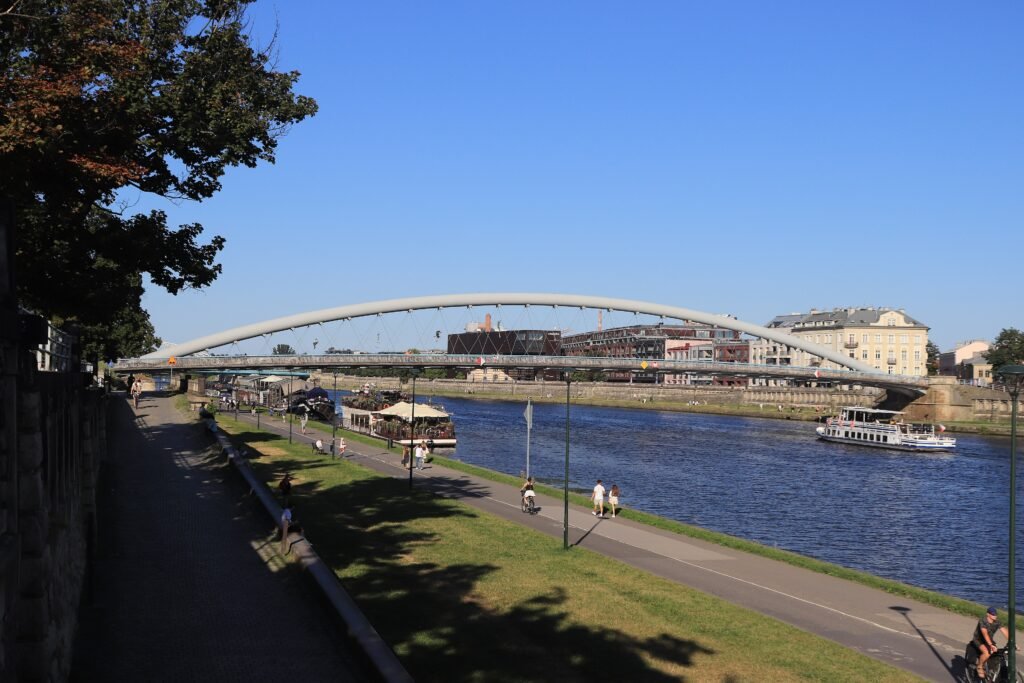
Begin at the Old Synagogue, then cross Kazimierz through Plac Nowy toward Bernatek Footbridge. The bridge carries the route directly into Podgórze without a tram transfer. Continue through Rynek Podgórski and Ghetto Heroes Square before finishing at Schindler’s Factory and MOCAK. Use transit back to the center if repeating the full walk adds little value.
Using Trams and Buses
Kraków uses time-based and multi-day public-transport tickets, available from machines and mobile apps. Ticket coverage, zones and validation requirements vary by product, so check current ZTP fare information before travel rather than relying on fixed prices in the guide.
Ticketing is inexpensive but requires a little attention. Current adult products include 15-, 30-, 60- and 90-minute tickets plus multi-day options. A 24-hour Zone I ticket costs 20 PLN. Machines and several mobile apps sell fares, but validation or activation rules depend on the product. Do not assume an ordinary bank-card tap always creates the correct fare automatically.
Weekend and evening coverage remains a strong backup for walkers. Kraków runs dedicated night trams and buses after regular daytime patterns wind down. That makes a central stay practical without using a private car for late returns.
Arriving Without a Car
Kraków Airport has a convenient rail connection to the city. The airport station sits beside the terminal and connects through a covered footbridge, with trains running directly to Kraków Główny. Check the current airport-rail timetable and fare before travel.
Rail and coach arrivals finish beside the northern edge of the visitor core. Kraków Główny and the adjacent MDA coach terminal connect through the same central transport area, leaving Old Town within easy walking distance. Direct domestic and international services vary by timetable, so check current rail or coach connections for your travel date.
When a Car Helps
A private car adds little to the standard Old Town, Wawel, Kazimierz and Podgórze weekend. It becomes more relevant for flexible regional touring or rural combinations beyond the city. Treat Wieliczka, Auschwitz-Birkenau, Zakopane and Ojców as separate excursions rather than extensions of the central Kraków weekend.
Walking Limitations and Practical Tips
Rynek and the major Old Town spines offer excellent pedestrian priority, but historic paving can be tiring over a full day. Kazimierz requires more attention around tram tracks, narrower sidewalks and mixed vehicle access. Wawel adds a modest localized climb rather than a citywide hill problem. In Zabłocie, larger blocks and rail infrastructure make short map distances feel less intimate.
Crowds can slow Floriańska, Rynek and the Wawel approaches even though the routes themselves remain straightforward. Temporary road, bridge or tram works can also move the best crossing or boarding point. Check current city and ZTP notices when travel-day construction affects the route.
Seasonal Context
Winter snow or ice can make historic paving and Wawel approaches more demanding. Summer heat can shorten comfortable midday walking, while rain highlights uneven surfaces. Air-quality episodes can also affect comfort. These conditions change the walking experience rather than the distances and connections between Kraków’s main sights.
Bottom Line
Kraków’s strongest first-time itinerary fits into an unusually coherent walking chain from the station through Old Town, Wawel and Kazimierz. Podgórze remains a natural second-day continuation across Bernatek Footbridge. Zabłocie is still reachable on foot, but it marks the point where transit becomes more valuable. Staying near Planty, Stradom or central Kazimierz keeps most weekend movement simple and car-free.