
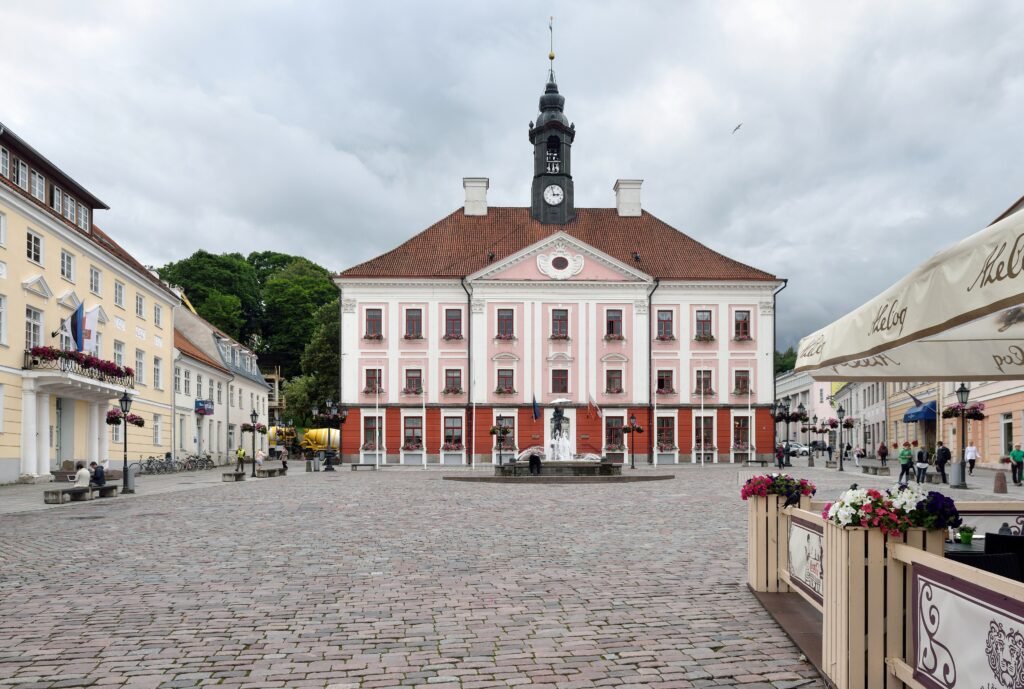

Tartu places its university and historic square on the same short stretch of city streets. Rüütli Street links the lively Old Town to academic buildings, while the Emajõgi sits just east of the square. Across the river, a pedestrian bridge makes the opposite bank feel like part of the center. Westward, Toome Hill rises above gentle streets, placing cathedral ruins and shaded paths near the center despite the climb. The science center occupies a separate short walk south. Farther northeast, the National Museum requires a longer walk through residential streets toward the higher ground of Raadi.
How Tartu Fits Together on Foot
The strongest walking area runs between Town Hall Square, Rüütli Street, the University of Tartu main building and the river. The Kissing Students fountain, Tartu Art Museum in the Leaning House, and nearby pedestrian streets need little planning to combine. Kaarsild provides a direct pedestrian crossing to the eastern bank. AHHAA sits south of the Old Town near the intercity bus station, close enough to reach as a separate central walk.
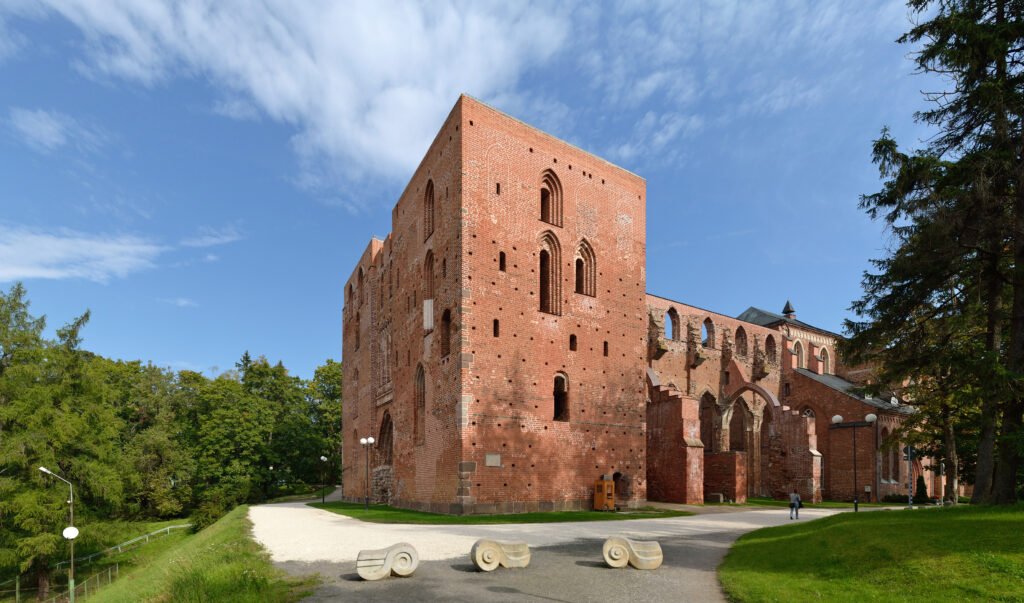
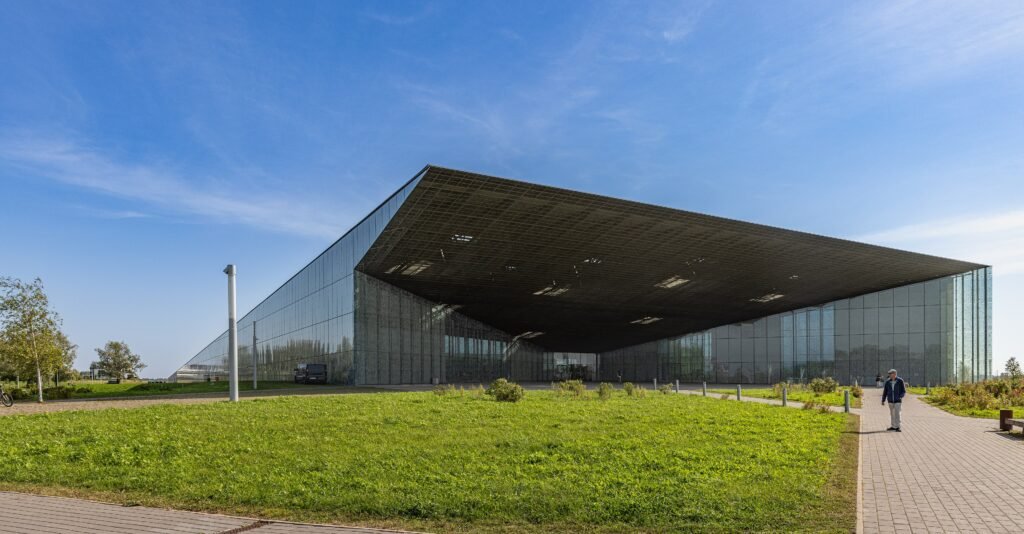
Toome Hill is close in distance but distinct in physical effort. The cathedral ruins, University Museum, Angel Bridge, Devil Bridge and observatory lie among hilltop paths and short climbs. The Estonian National Museum is different again: its Raadi building is about 2.5 kilometers from the center. Reaching it on foot means following the uphill Roosi Street corridor, not strolling through the historic square.
Best Areas to Stay Without a Car
Old Town and Town Hall Square make the most practical first-time base, especially around Rüütli Street and the university. Restaurants, cafés, historic sights and the river are close. Kesklinn near the bus station works well for train-and-coach itineraries and AHHAA, while still keeping the Old Town within walking distance.
Supilinn is an appealing quieter alternative for wooden-house streets and access to the northern riverfront. Karlova offers a neighborhood atmosphere farther south, but requires more walking to reach the principal sights. For a short weekend, prioritize the center over the character of an outlying address.
Walking Times Between Tartu Sights
Town Hall Square to University main building: about 4–6 minutes. Town Hall Square to Kaarsild: 3–6 minutes. Town Hall Square to Botanical Garden: 8–12 minutes. Town Hall Square to cathedral ruins: 8–12 minutes, including an uphill approach.
Town Hall Square to AHHAA: roughly 12–16 minutes. Tartu railway station to Town Hall Square: about 20 minutes. Intercity bus station to Town Hall Square: approximately 5–10 minutes. Town Hall Square to the Estonian National Museum: around 30–40 minutes across roughly 2.5 kilometers, including the climb toward Raadi.
These are useful planning estimates, not live-routing guarantees. The exact path, museum entrance, road crossings, ice and walking pace can change them.
A Two-Day Walking Route
Day 1: Old Town, University and Toome Hill
Walking route
Day 1: Old Town, the university and Toome Hill
- Tartu Town Hall Square and Kissing Students
- Rüütli Street
- University of Tartu main building
- University of Tartu Botanical Garden
- Supilinn riverside promenade
- Tartu Cathedral ruins and University Museum
- Angel Bridge
- Tartu Old Observatory
Start at the Kissing Students fountain in Town Hall Square and walk north along Rüütli Street. Continue to the university’s main building, then visit the Botanical Garden. The short side trip into Supilinn adds wooden houses and quieter streets without leaving Tartu’s walkable urban fabric. Its riverside promenade is an optional extension if your day is already full.
Turn southwest toward Toome Hill and climb to the cathedral ruins and University Museum. Continue past Angel Bridge and the observatory, using the hilltop paths to avoid needless descents. The nearby Devil Bridge is an easy addition. Expect the ascent to be the day’s hardest walking, despite modest total distance.
Day 2: AHHAA, the River and the National Museum
Walking route
Day 2: AHHAA, the Emajõgi and Raadi museum
- AHHAA Science Centre
- Tartu Market Hall
- Emajõgi River promenade
- Kaarsild pedestrian bridge
- Tartu City Museum
- Estonian National Museum
Begin at AHHAA Science Centre near Tartu’s bus station. Continue north to the Market Hall and follow the Emajõgi riverfront toward Kaarsild. Cross the pedestrian bridge, then continue to Tartu City Museum on the eastern side. From there, follow Roosi Street uphill to the Estonian National Museum, where the route ends rather than forcing a return on foot.
Allow substantial indoor time at AHHAA and the National Museum; both can absorb several hours. The National Museum normally closes on Mondays. Its bus 7 connection to central Tartu is the sensible way back when the long uphill approach has already used your walking energy. If preferred, skip the climb and take bus 7 both ways.
When Tartu Buses Are Worth Using
Buses are the only local public-transit mode in Tartu. Central visitors will rarely need them for the square, university, river or AHHAA. The clearest use is the Estonian National Museum: bus 7 links the Soola and Vabaduse stops near the center with the museum. City buses also help from the railway station and with longer district-to-district trips.
Contactless bank-card payments keep boarding simple, but routes and headways differ by time and day. Weekend and limited night-bus services exist; they do not provide frequent all-night coverage everywhere. Check Peatus or Tartu ticket information before longer bus trips.
Arriving in Tartu Without a Car
Intercity bus: Tartu’s central bus station is near the main shopping and sightseeing area. Frequent Tallinn–Tartu coach services are practical for car-free trips, with no peripheral terminal transfer on arrival. Rail: Elron trains arrive at Tartu railway station on Vaksali Street, around a 20-minute walk from Town Hall Square. A local bus or taxi can shorten the luggage transfer.
Air: Tartu Airport is about 10 kilometers from the center and has scheduled flights to Helsinki. The flight-timed E1 airport express bus runs between the terminal and city center, with a €5 single fare and contactless payment. Taxis are another option. From Tallinn Airport, certain intercity coaches travel directly to Tartu; rail travelers generally need an additional transfer.
Elron published temporary timetable adjustments for November 2026, including Tallinn-area infrastructure work. Verify your exact train departure before traveling rather than relying on a fixed time printed here. Flying through Helsinki? Its own car-free visitor guide covers that city’s central walking and airport connections.
Accessibility, Surfaces and Walking Limits
The central streets and river walks are relatively straightforward, but historic paving and crossings vary. Toome Hill is a significant exception to a flat-city impression. The University of Tartu documents several stair-free uphill approaches to its cathedral museum, including Lossi Street. Some alternative paths involve cobblestones, steps or a steeper grade.
Visitors using mobility aids should distinguish reaching the museum entrance from navigating every hilltop path or tower. The National Museum itself describes wheelchair access inside, but the uphill approach from the center remains a separate physical consideration. Consider bus 7 or a taxi when the approach is unsuitable, and check current entrance details before setting out.
When a Car Helps
A private car adds little to a normal two-day Tartu city break. Main central sights work on foot, and buses cover the most obvious outlying museum. Driving becomes more useful for a broader South Estonia itinerary with multiple rural attractions or stops that do not have convenient public-transport connections. That need is separate from the city’s own walkability.
Winter Walking in Tartu
Snow, ice and reduced daylight can make a winter visit feel markedly different. Take extra care on Toome Hill’s slopes, historic stones, stairs and riverfront paths. The central grid remains navigable, but allow more daylight for outdoor stretches and place indoor museums around shorter winter walking windows. Conditions affect comfort and pace rather than the underlying position of the city’s attractions.
Bottom Line
Tartu is most enjoyable on foot when you treat the Old Town, university quarter and river as one connected center. Toome Hill adds memorable sights along with a genuine climb. AHHAA fits a short additional walk, while the Estonian National Museum deserves its own longer excursion or bus ride. Stay centrally, keep the routes directional, and avoid treating every museum as if it sits around the same square.