
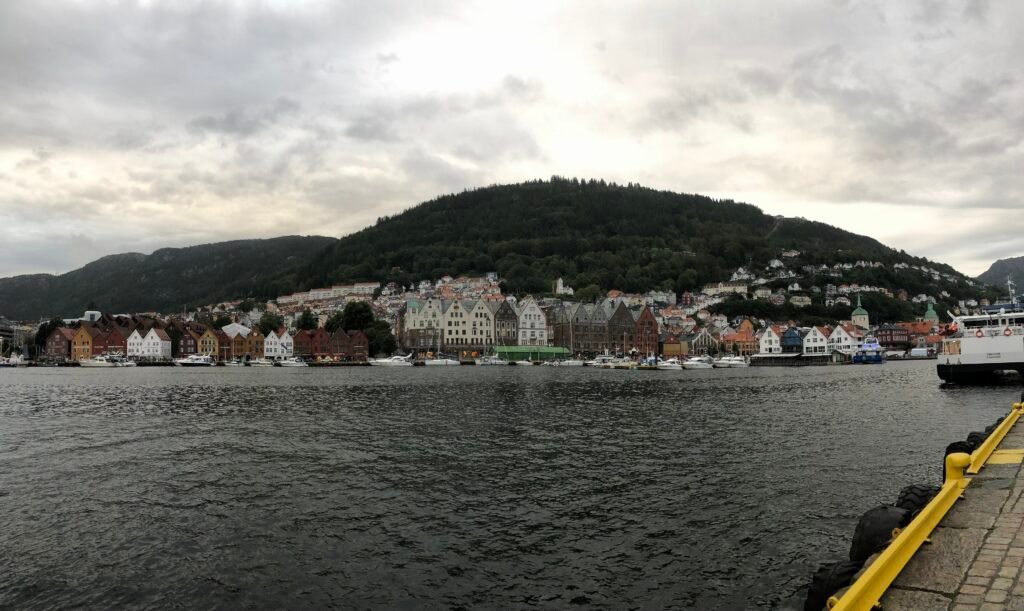

Norway’s strongest city breaks share a pattern: compact waterfront or historic cores, backed by useful transit for the edges. The ranking separates cities less by basic walkability than by how consistently that pattern holds across a full weekend. Oslo combines broad transit coverage with effortless airport arrival, but its headline sights spread beyond one walking loop. Trondheim keeps more of the visitor experience inside a tighter center while matching Oslo’s overall result. Bergen is denser still around Vågen, yet hills and historic surfaces demand more effort. Farther down, Stavanger, Tromsø, and Ålesund remain practical without a car, but each has a clearer outer-zone limitation.
The Ranking: 6 Most Walkable Cities in Norway
| Rank | City | Overall score | Strongest advantage | Main limitation |
|---|---|---|---|---|
| 1 (tie) | Oslo | 92/100 | Strongest transit support and exceptionally easy no-car arrival | Several headline sights sit beyond the central waterfront walking spine |
| 1 (tie) | Trondheim | 92/100 | Tight central sightseeing with strong pedestrian continuity | Kristiansten adds a climb and outer attractions need transit |
| 3 | Bergen | 90/100 | Exceptionally compact harbor sightseeing | Cobbles, slopes and historic surfaces raise walking effort |
| 4 | Stavanger | 89/100 | Compact historic harbor core with direct central routes | Transit depth and gateway convenience are less comprehensive |
| 5 | Tromsø | 88/100 | Short central walks with strong bus backup | Mainland sights and outer museums sit outside the central core |
| 6 | Ålesund | 85/100 | Very compact Art Nouveau waterfront | Aksla stairs and lower transit depth add effort |
Oslo and Trondheim are exactly tied at 92/100, so both share rank one. Competition ranking places Bergen third at 90/100, followed by Stavanger, Tromsø, and Ålesund. No secondary tiebreaker is applied. This article compares these six Norwegian city guides rather than claiming to rank every destination in Norway.
Why Oslo and Trondheim Share First Place
Oslo reaches first place through breadth rather than pure compactness. Oslo S opens directly onto Bjørvika, where the Opera House and MUNCH begin a strong waterfront sequence. Akershus Fortress, City Hall, the National Museum, Aker Brygge, and Tjuvholmen continue that chain westward. VisitOSLO now describes almost 10 kilometers of continuous harbor promenade, with pedestrian routes and regular wayfinding. The trade-off appears when Vigeland Park, Bygdøy, or Holmenkollen enters the plan. Those sights make Oslo’s excellent transit more important than the central map initially suggests.
Trondheim reaches the same total from a more concentrated pedestrian pattern. Midtbyen, Nidaros Cathedral, Gamle Bybro, Bakklandet, Solsiden, and Brattøra form a tighter visitor network. Visit Trondheim highlights pedestrian streets in Midtbyen and a signed central walking route. Bakklandet adds cobbles and character without breaking the core into separate districts. The clearest extra effort is the rise toward Kristiansten Fortress, while Ringve and Bymarka are better treated as extensions. Oslo gains more from transit and arrival; Trondheim gains more from central compactness.
Bergen: Compact Enough to Challenge the Leaders
Bergen sits only two points behind the co-leaders despite feeling smaller underfoot. Visit Bergen describes the city as compact, easy to navigate, and short on distances even when walking. Bryggen, the Fish Market, Fløibanen, KODE, and Bergenhus all sit around a remarkably concentrated central harbor. The difference is walking effort rather than sightseeing distance. Cobbles, slopes, uneven historic surfaces, and hillside streets make a compact map less effortless than Trondheim’s. Strong transit and excellent no-car arrival keep Bergen firmly near the top.
Stavanger, Tromsø and Ålesund: Strong Weekends With Clearer Edges
Stavanger keeps its central weekend unusually tidy. Fjord Norway’s suggested four-hour walk strings Old Stavanger, the harbor, cathedral, Fargegaten, and Breiavatnet together naturally. Its pedestrian conditions are strong, and the compact core rarely needs a bus. What separates Stavanger from Trondheim is not central walking quality. The gap comes from less comprehensive transit and a more burdensome representative arrival pattern.
Tromsø has a smaller central sightseeing footprint than its Arctic setting might imply. Visit Tromsø calls the city center a good size for exploring on foot and publishes several central walking routes. Polaria, Storgata, the cathedral, waterfront, and Polar Museum stay close together. The Arctic Cathedral shifts the trip across Tromsø Bridge, while Fjellheisen pushes farther onto the mainland. Good buses compensate effectively, which is why Tromsø remains easy without a car despite weaker central concentration.
Ålesund may have the smallest-feeling center in this ranking. Brosundet, the Art Nouveau streets, Byparken, Molja, and the harbor fit into a compact waterfront walk. That compactness does not remove physical effort. Aksla rises immediately behind the center with 418 steps, while Atlanterhavsparken requires a separate westward trip. Local buses solve that outer journey, but the network offers less depth than in the higher-ranked cities.
Best Norwegian City by Traveler Priority
| Traveler priority | Best fit | Why |
|---|---|---|
| Most balanced walking-first weekend | Trondheim | A tight central visitor network, strong pedestrian conditions, useful transit, and easy no-car access balance unusually well. |
| Strongest transit safety net | Oslo | Its network does the most to make separated headline sights efficient within a short visit. |
| Easiest no-car arrival | Oslo and Bergen | Both share the strongest stored arrival result; no single winner is justified. |
| Most compact visitor geography | Trondheim, Bergen, Stavanger and Ålesund | All four share the strongest stored visitor-destination result in this six-city set. |
| Historic harbor walking | Bergen | Bryggen, Vågen, the Fish Market and nearby cultural sights form the clearest historic harbor cluster. |
| Arctic city break | Tromsø | Central sights remain walkable while buses handle mainland and outer-museum extensions. |
| Small scenic waterfront | Ålesund | The Art Nouveau center and Brosundet compress much of the city experience into a very small area. |
Compact Does Not Mean the Same Thing as Easy Without a Car
Norway makes the distinction especially clear. Ålesund and Bergen concentrate major sights tightly, yet hills, stairs, cobbles, or thinner transit reduce effortless coverage. Oslo spreads farther but solves distance with the strongest transit network in this comparison. Tromsø follows a similar logic on a smaller scale, using buses to connect a compact island center with mainland sights. Stavanger and Trondheim sit closer to the middle, combining compact cores with enough transit for selected extensions.
Walking Effort: Hills, Cobbles, Bridges and Stairs
The biggest pedestrian differences appear after the map stops looking compact. Bergen’s slopes and historic surfaces add repeated small effort throughout the center. Trondheim and Stavanger are smoother overall, though Kristiansten and short harbor-side rises still matter. Tromsø’s center is comparatively straightforward, but the bridge creates a long exposed connection to mainland attractions. Ålesund delivers the sharpest single climb through Aksla’s 418 steps. Oslo is easier underfoot, but longer cross-city distances make route planning more important.
Transit and Arrival: Where the Network Changes the Weekend
Oslo benefits most from transit because its visitor offer extends far beyond the central waterfront. Bergen and Trondheim also provide strong backup, although their central sightseeing requires it less often. Tromsø’s buses are important for mainland and outer-island destinations. Stavanger remains easy without driving, but its network and gateway pattern contribute less to the weekend. Ålesund relies more selectively on buses for places such as Atlanterhavsparken. Across all six, a rental car is unnecessary for the standard city-focused weekend.
Seasonal Context
Norwegian walking conditions can change sharply with rain, snow, ice, wind, and daylight. Those factors affect comfort without changing the structural ranking used here. Bergen’s wet surfaces can make cobbles feel slower, while Tromsø’s winter conditions can change the practical feel of bridges and sidewalks. Ålesund’s Aksla stairs also deserve more caution when surfaces are slippery. Check local forecasts and service alerts near your travel dates.
Which Norwegian City Should You Choose?
Choose Oslo for the widest sightseeing range and strongest transit backup. Pick Trondheim when you want a compact, balanced weekend with minimal logistical planning. Bergen is the historic-harbor choice if hills and cobbles do not bother you. Stavanger works especially well for a relaxed southwest city break centered on the waterfront. Tromsø suits travelers pairing an Arctic city center with bus-assisted mainland sights. Ålesund is ideal when a small Art Nouveau waterfront and one deliberate hill climb sound appealing.
Bottom Line
Oslo and Trondheim share first place because different strengths balance to the same result. Oslo is the stronger transit-supported city, while Trondheim keeps more of the weekend inside a compact walking network. Bergen follows closely, losing ground mainly through walking effort rather than distance. Stavanger and Tromsø remain excellent without a car, but transit plays different roles in each. Ålesund ranks sixth despite an exceptionally compact center because stairs, outer attractions, and thinner transit create more friction.