
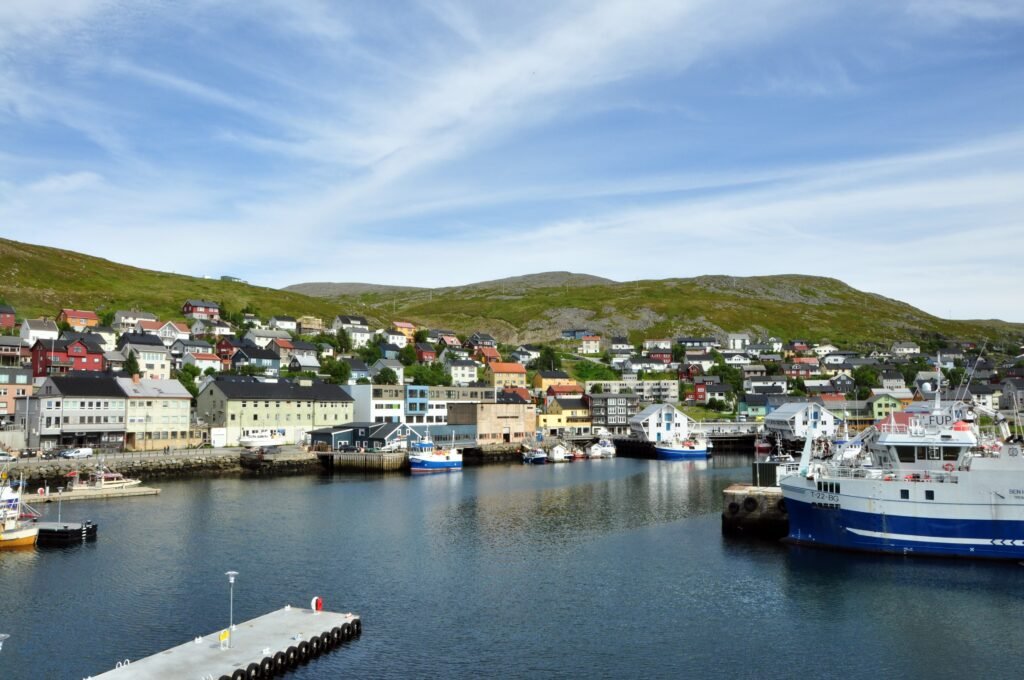

Tromsø concentrates much of its first-time sightseeing along a narrow downtown strip between Storgata and the waterfront. The Polar Museum, Tromsø Cathedral, Polaria, shops, restaurants, and central hotels sit inside that compact pattern. The geometry changes at Tromsø Bridge, where the visitor map expands onto the mainland and begins climbing. Crossing to the Arctic Cathedral remains a practical walk, but reaching Fjellheisen adds distance and elevation. Farther Tromsøya attractions make the bus network part of a complete weekend, not a substitute for walking.
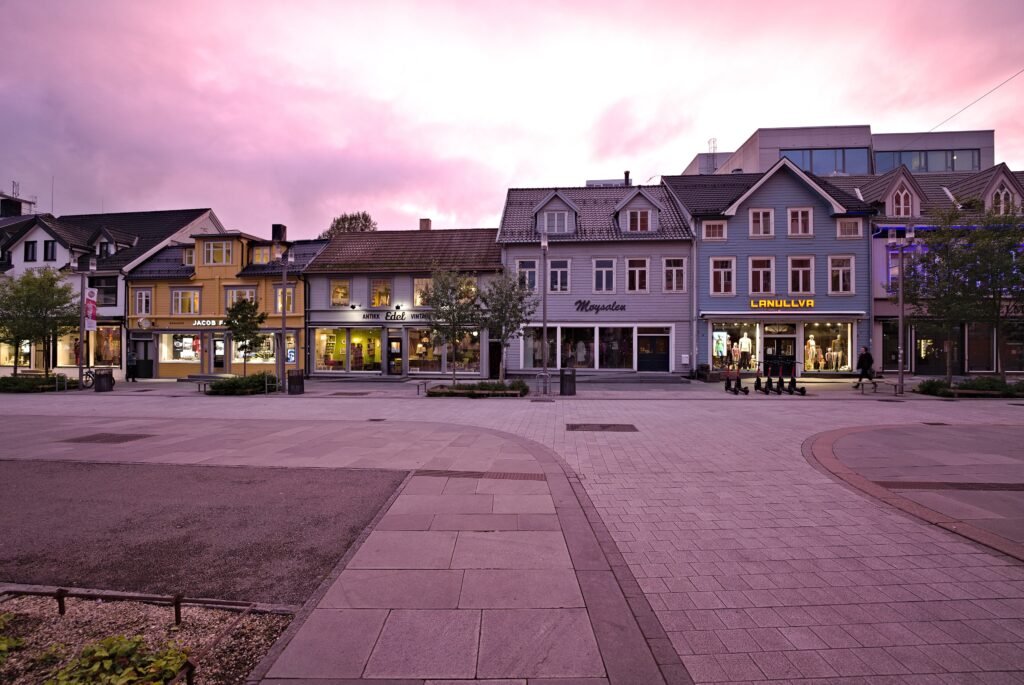
Why Tromsø Works Well on Foot
Central Tromsø is long and narrow rather than broad. Storgata acts as the main pedestrian spine, while the waterfront provides a parallel sightseeing line. Polaria sits south of the central core; Tromsø Cathedral and the art museum anchor the middle; Perspektivet and the Polar Museum extend north. The municipal description of Storgata as a key pedestrian street matches the visitor map: most downtown stops are close enough that walking is simpler than boarding a bus. The exception begins at the water. Tromsø Bridge is about one kilometer long, and the mainland side adds both distance and elevation.

Best Area to Stay for Walking
For the most walkable stay, choose Sentrum between Storgata, the harbor and Prostneset. That position keeps the Cathedral, art museum, Perspektivet, Polar Museum, restaurants and central bus stops close. Polaria remains a short walk south, while mainland buses leave from stops near Stortorget and Torgsenteret. Staying around the waterfront also simplifies airport arrival because the Airport Express serves several central hotels. Tromsdalen can suit travelers prioritizing Fjellheisen, but it is less balanced for a first city weekend.
Walking Times Between Major Tromsø Sights
From the tourist information area, Tromsø Cathedral is about two minutes away. Polaria and the Polar Museum are each roughly ten minutes on foot. The Arctic Cathedral takes about 20 minutes by the bridge route. From there, Fjellheisen’s lower station adds around 15 minutes. Walking from central Tromsø directly to Fjellheisen takes about 45 minutes. The Arctic University Museum takes roughly 30 minutes, or a shorter ride on bus 40.
A 2-Day Walking Route
Day 1: Polaria, Storgata and the Waterfront
Walking route
Day 1: Polaria, Storgata and the waterfront
- Polaria
- Ølhallen
- Tromsø Cathedral
- Northern Norway Art Museum
- Stortorget
- Perspektivet Museum
- The Polar Museum
- Skansen
- Vervet

Start at Polaria and move north through Ølhallen, Tromsø Cathedral and the Northern Norway Art Museum. Continue through Stortorget and Storgata to Perspektivet, then drop to the harbor for the Polar Museum and Skansen. Finish at Vervet rather than retracing the route. This day stays inside the strongest pedestrian cluster, with museums and food stops close enough to adjust around opening hours.
Day 2: Cross the Bridge to Tromsdalen
Walking route
Day 2: Tromsø Bridge, Arctic Cathedral and Fjellheisen
- Stortorget
- Tromsø Bridge
- Arctic Cathedral
- Fjellheisen Lower Station
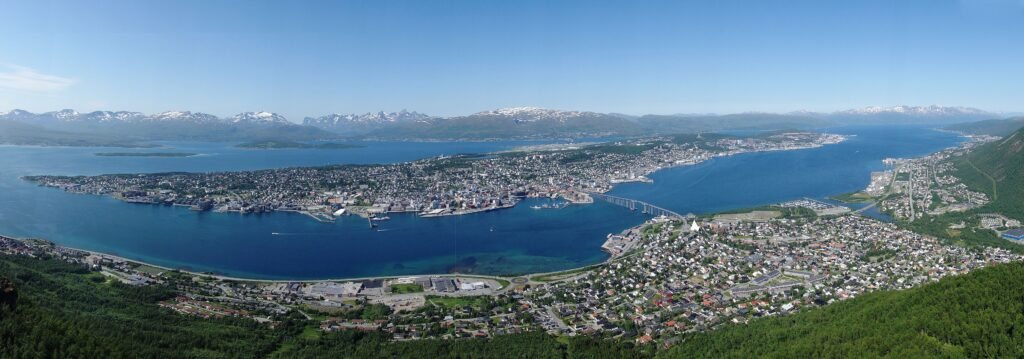
Begin at Stortorget and cross Tromsø Bridge on the pedestrian side. Visit the Arctic Cathedral, then continue about 15 minutes to Fjellheisen’s lower station. The bridge approach and mainland streets add more elevation than the central route. Ride the cable car if conditions suit, then use bus 26 for the return to central Tromsø. That one-way pattern avoids spending sightseeing time repeating the bridge walk.
When Transit Helps
Buses matter once you move beyond Sentrum. Route 26 links central Tromsø with Fjellheisen and also serves the airport; route 40 is useful for the Arctic University Museum; route 42 reaches the airport and Breivika area. Several other city routes fill in the network. Svipper combines journey planning, live departures, disruption notices and ticket purchasing. The current line 26 timetable includes late evening service, including weekends, so transit remains useful after daytime sightseeing. Always check live departures, especially during road works or winter conditions.
Arriving in Tromsø Without a Car
Most visitors arrive through Tromsø Airport, about five kilometers from the center. City buses 24, 26, 40 and 42 serve the airport, while the Airport Express stops at several central hotels and Polaria. The airport transfer is short, but it still requires a bus, coach or taxi rather than a central rail arrival. Tromsø has no railway station. Hurtigruten and Havila coastal ships also call year-round, using the central waterfront gateway at Prostneset.
When a Car Helps
A car adds little to a central two-day Tromsø visit. It becomes more useful when the trip expands into fjords, coastal villages or flexible nature stops outside the urban bus network. Even then, regional buses and organized tours can replace driving for some itineraries. Winter driving introduces its own burden on narrow, icy roads, so renting a car should solve a specific excursion rather than serve as the default city transport.
Limitations and Practical Tips
Tromsø’s compact core can create a misleading first impression of total walkability. The Arctic Cathedral is still a reasonable walk, but Fjellheisen, the university museum, botanical garden and science center pull the visitor map outward. The bridge is exposed and longer than downtown blocks, while mainland routes add elevation. Winter snow, ice and limited daylight can also slow otherwise simple walks. Visit Tromsø notes that the center is mostly flat and some footpaths are heated, but heavy snowfall can still make movement harder.
Seasonal Walking Context
Summer’s midnight sun can make late walking unusually flexible, while winter changes the same routes through snow, ice and long twilight. The Polar Night lasts roughly from late November to mid-January. In winter, allow more time and wear footwear suited to icy surfaces. Live transport checks matter more after snowfall, especially when a bridge walk or mainland connection is part of the day.
Bottom Line
Tromsø works best as a compact walking city with strategic bus extensions. Spend most of your time on foot between Polaria, Storgata, the waterfront and Polar Museum. Walk the bridge when conditions suit, then let buses handle Fjellheisen, outer museums and other low-value mileage. A car is unnecessary for the core weekend, but becomes useful when the trip turns into a broader Arctic road journey.