
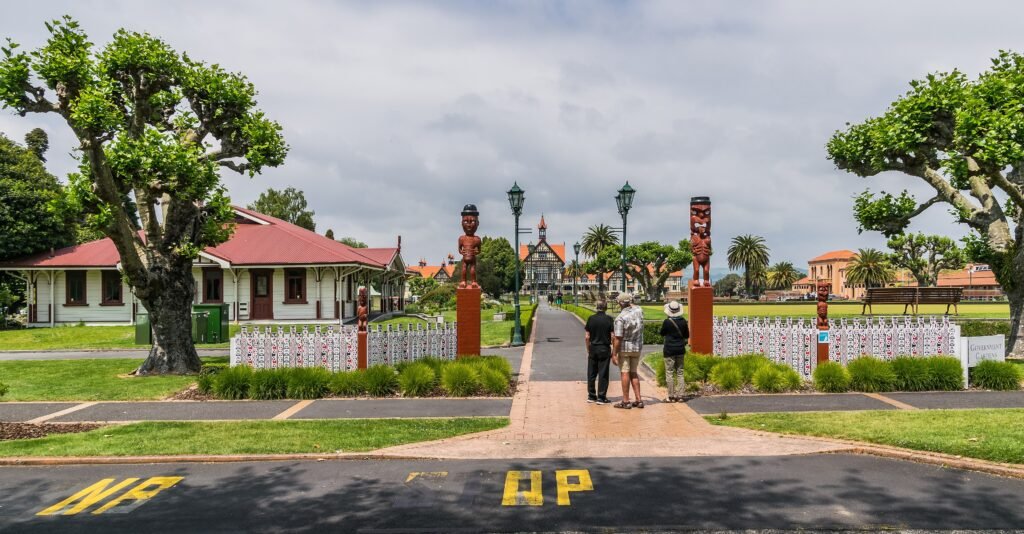
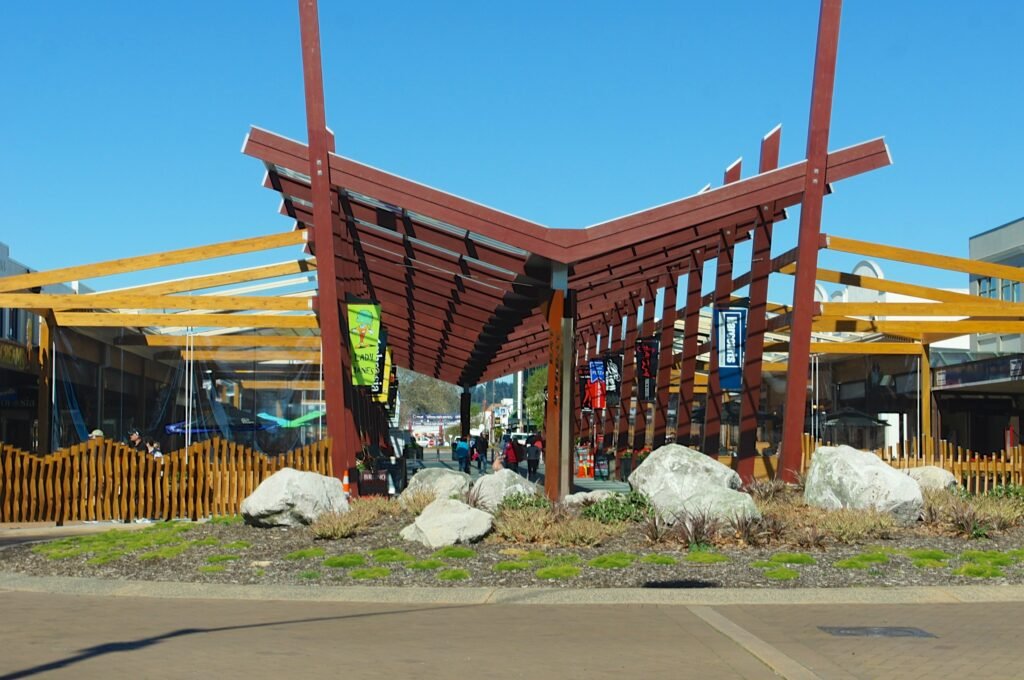
One compact lakeside grid carries much of the first-time visitor experience before Rotorua begins to stretch outward. Tūtānekai Street runs from shops and restaurants toward Eat Streat and the redeveloped lakefront. From there, broad paths lead toward Government Gardens, Polynesian Spa, and the Sulphur Point shoreline. Kuirau Park sits within an easy walk on the opposite side of the CBD. The geography changes south and north of this core. Te Puia and Whakarewarewa require substantial walks along the Fenton Street corridor. The Redwoods and Skyline sit about five kilometres from central Rotorua. Those outer sights are better treated as separate trips.
Why Rotorua’s Central Core Works on Foot
The strongest walking chain begins around the CBD and runs north along Tūtānekai Street to Eat Streat. The lakefront then opens into broad boardwalks and shoreline paths rather than forcing pedestrians back onto busy roads. Government Gardens continues the sequence eastward, with Polynesian Spa only minutes from central shops. Sulphur Point begins just beyond the Bath House precinct. Kuirau Park works as a separate but easy western extension from the same central grid.
Where Rotorua Stops Feeling Compact
Te Puia and Whakarewarewa are important Rotorua sights, but neither belongs to the lakeside walking core. Te Puia sits at 20 Hemo Road, and Whakarewarewa uses a separate entrance at 17 Tryon Street. Walking from central Rotorua means a long southern approach along the Fenton Street corridor. The Redwoods and Skyline sit about five kilometres from the CBD in different directions. Both are better reached by public transport when time matters.
The Redwoods has a more pleasant non-road approach than its distance suggests, including walking and shared-path connections. That helps pedestrian comfort without making the forest geographically central. Skyline’s approach is comparatively gentle but follows the Fairy Springs corridor, where traffic exposure matters more than gradient. The gondola begins only after reaching the attraction base and does not function as a city pedestrian connection.
Best Areas to Stay for a Walking Weekend
The CBD and Tūtānekai Street are the most balanced bases for a short visit. They keep restaurants, the i-SITE, buses, lakefront and Government Gardens close together. Staying near Eat Streat favors dining and the waterfront, while Government Gardens-side hotels shorten walks to Polynesian Spa. Fenton Street lodging remains practical, although farther-south properties increase the distance to the lakefront.
Useful Walking Times Between Rotorua Sights
Central shops to Polynesian Spa is about five minutes, while the museum precinct is roughly three minutes from the spa. Eat Streat reaches the lakefront in only a few minutes. Kuirau Park is generally around 10–15 minutes from the central Tūtānekai area. Te Puia and Whakarewarewa are roughly 40–55 minute walks from the CBD, depending on the starting point. The Redwoods is about one hour on foot. Skyline is a similar five-kilometre outer trip. Treat the longer figures as practical planning estimates rather than guaranteed walking times.
A 2-Day Walking Route
Day 1: Tūtānekai Street, Lakefront and Sulphur Point
Walking route
Day 1: Tūtānekai Street, Lakefront and Sulphur Point
- Rotorua i-SITE Visitor Information Centre
- Tūtānekai Street
- Eat Streat
- Rotorua Lakefront
- Government Gardens
- Rotorua Museum exterior
- Polynesian Spa
- Sulphur Point boardwalk
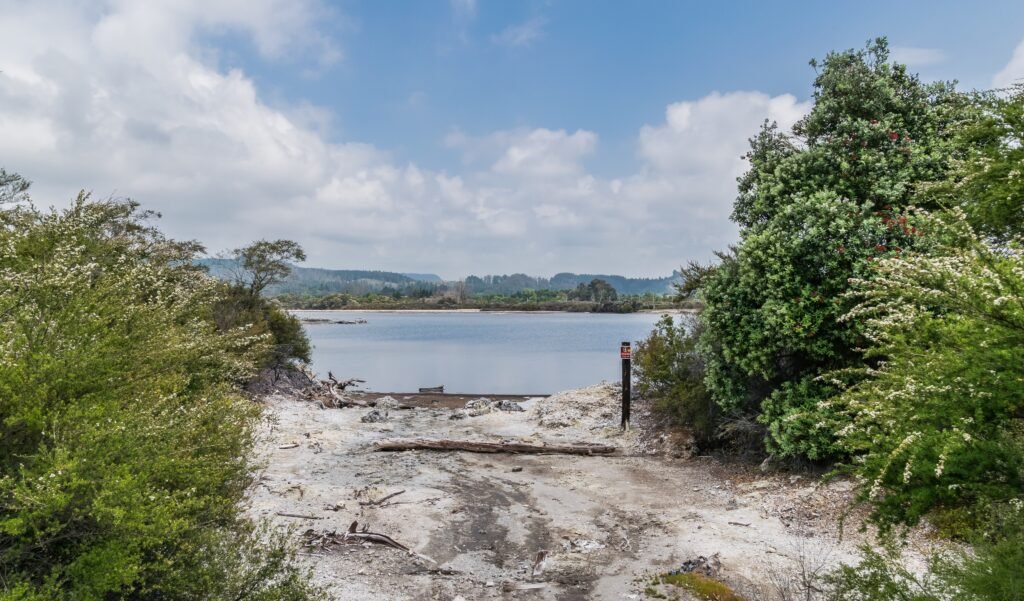
Start at the Rotorua i-SITE and use the CBD grid to reach Tūtānekai Street. Continue north through Eat Streat, then step onto the redeveloped lakefront paths. Follow the water east into Government Gardens and pass the closed Rotorua Museum exterior. Polynesian Spa sits nearby before the route continues to the Sulphur Point boardwalk. Stop after a short geothermal shoreline section unless you want the much longer Motutara Point walk.
Day 2: Kuirau Park, Te Puia and Whakarewarewa
Walking route
Day 2: Kuirau Park, Te Puia and Whakarewarewa
- Kuirau Park
- Rotorua CBD - Arawa Street interchange
- Te Puia
- Whakarewarewa - The Living Māori Village
- Fenton Street return corridor
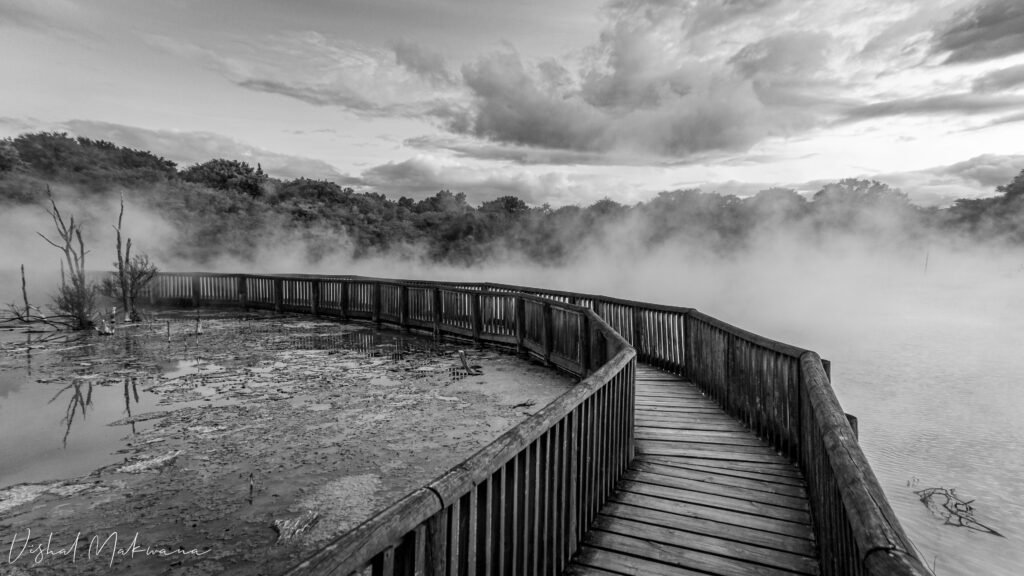
Begin with Kuirau Park while your day is still centered on foot. Walk back through the CBD to Arawa Street, then use Baybus Route 11 to Te Puia. That short transit jump avoids spending nearly an hour on a low-value arterial approach. After Te Puia, continue on foot toward the separate Whakarewarewa entrance if both attractions fit your schedule. Return from the Fenton Street corridor by Route 11 rather than retracing the entire walk.
Using Baybus Without Overplanning
Rotorua’s bus network is small and easy to understand because all 11 urban routes begin at Arawa Street. Route 11 is the key visitor service for Te Puia. Route 1 serves Skyline, while Route 3 reaches the Redwoods/Lynmore corridor. Cash fares and Bee Card are both available, and the Rotorua Daysaver simplifies multiple rides.
Frequency is the bigger limitation, particularly on weekends. Route 11 is less frequent on Saturdays and especially Sundays, while several outer routes finish relatively early. Check the current timetable and plan major outer attractions before late afternoon rather than relying on frequent evening service.
Arriving in Rotorua Without a Car
Rotorua Airport has a direct public connection that is better than the city’s modest network might suggest. Route 10 stops just outside the terminal and reaches the CBD in about 17 minutes on scheduled airport trips. Airport-serving departures are hourly, with a shorter operating span on Sundays. That makes the trip easy when the timetable fits your flight, but poor for very early or late arrivals.
InterCity coaches provide another useful car-free arrival option. Multiple daily services use the Rotorua i-SITE at 1167 Fenton Street as the main city stop. That places coach arrivals directly inside the central walking geography.
When a Car Helps
A private car adds little value inside the CBD, lakefront and Government Gardens core. It becomes more useful for regional excursions that sit well beyond Rotorua’s urban walking geography. Wai-O-Tapu, Waimangu Volcanic Valley, Lake Tarawera, Hell’s Gate and other rural destinations should be planned as separate trips. Hobbiton is also a regional excursion rather than part of a Rotorua walking weekend.
Limitations and Practical Tips
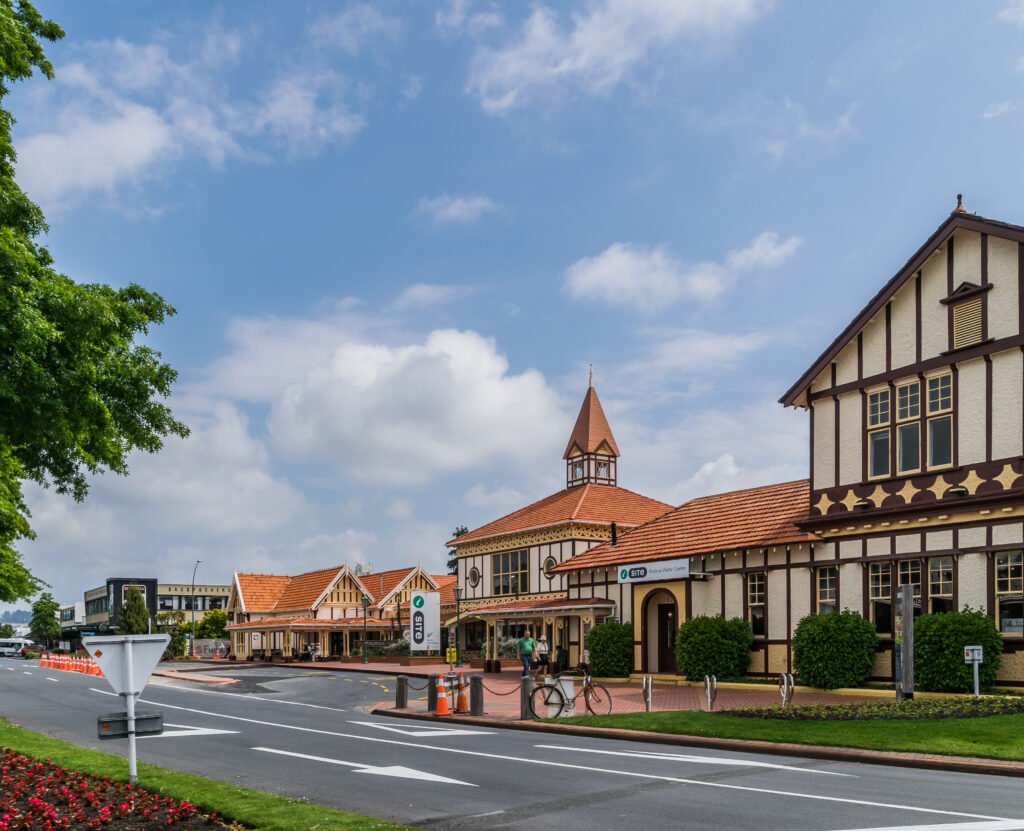
Rotorua Museum remains closed for earthquake strengthening and redevelopment, so check current reopening information before visiting. Government Gardens remain worth exploring on foot despite the museum closure. Work around Prince’s Gate can occasionally create local detours, so follow council notices and signed routes when access changes.
Geothermal steam, odors and localized restrictions are normal around Sulphur Bay, Kuirau Park and paid geothermal attractions. Stay on signed paths rather than treating geothermal ground as open space. The longer Fenton Street and Fairy Springs walks have usable footpaths but more vehicle exposure than the central lakefront. Public buses are most valuable for avoiding those low-value road miles.
Seasonal Walking Context
Rain, cool mornings and exposed shoreline conditions can change walking comfort in Rotorua. Carry a light waterproof layer and allow extra time on wet geothermal or forest paths. Bus connections become especially useful when poor weather makes the longer Fenton Street or Fairy Springs approaches less appealing.
Bottom Line
A central Rotorua stay gives you a strong day of walking before the city’s major attractions begin to spread outward. Use the CBD, lakefront, Government Gardens and Kuirau Park as the pedestrian core. Add Te Puia or Whakarewarewa with a planned Route 11 repositioning, and treat the Redwoods or Skyline as separate outer trips. That approach keeps a two-day visit efficient without pretending every famous Rotorua sight is close together.