
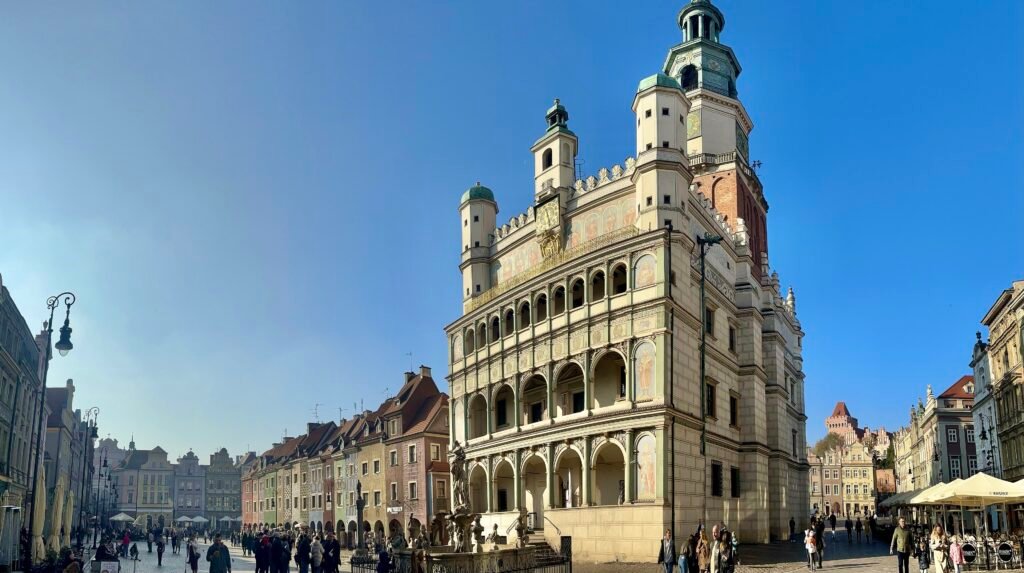
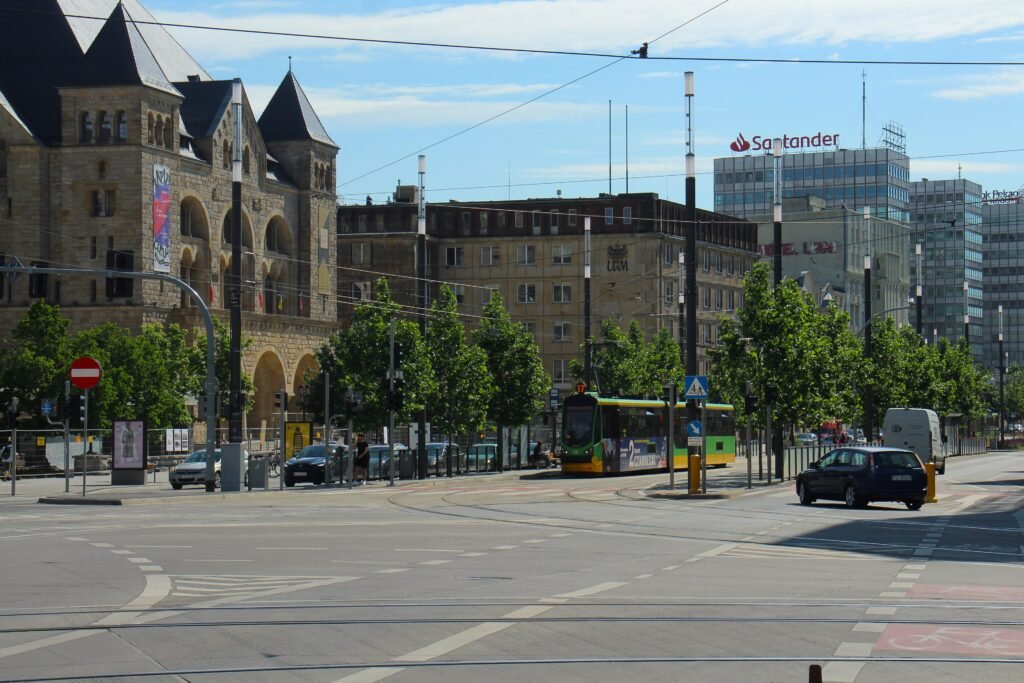
Poznań unfolds along a west-to-east visitor axis rather than around one tiny historic center. Poznań Główny sits on that axis’s western edge, beside the fairgrounds and a short walk from Święty Marcin. From the Imperial Castle, rebuilt central streets lead through Plac Wolności toward the dense Old Town around Stary Rynek. The strongest uninterrupted walking geography largely ends east of the market, where Chwaliszewo begins the approach toward the river channels. Bridges keep Ostrów Tumski and Śródka easy to reach, but they remain a distinct sightseeing cluster. That pattern favors long central walks, with trams best reserved for outer extensions.
Why Poznań Works Well on Foot
The most useful walking chain begins near Poznań Główny and runs east through the modern center. The Imperial Castle, Święty Marcin and Plac Wolności lead naturally toward the Old Town. Around Stary Rynek, Town Hall, the Royal Castle and museum streets sit within a very compact network. The square itself should no longer be judged from construction-era reports. Its major reconstruction is complete, with renewed paving, lower curbs, greenery and tightly restricted vehicle access.
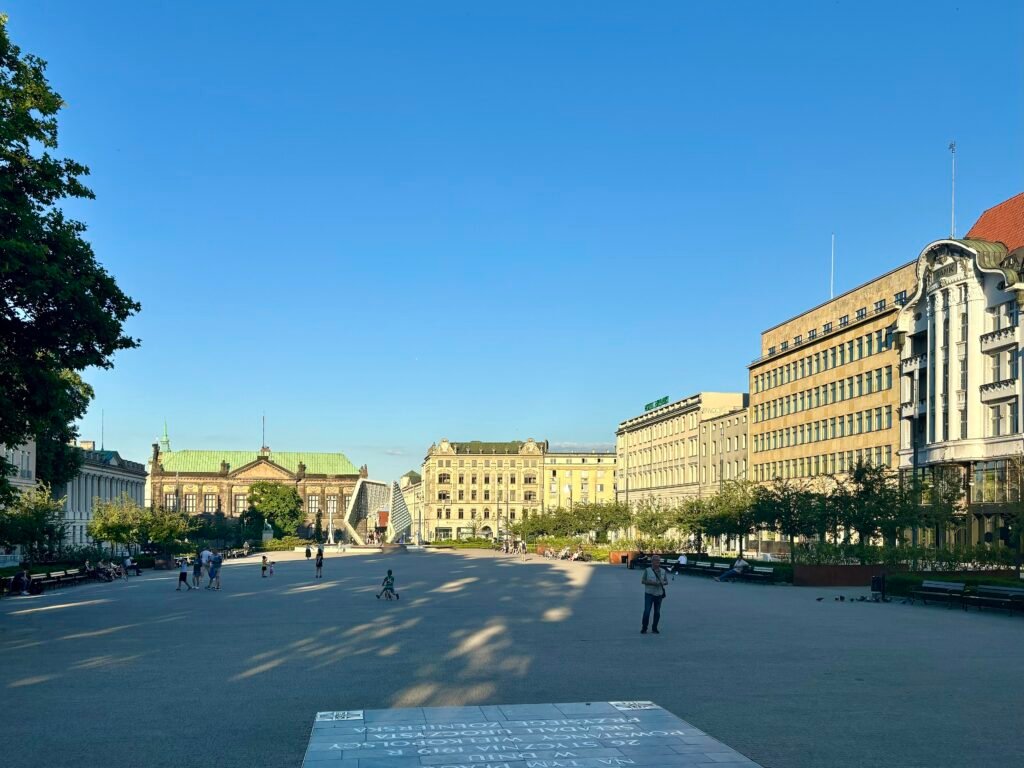
The eastern heritage area changes the pattern. Chwaliszewo provides a logical walking continuation from Old Town, while bridges connect Ostrów Tumski with Śródka. The Cathedral and Porta Posnania therefore remain easy to visit without a car. They still form a distinct cluster rather than an extension of the market square. Malta Lake sits farther east, while Citadel Park stretches north and the fairgrounds remain on the station side.
Where to Stay for the Easiest Walking
Old Town and the Święty Marcin corridor are the strongest bases for a first visit. They put restaurants, museums and the main central sights within straightforward walking range. Staying near Poznań Główny is convenient for rail arrivals and the International Fair, but adds daily distance to Stary Rynek. The western edge of Jeżyce can also work well, especially with trams, although it sits outside the tightest sightseeing geography.
Practical Walking Times
These are practical visitor estimates rather than live-navigation guarantees. Station exits, tram tracks and major crossings can change the feel of otherwise short distances.
| Walk | Typical time | What to expect |
|---|---|---|
| Poznań Główny → Imperial Castle | 12–15 min | The distance is short, but station exits, major streets and tram-running corridors make the start less seamless than Old Town. |
| Poznań Główny → Stary Rynek | 25–30 min | A practical center walk via the Święty Marcin and Plac Wolności axis; allow more time with luggage. |
| Imperial Castle → Plac Wolności | 10–12 min | Mostly along the rebuilt central avenue system. |
| Plac Wolności → Stary Rynek | 8–10 min | A short transition from the modern center into the Old Town grid. |
| Stary Rynek → Poznań Cathedral | 18–22 min | The route crosses Chwaliszewo and approaches the river channels; distance, not route confusion, is the main factor. |
| Poznań Cathedral → Porta Posnania | 6–8 min | A short eastern-cluster walk using the bridge network around Ostrów Tumski, Śródka and the Cybina. |
| Stary Rynek → Citadel Park | about 15 min | Official tourism describes Citadel as a nearby northern extension, but park walking adds substantial extra mileage once inside. |
These are practical planning estimates rather than guaranteed walking times.
A 2-Day Walking Route
The routes divide Poznań into two coherent walking days. The first follows the station-to-Old-Town spine, while the second continues east through the separate heritage cluster.
Day 1: Poznań Główny, Święty Marcin and Old Town
Walking route
Day 1 — Poznań Główny, Święty Marcin and Old Town
- Poznań Główny
- Imperial Castle
- Plac Wolności
- Royal Castle
- Stary Rynek
- Poznań Town Hall
Start at Poznań Główny and walk toward the Imperial Castle rather than taking a tram for a very short first hop. Continue along Święty Marcin, then use Plac Wolności as the transition into the Old Town. The Royal Castle sits just above the market streets, so visit it before finishing around Stary Rynek and Town Hall. This sequence shows where the station-side city becomes a genuinely compact sightseeing core.
Day 2: Chwaliszewo, Ostrów Tumski and Śródka
Walking route
Day 2 — Chwaliszewo, Ostrów Tumski and Śródka
- Stary Rynek
- Chwaliszewo
- Poznań Cathedral
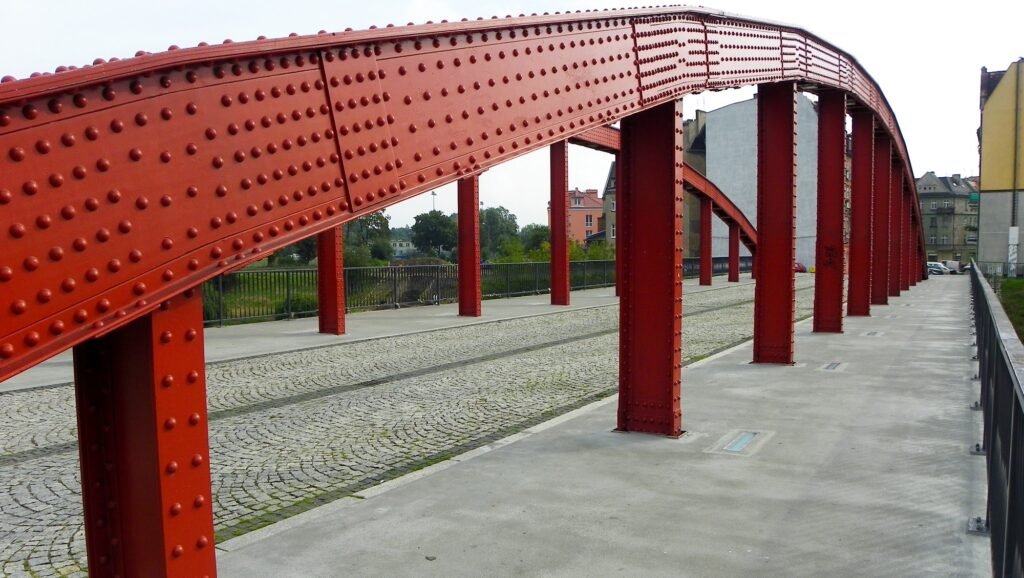
- Bishop Jordan Bridge
- Rynek Śródecki
- Porta Posnania
Leave Stary Rynek eastward through Chwaliszewo and continue toward Poznań Cathedral on Ostrów Tumski. From there, Bishop Jordan Bridge creates a clear pedestrian link into Śródka. Finish at Porta Posnania beside the Cybina. The route is longer and more open than Old Town, but the bridge pattern keeps it coherent. Add Malta Lake only if you want a leisure extension; a tram can save low-value cross-city mileage.
Using Trams and Buses
Poznań’s trams are most useful once the central walking area begins to spread. They work well for Jeżyce, station-side returns, Malta and other destinations beyond the Old Town core. Evening and night services provide additional coverage, so check the current ZTM timetable when planning a late or outer trip.
Time-based and longer-duration tickets are available through onboard machines, mobile apps and other ZTM sales channels. Payment and validation rules depend on the product, so check current fares before travel rather than relying on fixed prices in the guide.
Arriving Without a Car
Poznań-Ławica Airport has direct public-bus connections toward Poznań Główny and the city center. Journey times vary with traffic, so check the current airport and ZTM timetable before travel. Late services may also be available depending on your arrival time.
Rail arrival is even easier for many regional and international travelers. Poznań Główny is the city’s principal railway gateway and receives extensive domestic and cross-border services. The station is on the western edge of the main visitor axis rather than inside Old Town. With light luggage, walking toward Święty Marcin is usually a sensible first move; trams are convenient when energy or weather argues otherwise.
When a Car Helps
A private car offers little advantage for the standard two-day city itinerary. It becomes more useful for regional excursions where schedules or multiple stops matter. Gniezno, Kórnik and Rogalin are better treated as separate regional excursions rather than extensions of the central Poznań weekend.
Limitations and Practical Tips
Poznań Główny is close to the center, but the station complex, Avenida, major streets and tram tracks make arrival less seamless. Historic paving remains uneven in places despite major upgrades. Półwiejska is strongly pedestrian-priority, yet bicycle and courier interactions can still require attention. The eastern heritage cluster adds meaningful distance, while Malta and Citadel work better as deliberate extensions than compulsory stops.
Major renovations can occasionally affect access to individual attractions such as the Palm House. Check current opening information before building an itinerary around a specific attraction.
Seasonal Walking
Summer sun can make exposed squares and river approaches more tiring, while winter brings shorter daylight and potentially slippery surfaces. Spring and autumn often suit longer central walks well. Seasonal conditions change comfort rather than the distances between Poznań’s main sights.
Bottom Line
Poznań fits a walking-first weekend best when you treat the station-to-Old-Town axis as one core and the eastern heritage area as another. Walk the center extensively, cross to Ostrów Tumski and Śródka on a separate day, and use trams for lower-value mileage. That approach covers the first-time essentials efficiently without needing a private car.