
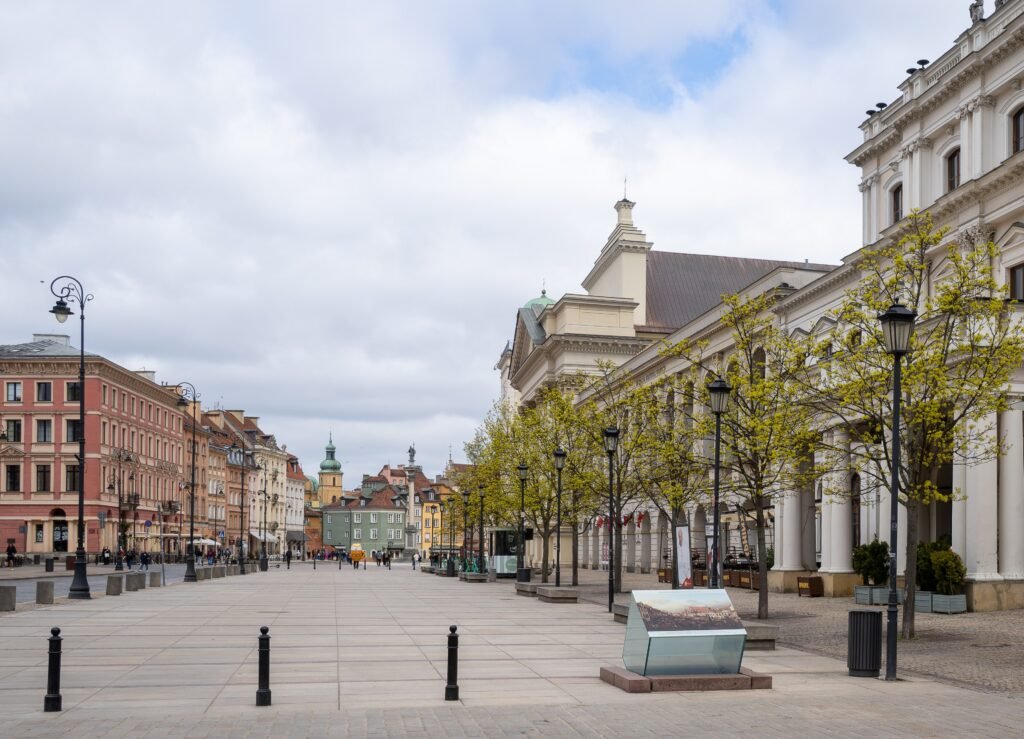
Warsaw stretches its first-time sights along a long central axis rather than packing them around one historic square. Modern Śródmieście begins around Warszawa Centralna and the Palace of Culture, then opens toward Nowy Świat. From there, the Royal Route carries walkers north through Krakowskie Przedmieście to Castle Square and the Old Town. That sequence is direct and rewarding, but it is already several kilometres long. POLIN, the Warsaw Rising Museum, Łazienki Park, and Wilanów extend the visitor map in different directions. The Vistula adds another layer, with Powiśle below the escarpment and Praga now linked by a dedicated pedestrian bridge. Walking works best by corridor; transit handles the gaps.
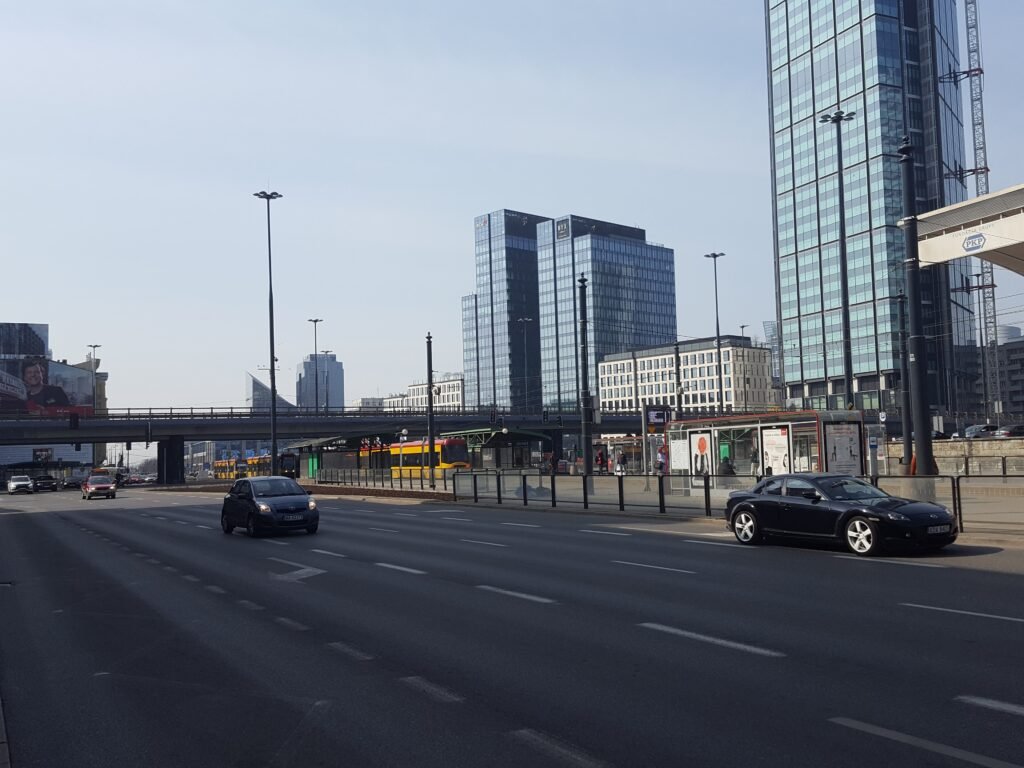
Why Warsaw Works Well on Foot
Warsaw’s strongest walking geography is a sequence, not a compact circle. Warszawa Centralna and the Palace of Culture form one modern-center node. From there, Nowy Świat leads naturally into Krakowskie Przedmieście and Castle Square. Old Town then compresses the experience into narrow historic streets around the Market Square and Barbican. The entire chain is easy to understand, but its length matters more than its complexity.
The Royal Route is especially useful because it provides orientation as well as attractions. Normal traffic is restricted on key central sections, although authorized vehicles still use the corridor. Some summer weekends bring additional traffic restrictions, making the corridor even more pleasant to walk. These arrangements can change through the year, so they should be treated as a bonus rather than something to depend on.
Where Warsaw Feels Most Walkable
Old Town is the tightest pedestrian cluster. Castle Square, the Royal Castle, Market Square and Barbican sit within a short sequence. Historic paving can be uneven, and crowds may slow progress, but ordinary sightseeing distances are small. The northern Royal Route is different: it offers wider public space and a clear line through major civic landmarks.
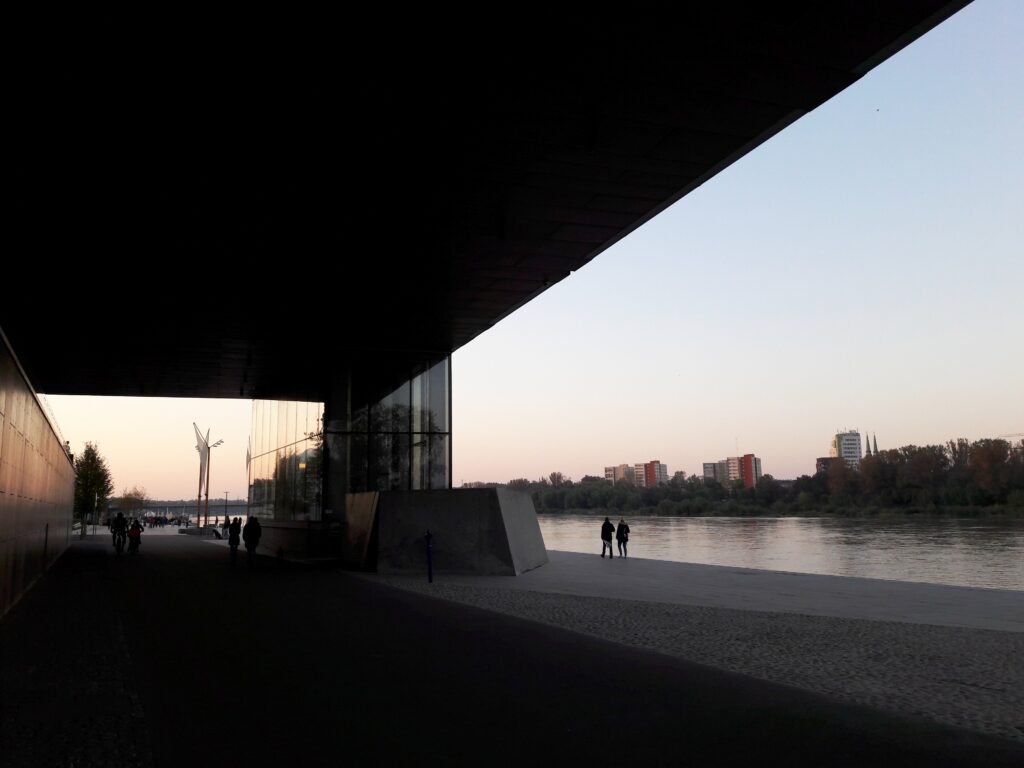
Powiśle and the Vistula Boulevards provide another strong walking environment. The riverfront is lower than upper Śródmieście, so some access points involve ramps, stairs or slopes. Since 2024, the dedicated pedestrian and cycling bridge has given walkers a direct connection toward Okrzei Street and Praga. It improves cross-river walking without turning Praga into part of the Old Town core.
Best Areas to Stay for Walking
Nowy Świat and central Śródmieście offer the best balance for a first visit. They keep Centralna, the Royal Route and Metro access within practical reach. Old Town is better if historic streets and evening atmosphere matter most. The Palace of Culture area is excellent for rail arrivals and transit, but its broad roads feel less intimate. Powiśle suits visitors prioritizing the riverfront and Copernicus Science Centre.
Practical Walking Times
Allow roughly 7–10 minutes between Warszawa Centralna and the Palace of Culture. Centralna to Castle Square takes about 30–35 minutes on foot. Castle Square to Old Town Market Square is only about 5–8 minutes. POLIN adds roughly another 18–25 minutes from the Market Square. These are practical planning estimates rather than guaranteed walking times.
A 2-Day Walking Route
The first day follows Warsaw’s strongest central sightseeing chain from the modern center into Old Town. The second starts after one short Metro repositioning and stays near the Vistula before crossing into Praga. This avoids forcing Łazienki, Wilanów and western museums into oversized walking days.
Day 1: Centralna, Royal Route and Old Town
Walking route
Day 1: Warszawa Centralna, Royal Route and Old Town
- Warszawa Centralna
- Palace of Culture and Science
- Charles de Gaulle Roundabout
- Nicolaus Copernicus Monument
- Presidential Palace
- Castle Square
- Royal Castle in Warsaw
- Old Town Market Square
- Warsaw Barbican
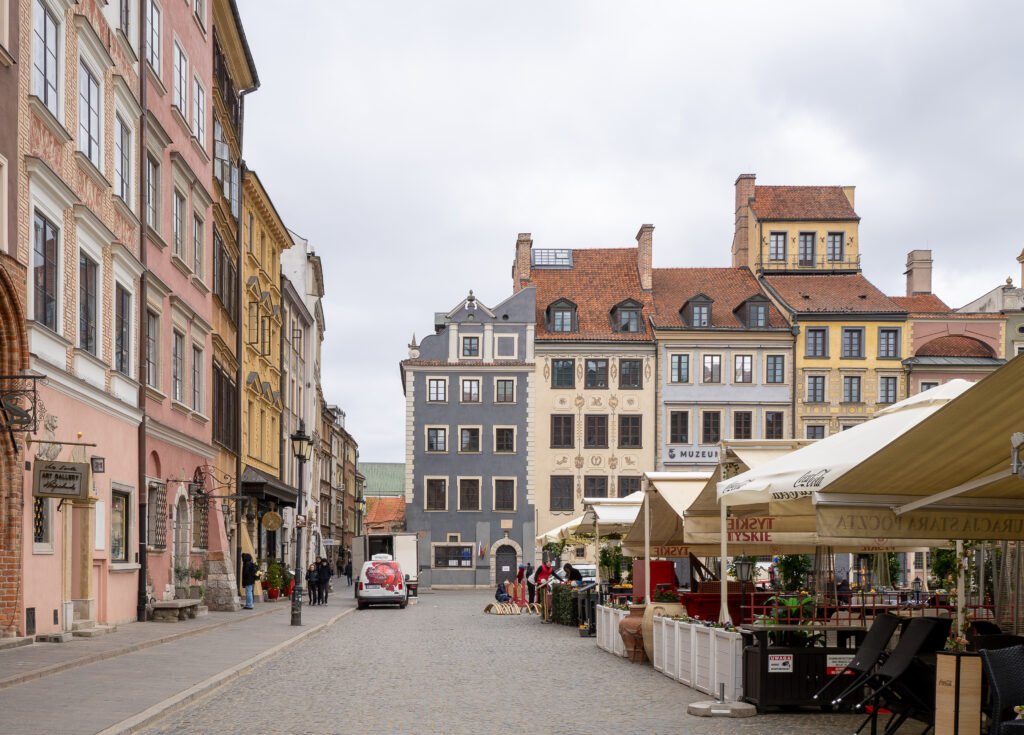
Start at Warszawa Centralna, cross into the Palace of Culture area, then head east toward Nowy Świat. Turn north and stay on the Royal Route through Krakowskie Przedmieście. Castle Square marks the transition into the compact historic core. Continue through Market Square to the Barbican, then use transit back instead of retracing the full route.
Saxon Garden is an easy optional side visit from the central corridor, but it is not forced into the mapped spine. POLIN is also best treated as a northern extension. Adding both while keeping every Royal Route stop would create unnecessary side mileage.
Day 2: Powiśle, the Vistula and Praga
Walking route
Day 2: Powiśle, Vistula riverfront and Praga
- Copernicus Science Centre
- University of Warsaw Library Garden
- Vistula Boulevards
- Vistula Pedestrian and Cycling Bridge
- Okrzei Street
- Cathedral of St. Michael the Archangel and St. Florian the Martyr
- Dworzec Wileński Metro Station
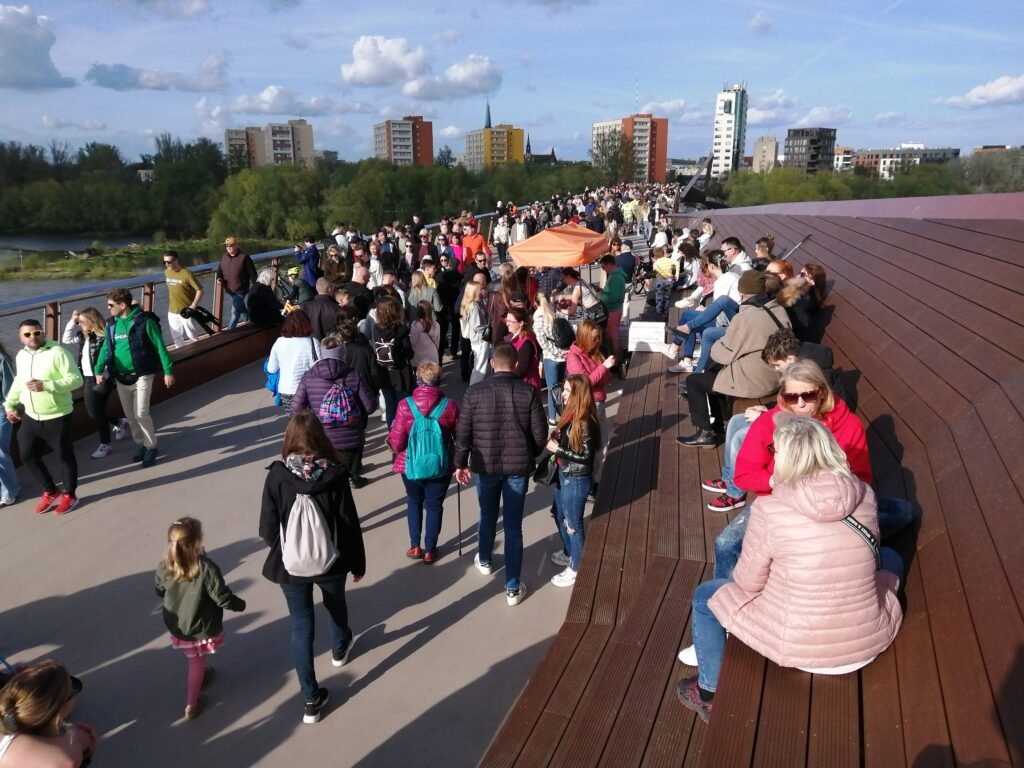
Take M2 to Centrum Nauki Kopernik and begin walking at river level. Link the science center with the University Library area, then follow the Vistula Boulevards north. Cross the operating pedestrian bridge toward Okrzei Street and continue into Praga. Finish at Dworzec Wileński for a direct M2 return.
Using Transit Without Losing the Walk
Warsaw’s Metro, trams and buses are most useful for connecting walking districts rather than replacing short central walks. M1 and M2 cover the main urban axes, while surface transport reaches Łazienki, Wola, Praga, Wilanów and other outer visitor areas. Evening and weekend services remain useful, but check current WTP timetables for your travel date.
Time-based and multi-day tickets cover most ordinary city sightseeing, with ticket machines and mobile apps providing convenient purchase options. Zones and validation rules vary by product, so check current WTP fare information before travel.
Arriving in Warsaw Without a Car
Warsaw Chopin Airport has direct rail and bus connections into central Warsaw, making a car unnecessary for most arrivals. Airport trains serve central stations from which hotels, Metro connections and the Palace of Culture area are easy to reach. Check current airport and WTP information for the best service on your travel date.
Warszawa Centralna is already inside the central visitor area and provides extensive domestic and international rail access. Modlin Airport is farther away and requires a longer onward public-transport journey, so travelers using it should check current connections separately.
When Transit Saves the Most Time
Use transit for the Warsaw Rising Museum from Old Town, and for Łazienki when energy or time matters. Wilanów Palace is roughly 10 km from the center and clearly belongs to a transit-supported outer visit. POLIN is walkable from Old Town but still sits outside its tight cluster. Praga can now be reached pleasantly on foot across the pedestrian bridge, with M2 providing an efficient return.
Walking Limitations and Practical Tips
The main limitation is cumulative distance. Warsaw’s central corridor is direct, but first-time anchors extend north, south, west and across the Vistula. Aleje Jerozolimskie and other broad roads are not impassable barriers, yet crossing choices can affect comfort. Underpasses can be useful where they are direct and accessible, while stairs or indirect access can still add friction.
The Vistula Escarpment is the only recurring terrain feature worth planning around. It matters between upper Śródmieście and Powiśle, not across the entire city. Old Town adds cobbles and historic paving rather than meaningful elevation. Neither issue affects every central walk, but both can add effort to particular routes.
Seasonal Walking Context
Summer weekends can make parts of the Royal Route especially pleasant when additional traffic restrictions are in place, but those arrangements vary. Winter snow, ice and shorter daylight can reduce comfort, while warm weather makes exposed Vistula walks more tiring. Check current street and transport information before travel if your plans depend on a particular weekend closure.
Bottom Line
Warsaw works best as a walking city with selective transit. The Royal Route and Old Town provide a strong continuous sightseeing day, while Powiśle and Praga support another coherent walk. The city becomes less efficient only when distant museums, Łazienki and Wilanów are treated as if they belonged to one compact core. A car adds little to a normal first-time weekend.