
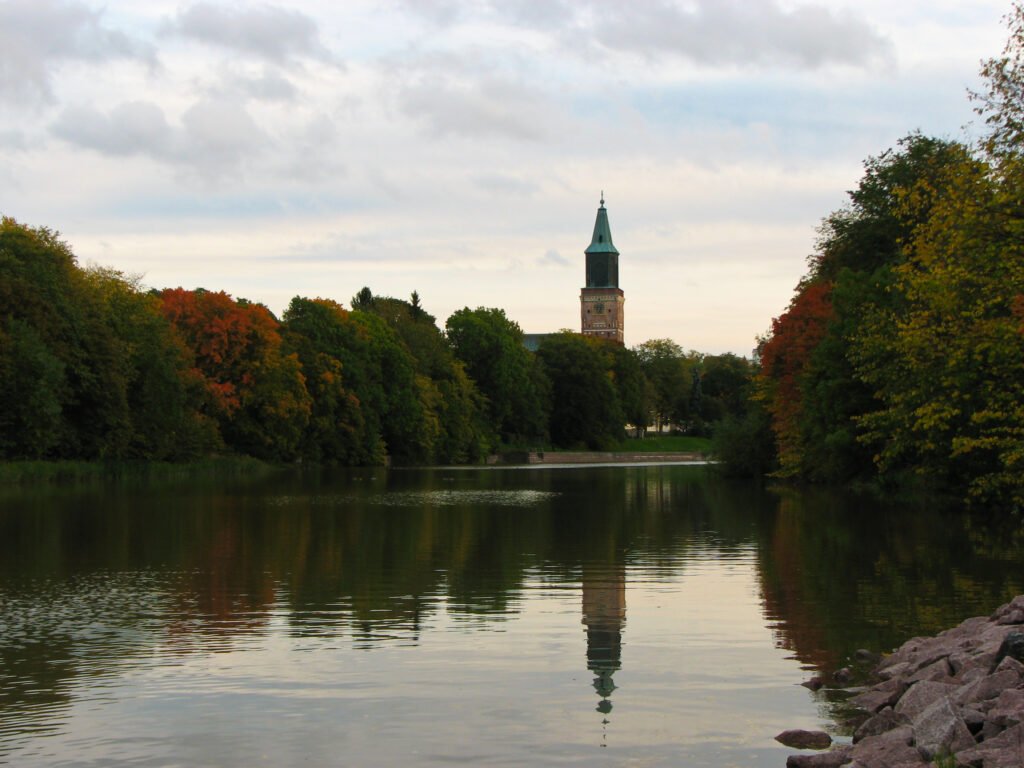

Turku’s visitor core follows a long east-west corridor rather than a tight historic circle. Around the cathedral, Old Great Square and Aboa Vetus sit only minutes apart. Market Square and the main commercial center occupy the opposite side of the river nearby. From there, museums, riverfront paths and repeated bridge crossings keep sightseeing continuous downstream. The tradeoff appears near the harbor, where Forum Marinum and Turku Castle stretch the route well beyond the central cluster. That distance matters more than the scenery when judging a two-day walking weekend.
How Turku’s Walking Geography Fits Together
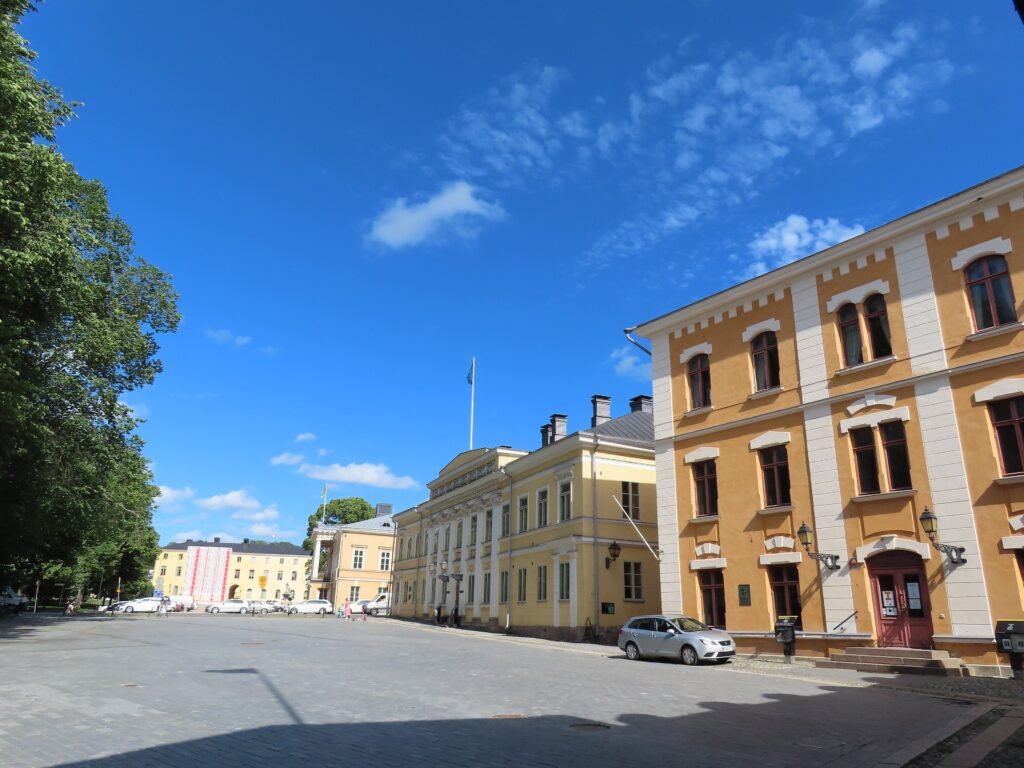
The strongest first-time cluster sits around the eastern riverbank. Turku Cathedral, Old Great Square and Aboa Vetus are close enough to treat as one stop-rich district. Across the river, Vähätori and Market Square connect that historic core to the modern center without a long transfer. From Market Square, the river remains the organizing line toward Qwensel House, Föri, Forum Marinum and Turku Castle. The City of Turku even maps a 4.1-kilometer cultural route between the castle and cathedral. That continuity is real, but it is elongated rather than compact.
A temporary condition matters for current trips: Turku Cathedral is closed to the public from February 9, 2026, through December 2, 2028. Its square and exterior still anchor the route, but visitors should not plan an interior visit during the renovation.
Best Areas to Stay for a Walking Weekend
- Market Square and the central grid: the best all-around base for buses, shops, restaurants, Market Hall and short walks to both riverbanks.
- Vähätori and the Old Town edge: best for immediate access to the river, Old Great Square, Aboa Vetus and the cathedral district.
- Puolalanpuisto and the Art Museum side: convenient for the Logomo rail station and central sights, though the hill adds a little effort.
Staying near the harbor can work for ferry passengers or castle-focused trips, but it weakens access to the main central cluster. For most two-day visitors, a room around Market Square or the upper central river keeps the weekend simplest.
Walking Times Between Major Turku Sights
| Walk | Typical planning time | What it means |
|---|---|---|
| Turku Cathedral → Old Great Square | 3–5 minutes | The two historic anchors are about 240 meters apart. |
| Old Great Square → Aboa Vetus | 2–4 minutes | These sights function as one compact historic cluster. |
| Market Square → Old Great Square | 10–12 minutes | The published distance is under one kilometer. |
| Turku railway station → Market Square | Under 15 minutes | Walking is realistic; line 20 is an easy fallback. |
| Kupittaa station → Turku Cathedral | 18–20 minutes | VR places the cathedral 1.5 kilometers from the station. |
| Market Square → Turku Castle | 35–45 minutes | The roughly three-kilometer riverfront extension is the main long walk. |
| Turku Cathedral → Turku Castle | About 50–55 minutes nonstop | The City of Turku’s cultural route measures 4.1 kilometers. |
These are practical visitor estimates rather than live-navigation guarantees. Museum entrances, bridge choices, construction and winter surfaces can change the exact route.
A 2-Day Walking Route
Day 1: Central Turku and the Old Town
Walking route
Day 1: Central Turku and the Old Town
- Turku Art Museum
- Turku Market Square
- Turku Market Hall
- Pharmacy Museum and Qwensel House
- Vähätori
- Aboa Vetus Ars Nova
- Old Great Square
- Turku Cathedral
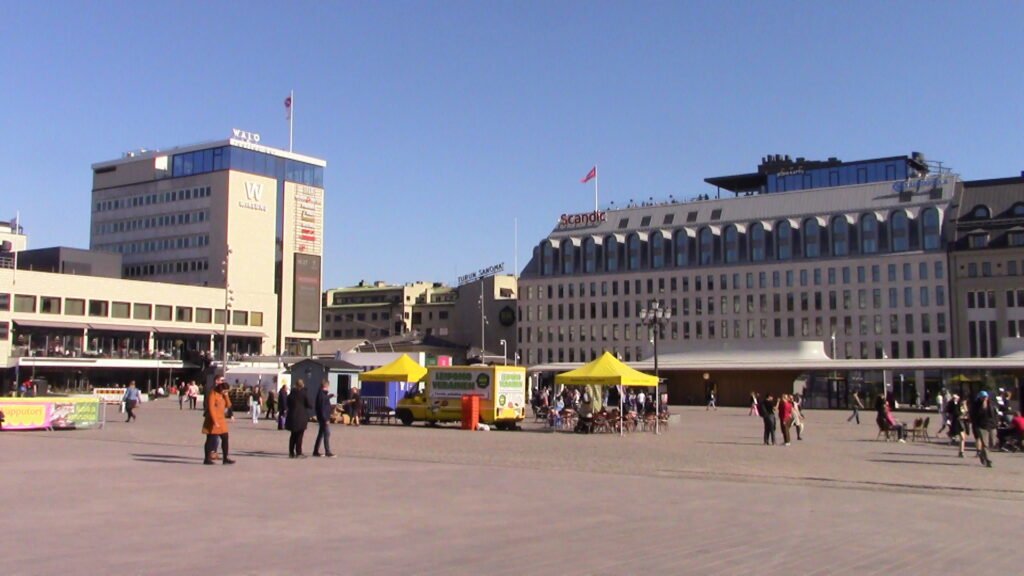
Start at Turku Art Museum and descend toward Market Square, using the hill early rather than climbing it late. Continue to Market Hall, then cut to the river at the Pharmacy Museum and Qwensel House. Follow the bank upstream to Vähätori, cross toward Aboa Vetus, and continue through Old Great Square. Finish at the cathedral square. This order links the commercial center and historic core without repeating the same river segment.
The cathedral should be treated as an exterior stop during its current renovation closure. If museum time is limited, prioritize Aboa Vetus for the medieval-city context and leave extra time around Old Great Square.
Day 2: Castle, Maritime Turku and the Lower River
Walking route
Day 2: Castle, Maritime Turku and the Lower River
- Turku Castle
- Forum Marinum
- Föri Ferry
- Turku Biological Museum
- Luostarinmäki
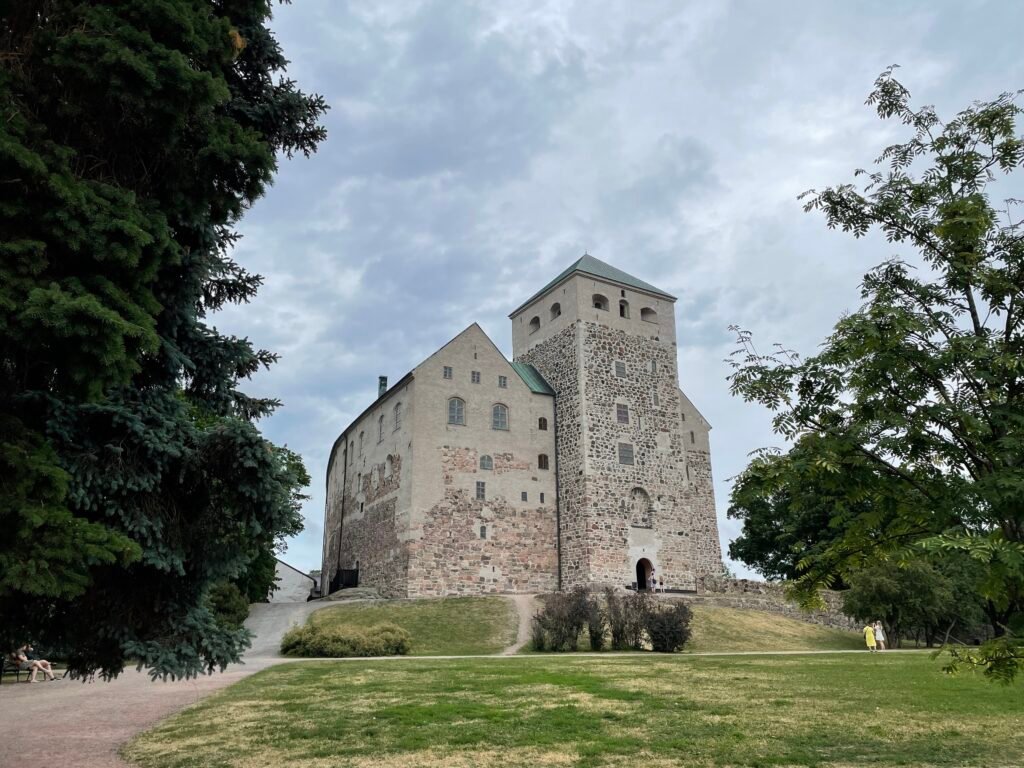
Use Föli line 1 from the center to Turku Castle at the start of the day. That removes the least valuable out-and-back mileage. After the castle, walk upstream to Forum Marinum and continue along the river to Föri. Cross the river, then angle toward the Biological Museum and finish at Luostarinmäki. The route keeps the castle as a purposeful endpoint while preserving the lower river as a sightseeing walk rather than a transfer.
Kakolanmäki can be added near Föri if you want a hilltop detour. It is optional because climbing away from the river adds effort and some backtracking.
Using Föli Without Making Turku Transit-Dependent
Föli is most useful when it protects walking time rather than replacing it. Trunk lines 1–9A serve the central Market Square area, while inner-city routes add station and neighborhood coverage. Line 1 links the airport, center and harbor; its current timetable gives about 23 minutes from the airport to the center. Line 20 connects Market Square with the Logomo railway station in about five minutes and runs every 20 minutes for much of the day.
Payment is unusually simple for occasional visitors. Contactless bank cards and mobile wallets work across Föli buses, with a two-hour transfer period and automatic fare caps. Weekend coverage is also useful: several trunk lines run night service from about 1 a.m. to 4 a.m. on Friday/Saturday and Saturday/Sunday nights.
Arriving in Turku Without a Car
The main Turku railway station now uses the Logomo platforms at Logomon Silta 1. Walking to Market Square is practical, while Föli line 20 gives a short direct connection. Kupittaa is another useful rail gateway on the eastern side; VR places Turku Cathedral 1.5 kilometers away. Trunk line 3 also connects Kupittaa station with the city center.
Turku bus station sits beside the rail yard and already lies near the center. Line 1A takes about five minutes between the bus station and Market Square on scheduled trips. From Turku Airport, line 1 runs directly to Market Square in about 23 minutes, avoiding a transfer. These gateways make a car-free arrival straightforward even before the sightseeing walk begins.
When a Car Helps
A private car adds little to a normal two-day Turku city break. It becomes more useful for multi-stop trips beyond the urban core, especially archipelago drives or dispersed regional nature destinations. Those excursions are separate from Turku’s city-center walkability and should not determine how you plan the central weekend.
Limitations and Practical Tips
- Do not underestimate the castle extension. About three kilometers from Market Square is pleasant when sightseeing, but inefficient as an out-and-back transfer.
- Use the river for orientation. It keeps the main east-west sightseeing chain easy to follow even when side streets become less obvious.
- Expect localized hills and historic surfaces. Puolalanmäki, Vartiovuori and Kakolanmäki add climbs, while several cultural routes include cobbles or stairs.
- Check museum opening days. Seasonal hours can matter, especially outside summer, even when the walking route itself remains usable.
- Plan around the cathedral closure. Interior access is unavailable through December 2, 2028, although the surrounding historic district remains worth walking.
Seasonal Walking Context
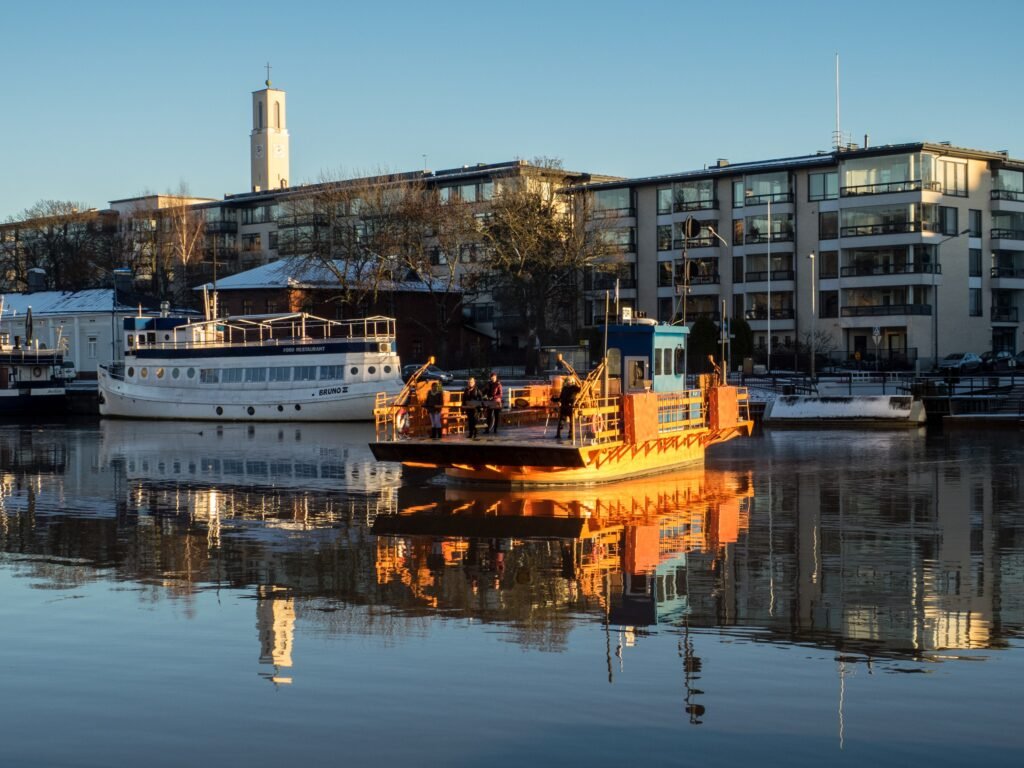
Turku’s river corridor remains structurally walkable year-round, but seasonal comfort changes considerably. Winter snow and ice can make cobbles, slopes and bridge approaches slower, while short daylight compresses outdoor sightseeing. Warmer months make the long lower-river walk easier to combine with museums and terraces. These seasonal differences affect comfort and pacing, not the city’s underlying visitor geography.
Bottom Line
Turku works because its major visitor districts connect rather than break into isolated sightseeing islands. The cathedral, Old Great Square, Market Square and central museums belong to one easy walking system. Turku Castle extends that system instead of sitting outside it, but the distance is substantial enough to justify a bus in one direction. Base yourself centrally, walk the river selectively, and use Föli for the mileage that adds the least value.